March 2021

MIGREC’s Training workshop

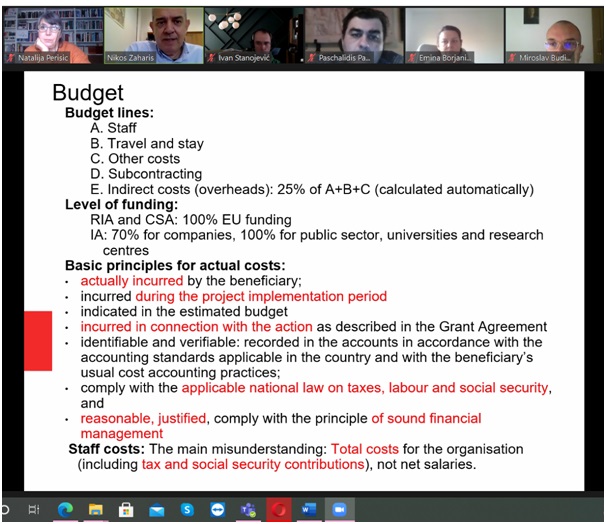
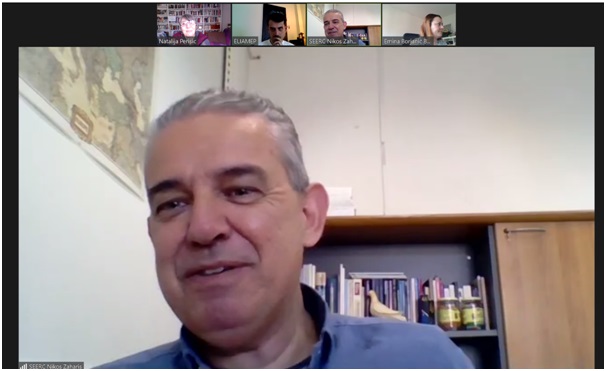
The First MIGREC “Training workshop in applying for external research funding with emphasis on HORIZON EUROPE” took place online during 3 days: March 22, 24 and 29, 2021. Research staff from FPN, GEF and other Faculties including PhD candidates plus researchers from ELIAMEP and SEERC participated in an intense workshop led by Nikos Zaharis, SEERC Director.

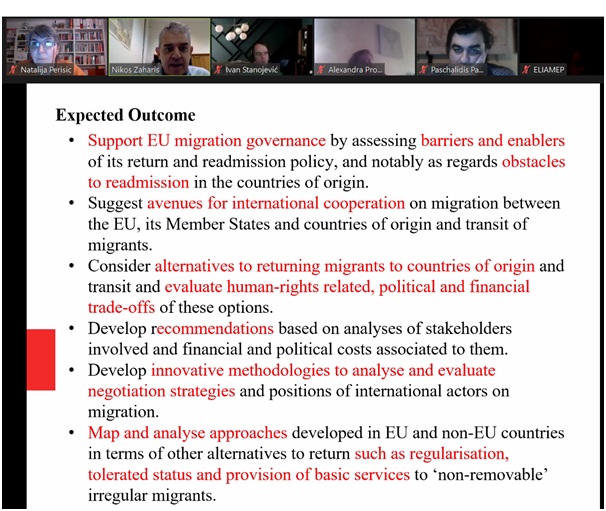
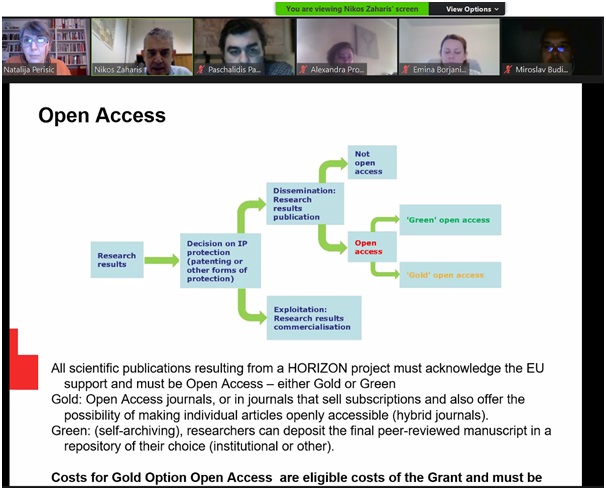
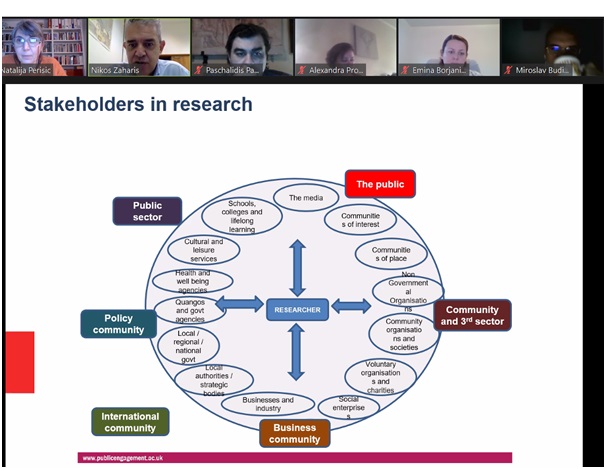
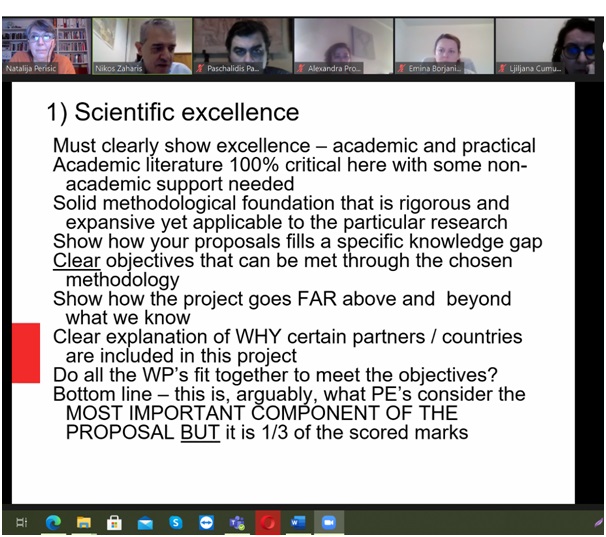
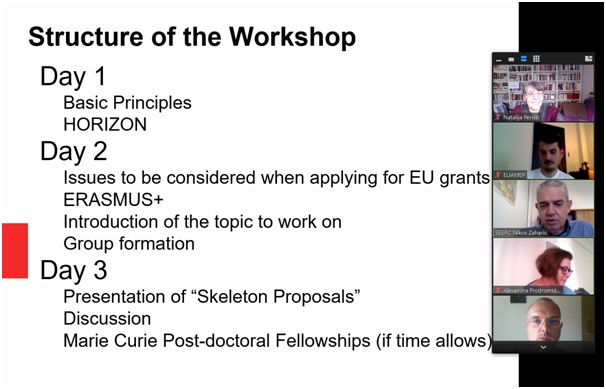
The workshop started with a definition and basic principles of externally funded research and went on to discuss in detail the aims and mechanisms of the main EU research funding programs H2020 and HORIZON EUROPE along with relevant aspects of ERASMUS+. Emphasis was given to research topics that are relevant to migration studies. As examples, two calls were examined in detail:

  • Mapping and overcoming integration challenges for migrant children (closed call; the workshop studied the resulting projects) and
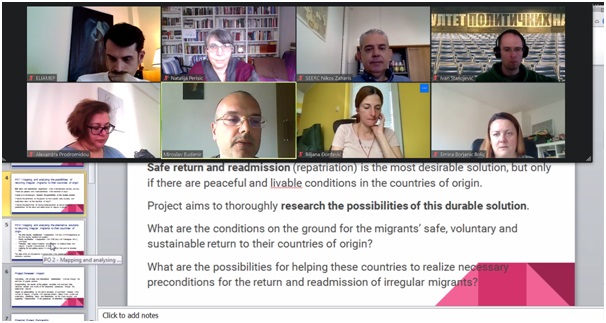
  • Return and readmission of irregular migrants in the EU (future call)

The participants studied the second call and formed three groups that worked together on “Skeleton Proposals” which were presented and discussed the third day of the workshop. The “skeleton proposals” included an outline of the following items: i) Proposed progress beyond the state of the art, ii) Project Objectives, iii) Project Foreseen Impact, iv) Potential Project Partnership and v) Project Work-Plan.

Finally, the workshop’s speaker Nikos Zaharis presented in more details the upcoming call for the MSCA Post-doctoral fellowships, which is a prospect that should interest both young researchers (as potential post-doctoral fellows) and the Faculties of the University of Belgrade (as possible host organisations).
MIGREC’s Training workshop Read More »

MIGREC at the conference of the Demographic Association of Serbia

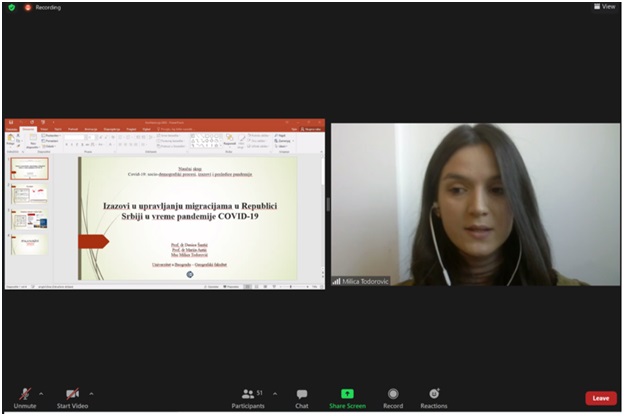
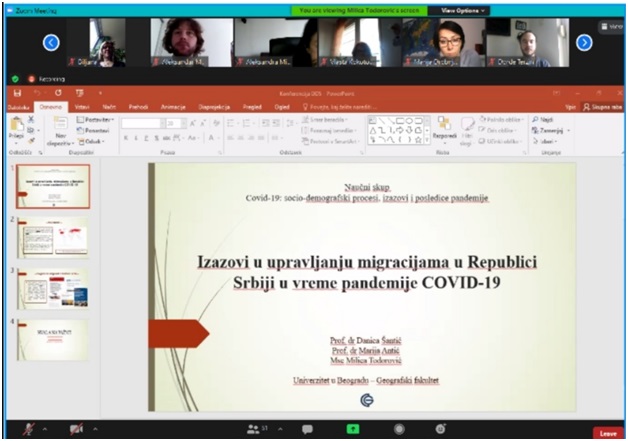
Members of the MIGREC team – Danica Šantić, Marija Antić and Milica Todorović – participated at the conference “COVID-19: socio-demographic processes, challenges and consequences of the pandemic” organized by the Demographic Association of Serbia and the Center for Demographic Research of the Institute of Social Sciences with presentation “Challenges in Migration Management in the Republic of Serbia during the COVID-19 pandemic”, on March 25, 2021.

The academic conference was devoted to analyses of effects and consequences of the COVID-19 pandemic on demographic, social and migration processes. More than 50 prominent researchers from the Republic of Serbia and other countries of the region who treat population topics from various aspects took part in the conference. Although long-term consequences of the pandemic for population, society and migration are still uncertain, the participants on this occasion exchanged the so-far obtained research results, opinions and attitudes in the actual pandemic context. The papers were organized in three sessions: mortality due to the corona virus pandemic, COVID-19 and population and social groups and COVID-19 – migration and labour market.

Prof. Danica Šantić, Prof. Marija Antić and Milica Todorović, MSc, presented their research results within the third session: COVID-19 – migration and labour market. Their research put accent on the challenges the Republic of Serbia faced with in management of return migration flows and irregular migration in the aftermath of introduced state of emergency. The authors pointed out that mass return migration flows in the Republic of Serbia in that period made a huge challenge for the state which policy moved between “don’t stay/don’t leave” discourses. On the other hand, it was stressed that irregular migrants during the state of emergency faced with particularly unfavorable circumstances having in mind the limitation of movement from the admission centres and high level of their stigmatization. The conclusion is that in this period the migration-related policies were carried out in accordance with the conditions of global health and economic crises, which the Republic of Serbia was not exempted from.


MIGREC at the conference of the Demographic Association of Serbia Read More »

MIGREC Project presented at the Twinning Project Days

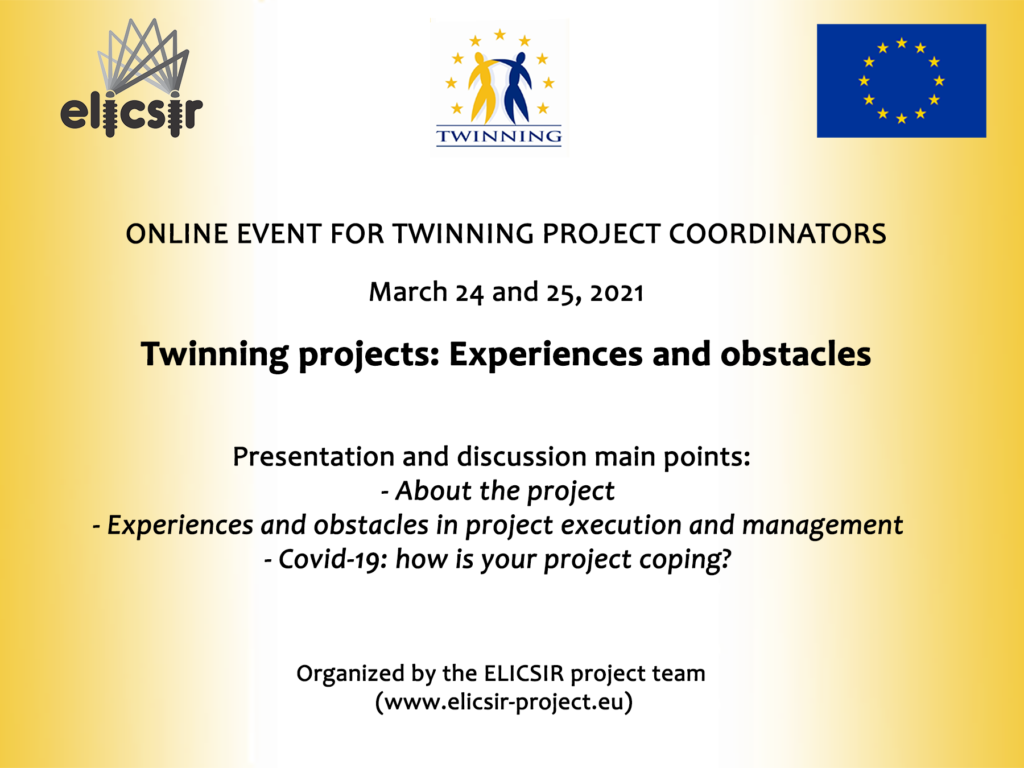
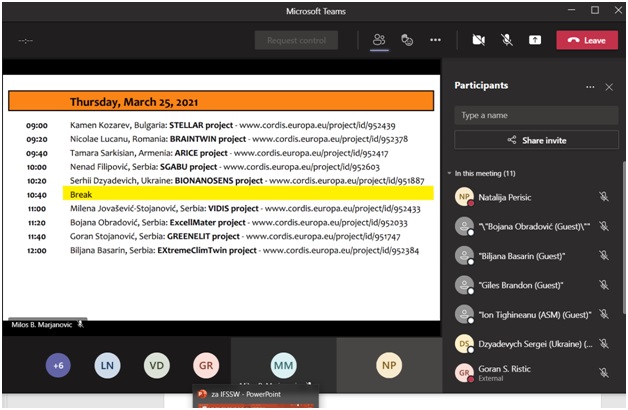
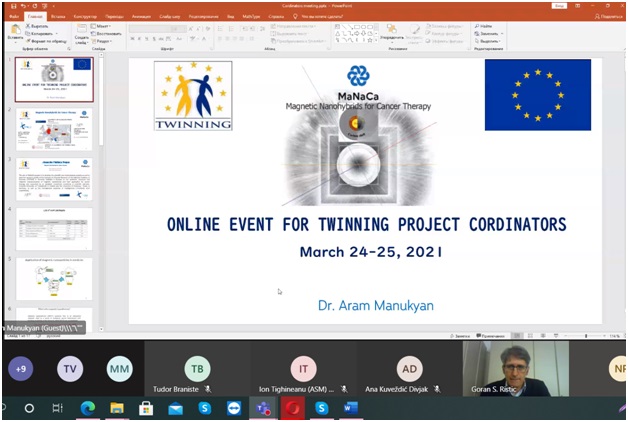
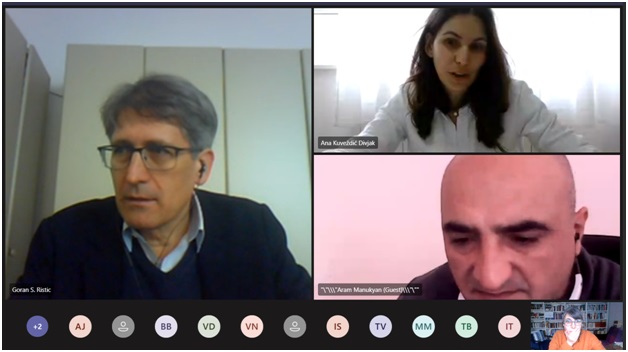
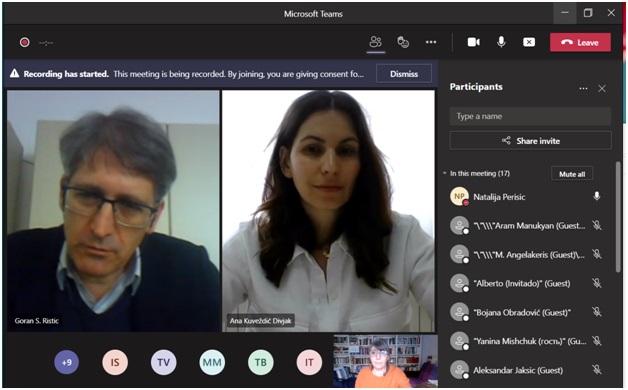
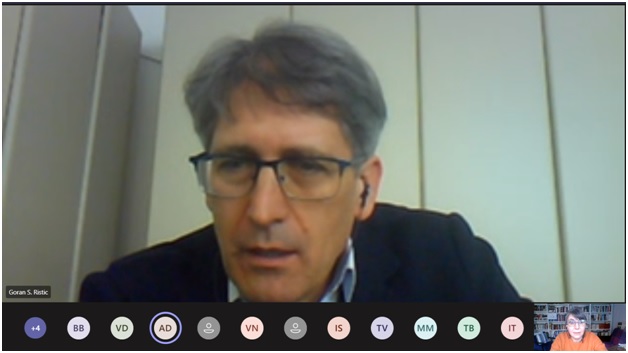
The Twinning Project Days were held at the MS Teams online platform on March 24 and 25, 2021. The Faculty of Electronic Engineering of the University of Niš – coordinator of the ELISCIR project – was the organizer.

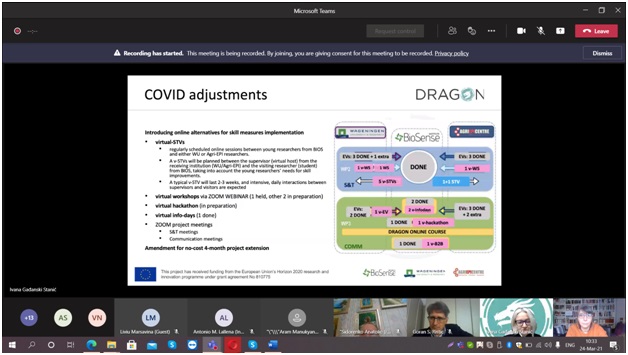
Out of the need for connecting and networking and exchange of experiences in implementation of the Twinning projects, the coordinator of the ELICSIR project, Prof. Goran Ristić, organized presentations of nineteen ongoing Twinning projects funded within the EU Horizon2020 programme. Coordinators from seven European countries presented goals, work packages and impact of their respective projects. A particular segment of presentations was devoted to the adjustment of project activities to new circumstances due to the COVID-19 pandemic. Project coordinators exchanged extremely useful experiences on transfer of activities to online forms, redistribution of cost, introduction of new activities etc.

Prof. Natalija Perišić presented general and particular goals of the MIGREC project, the activities realized so far within the work packages and influence of COVID-19 on current and further activities. The record of presentation of the MIGREC project is available at the link https://youtu.be/Pf9nxtKfyN0.


MIGREC Project presented at the Twinning Project Days Read More »

MIGREC online presentation at an academic conference in Sarajevo

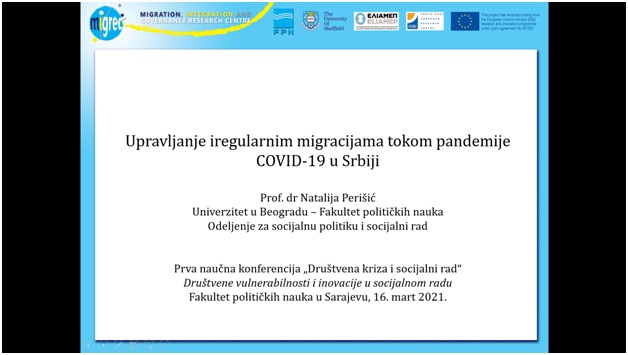
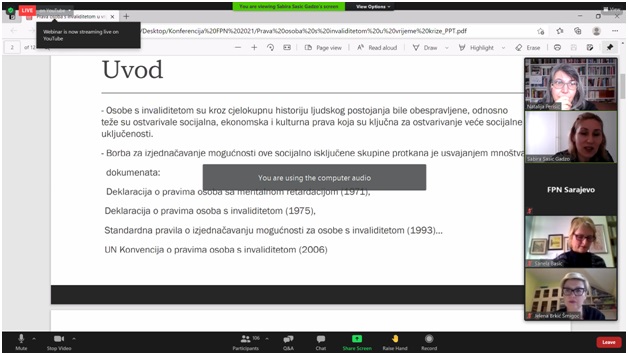
Member of the MIGREC team Natalija Perišić participated at the academic conference “Social Vulnerabilities and Innovation in Social Work” organized by the Faculty of Political Science of the University of Sarajevo, with online presentation “Irregular Migration Governance during the COVID-19 Pandemic in Serbia” on March 16, 2021.

The conference was aimed at contributing the re-creation of inclusive sociality for the post-crisis period, by launching a dialogue between academic and professional communities on possibilities for (self)critical re-description of professional paradigm on the platform advocated by the Global Agenda for Social Work and Social Development 2020-2030, with focus on welfare and wellbeing of all on the principles of social citizenship, human rights and social justice. The conference was envisaged as a place for presentations, discussion and critical reflection of innovative policies, programmes and approaches of professional social work in promoting, advocating and realization of inclusive, democratic, just and solidary society. The plenary session has been accompanied with four thematic panels.

Prof. Natalija Perišić’s presentation focused on the actions of the Government of the Republic of Serbia during the state of emergency proclaimed in March 2020, in the field of irregular migration. The adoption of the decision on limitation of movement of irregular migrants and asylum seekers as a consequence of the COVID-19 pandemic resulted in overcrowded capacities in the asylum and reception centres. In order to facilitate the situation, the Commissariat for Refugees and Migration of the Republic of Serbia increased accommodation capacities and took numerous urgent measures. However, the adjustment of other state institutions to new circumstances was extremely slow. This influenced aggravation of living conditions of irregular migrants and asylum seekers, particularly combined with limiting non-governmental sector to involve in provision of support and assistance. The presentation delivered by Prof. Natalija Perišić pointed to the needs for more careful planning of decisions and measures pertaining to irregular migration governance, in coordination with other policies important for irregular migrants and asylum seekers.


MIGREC online presentation at an academic conference in Sarajevo Read More »