April 2021

MIGREC at the Conference of Global Campus South East Europe

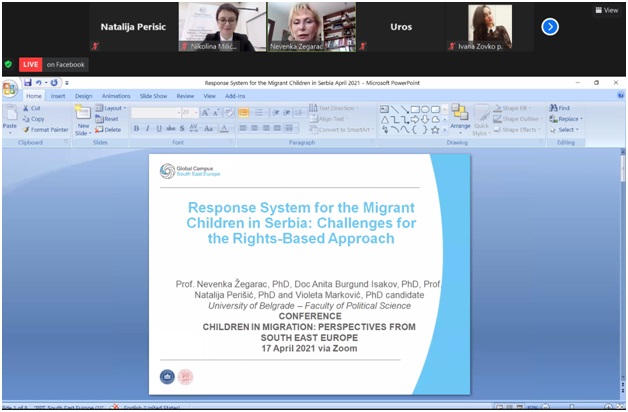
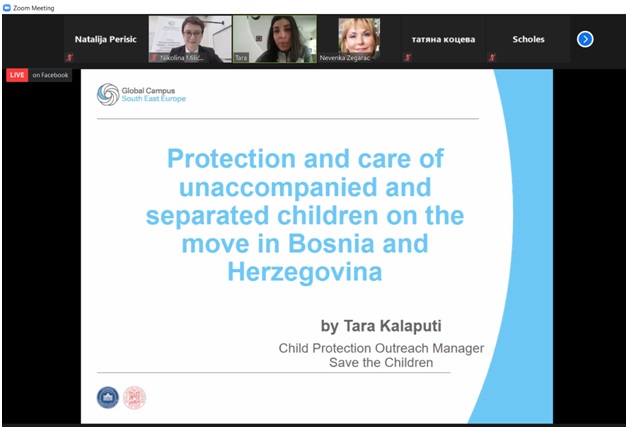
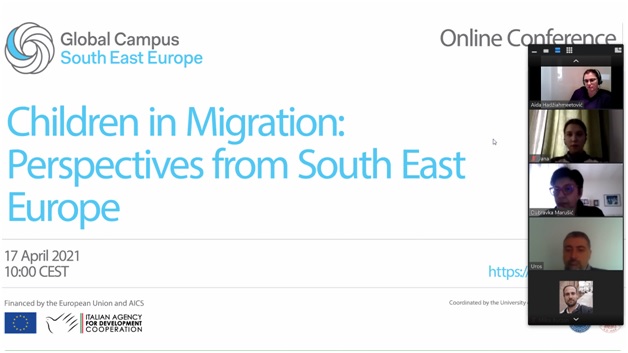
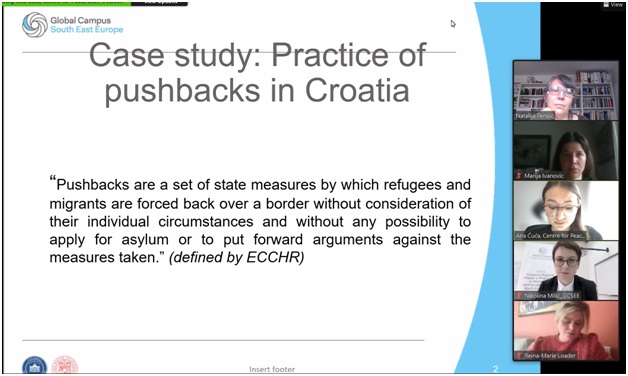
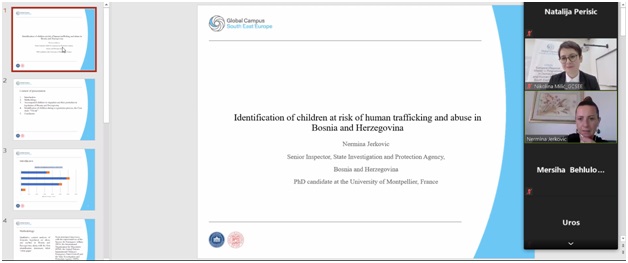
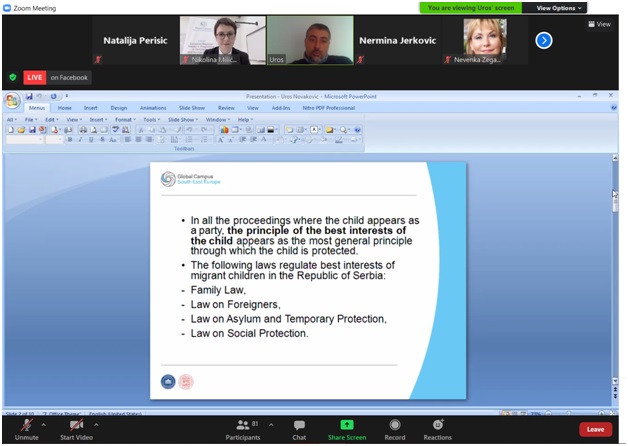
Members of the MIGREC team – Nevenka Žegarac, Anita Burgund, Natalija Perišić and Violeta Marković – participated at the conference “Children in Migration: Perspectives from South East Europe” organised by the Global Campus South East Europe / European Regional Master Programme in Democracy and Human Rights in South East Europe, the University of Sarajevo and the University of Bologna with presentation “Response System for the Migrant Children in Serbia: Challenges for the Rights-Based Approach”, on April 17, 2021.

The conference was a part of the two-year-long project ‘Children in migration in South East Europe’ which aims to strengthen education, research, training, network-building, and advocacy for the rights of migrant and refugee children in South East Europe by producing high-quality research on the topic and disseminating knowledge among students, academia, relevant stakeholders, and the wider public.

The conference focused on presenting and discussing the preliminary findings of research done by 16 researchers from five countries of South East Europe. Research encompasses different issues around children in migration through the region, from identification and arbitrariness of age assessment to guardianship and access to education and integration. The objectives of the conference were to contribute to a mutual understanding of the highest child rights standards enshrined in international and regional mechanisms, as well as to create a space for knowledge exchange between relevant stakeholders, experts and practitioners working directly with children in migration in different countries of South East Europe.

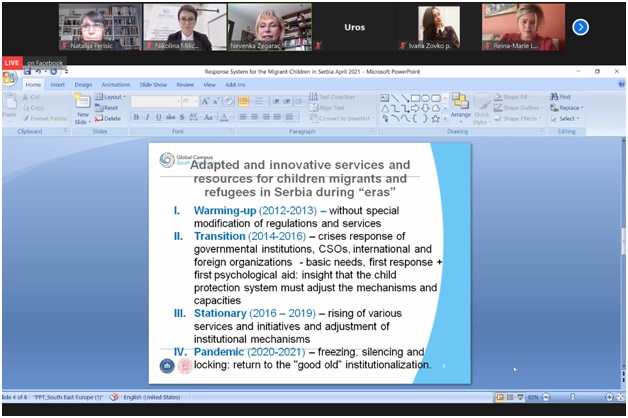
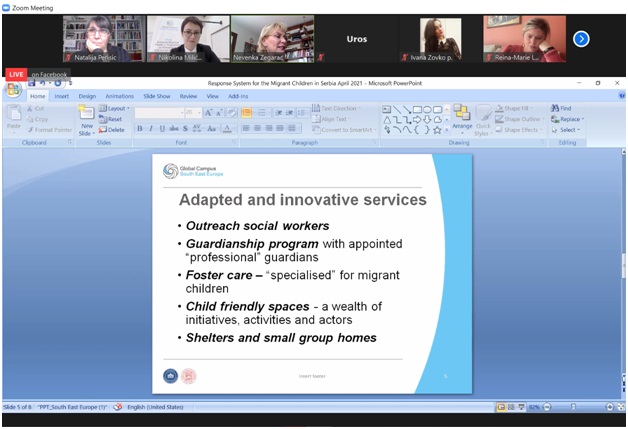
Prof. Žegarac presented her contribution on the challenges for the rights-based approach to migrant children in Serbia. She argued in favour of shifting national responses from migration perspective to child rights-based perspective and the importance of child participation and agency, gender sensitivity and diversity.  The development of child centered services in the national context passed different stages to result in some adapted and some innovative services for migrant children. Prof. Žegarac presented in more detail outreach social workers, guardianship programme, foster care, child friendly spaces, as well as shelters and small group homes for migrant children. Finally, she reflected on the availability, accessibility, acceptability and quality of child-rights response. The main conclusions are an unprecedented dose of adaptability and resilience, openness to innovation and the need to respect the rights-based approach, flexible usage of resources, and quick shifts to changing situations, but also the lack of institutional memory of the response system, as well as the absence of an authentic approach based on the rights of children.
MIGREC at the Conference of Global Campus South East Europe Read More »
MIGREC at the Conference of International Association of Schools of Social Work and International Council on Social Welfare

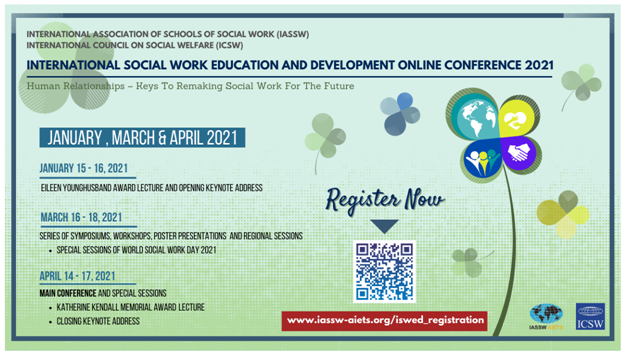
Members of the MIGREC team – Nevenka Žegarac and Natalija Perišić, together with Katarina Lončarević– participated at the conference “Human Relationships – Keys to Remaking Social Work for the Future” organised by the International Association of Schools of Social Work and International Council on Social Welfare with presentation “Co-production of Knowledge for the Protection of Children Affected by Migration: Curriculum Development”, on April 16, 2021.

The Conference was structured around 5 topics: Promoting human relationships, global context and sustainable development; Sustainable Development Goals (SDGs) in fostering human relationships; Social policy to enhance human relationships; Gender and minority issues, and social inclusion and integration; and Challenges and capacities of Social Work Education and Research in promoting human relationships.

Prof. Žegarac pointed to numerous challenges brought up for social work practice by a migrant “crisis”. She pointed that in Serbia, for a relatively short period, social workers had to acquire new knowledge and develop specific competencies to response to the needs of migrant families with children, especially unaccompanied migrant children. Her presentation focused on designing and trial of the process of co-creation of knowledge in the development of social work curriculum in order to equip students and professionals for responding to new vulnerabilities of children in the context of migration.

In order to create a curriculum integrating existing and emerging knowledge and comparative experience, a specific process was designed and implemented. It involved national and international perspectives, achievements and shortcomings from different policies and experiences, social work practice wisdom, gender studies experts’ knowledge focusing on gender based violence (GBV), cultural differences and gender positioning of children in the context of migration. It comprised of review and evaluation of training courses for professionals during the migrant “crisis”; analysis of curricula for social work with migrant children from universities worldwide; mapping and systematization of experiences of social services operating in the migration field in Serbia; and a series of consultations with frontline practitioners, program managers, volunteers, policy makers and migrant children. The main points of the process were framing, designing and leading ethical and inclusive consultations and diligent documenting of the process and its outcomes. Finally, it included verification, reflection and critical review of experiences.


MIGREC at the Conference of International Association of Schools of Social Work and International Council on Social Welfare Read More »

MIGREC’s first Publishing Seminar a success

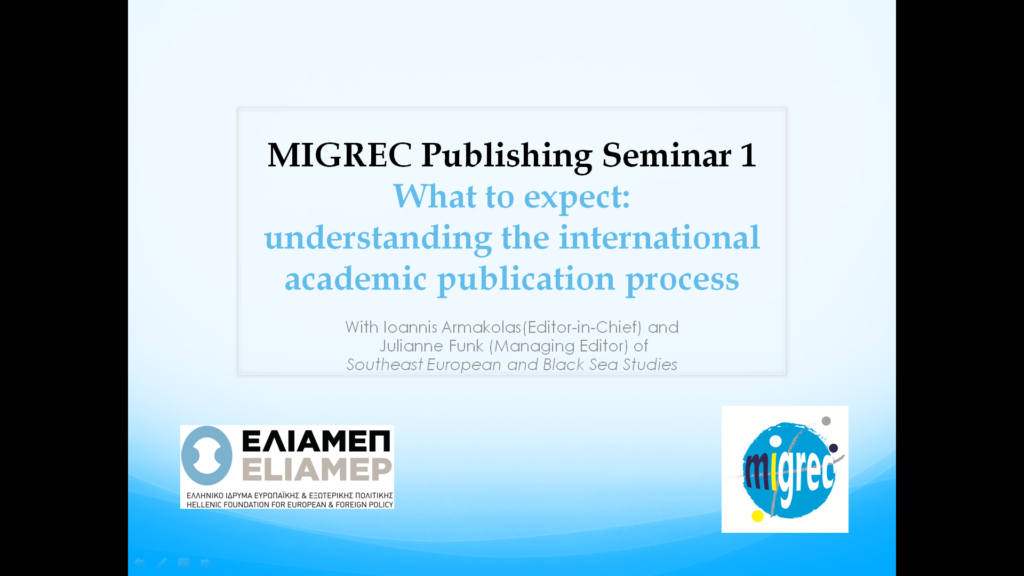
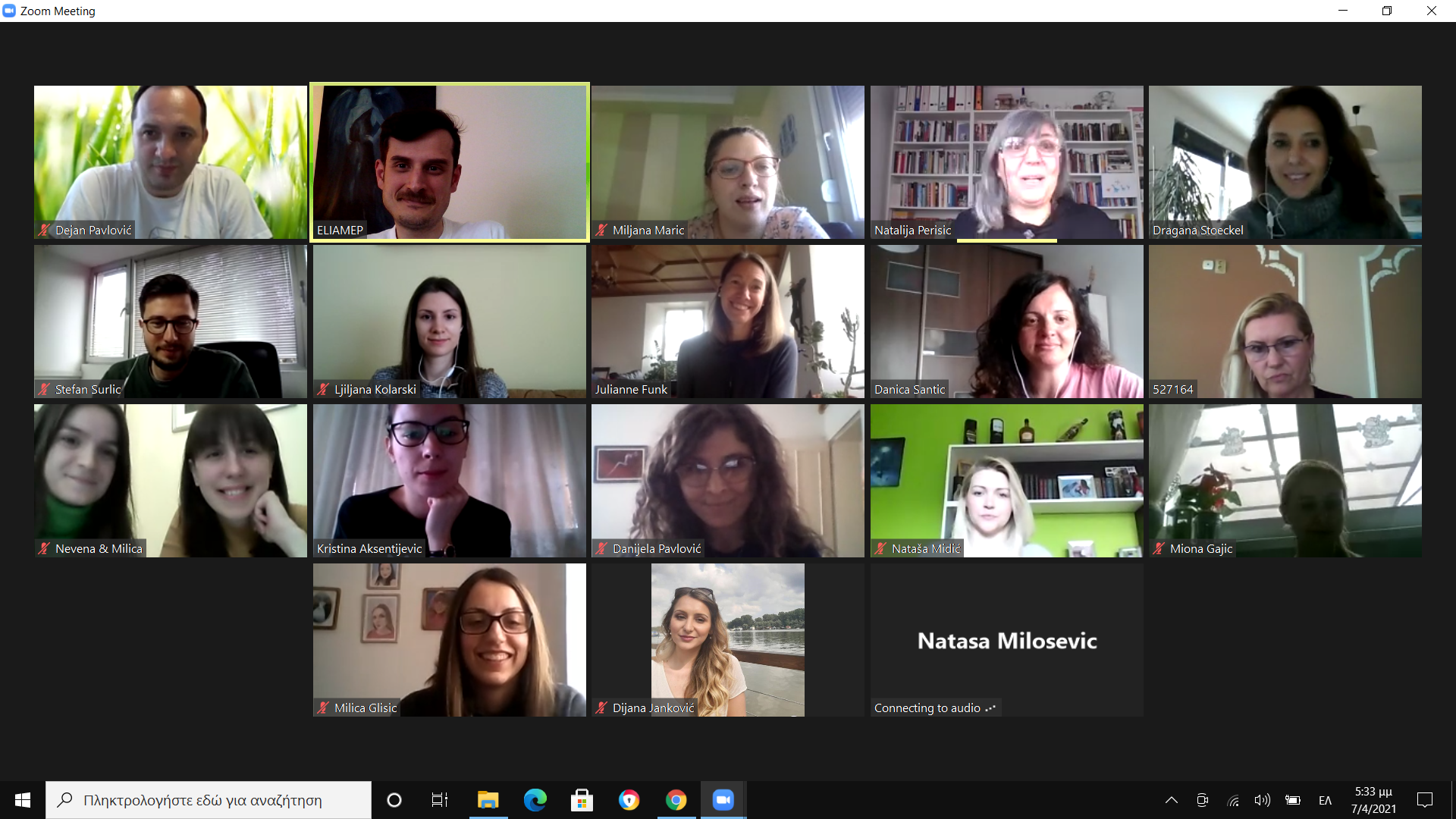
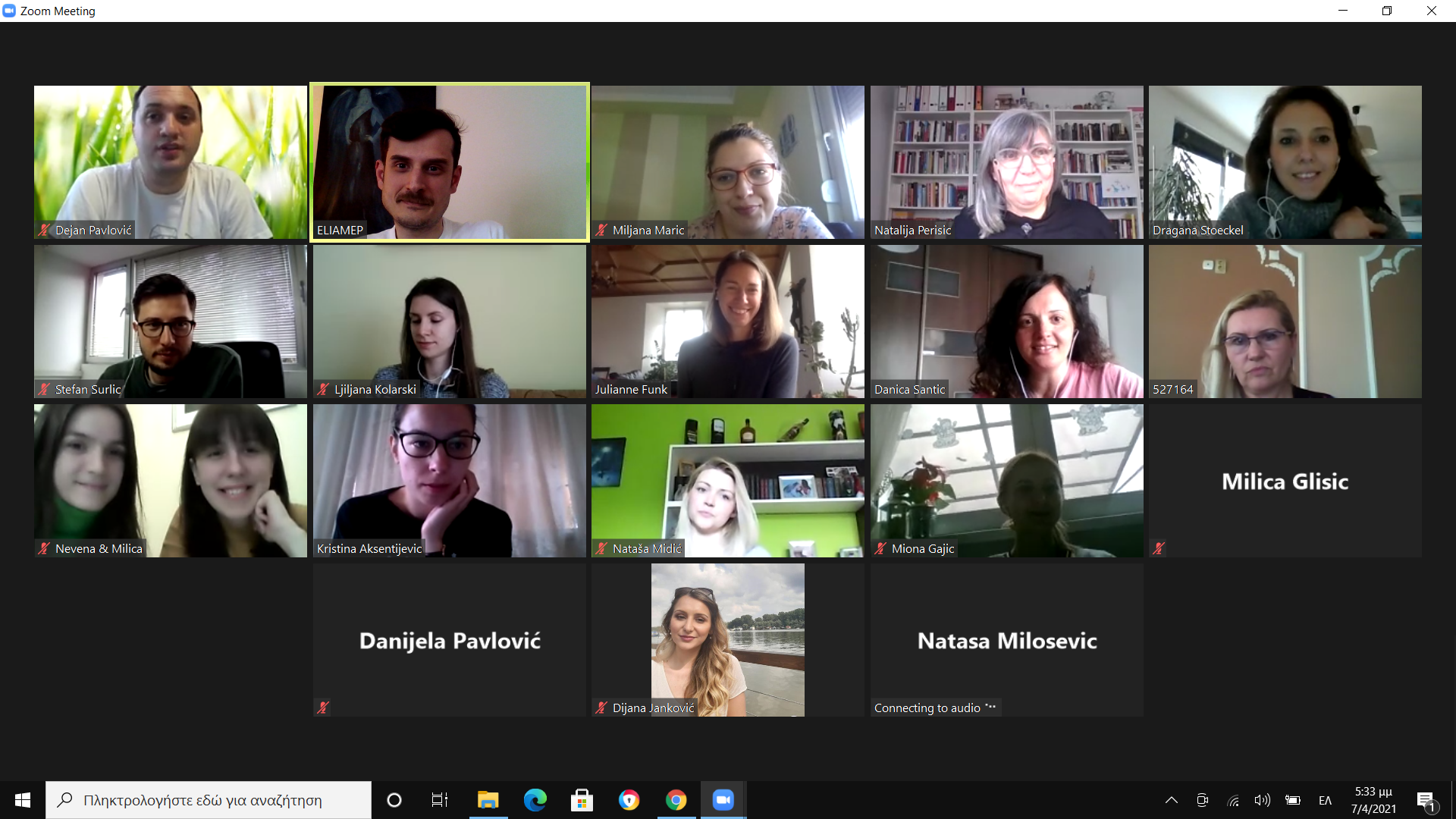
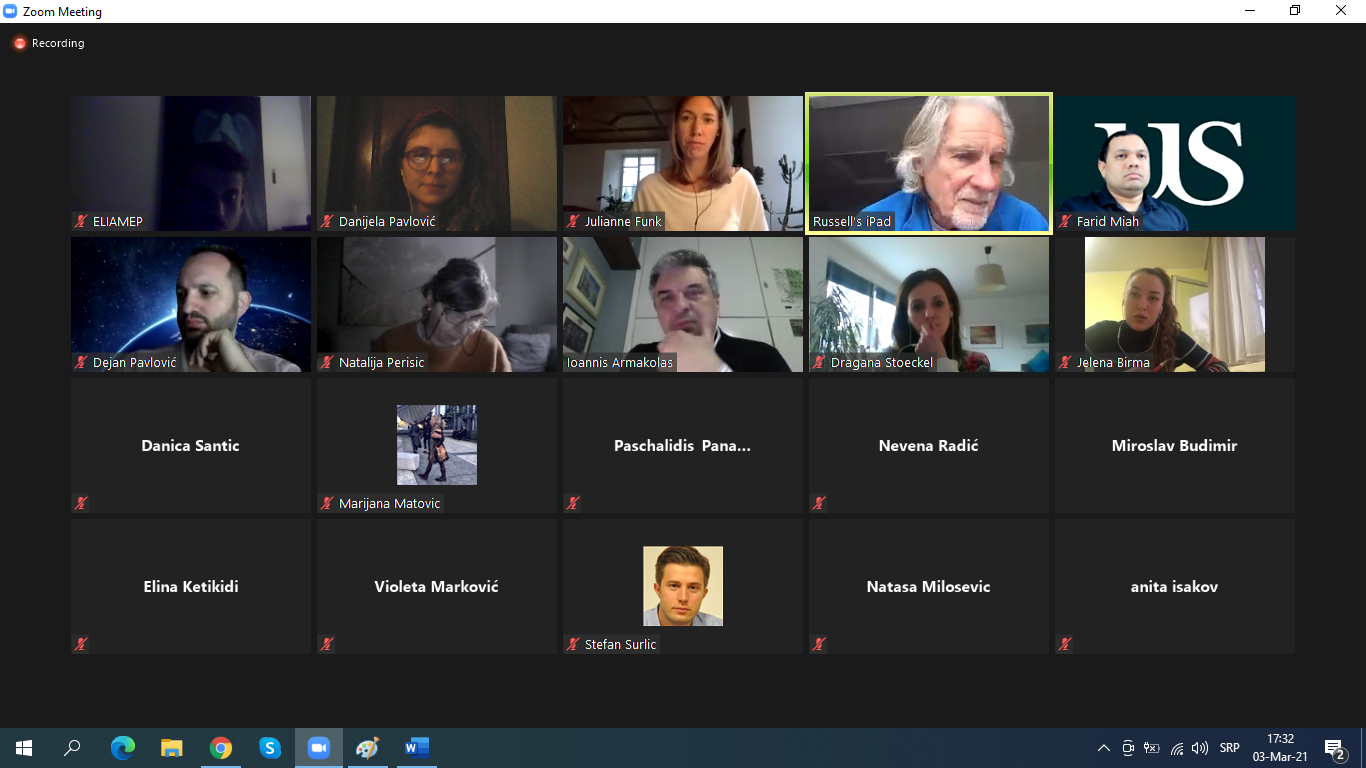
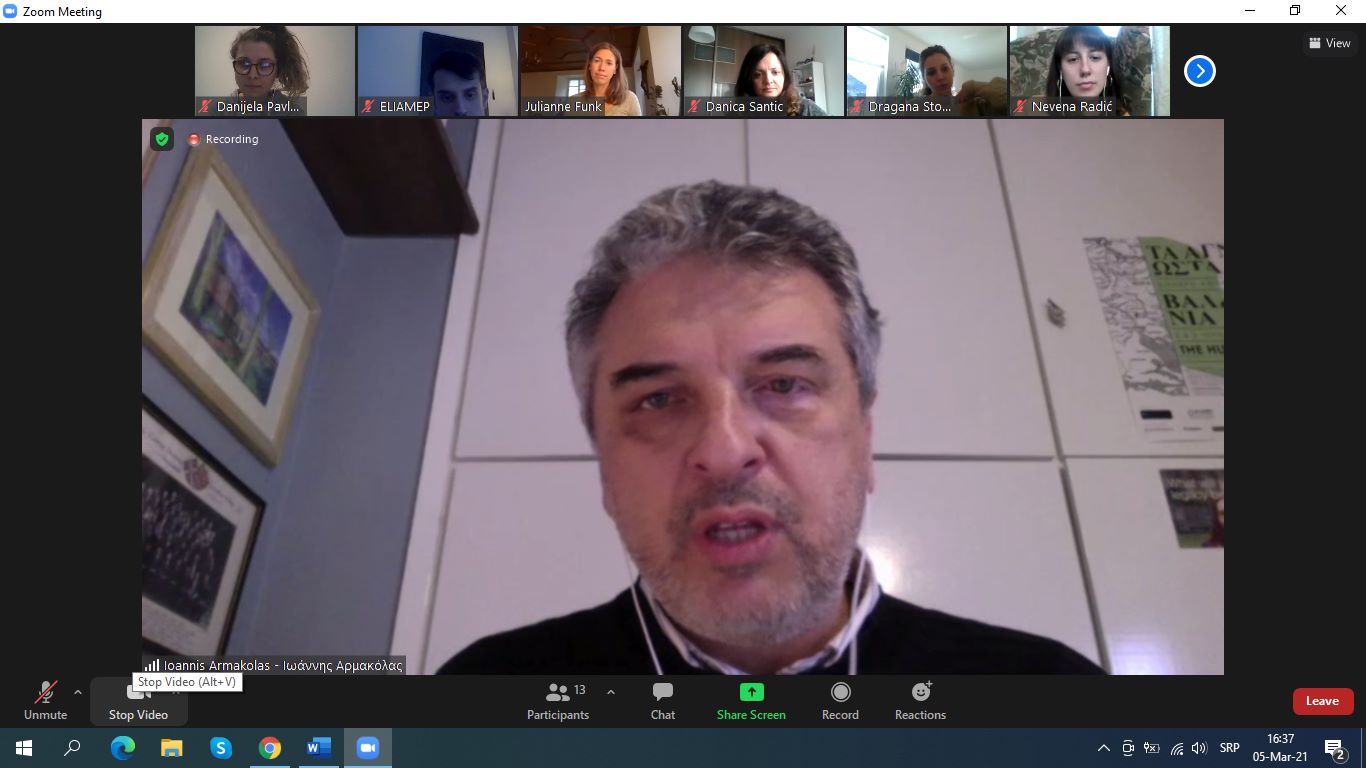
In March and April 2021 the MIGREC project held its first Publishing Seminar on the theme ‘What to expect: understanding the international academic publication process’. The seminar was led by ELIAMEP team members of MIGREC, Drs. Ioannis Armakolas and Julianne Funk, who are also editors of the journal Southeast European and Black Sea Studies (SEEBSS). The four sessions of the seminar were held online and attended mostly by University of Belgrade MA students, PhD candidates and professors, but also other MIGREC team members from ELIAMEP and SEERC. The goal of the seminar was to improve the understanding of the publication process for prominent international scientific journals.

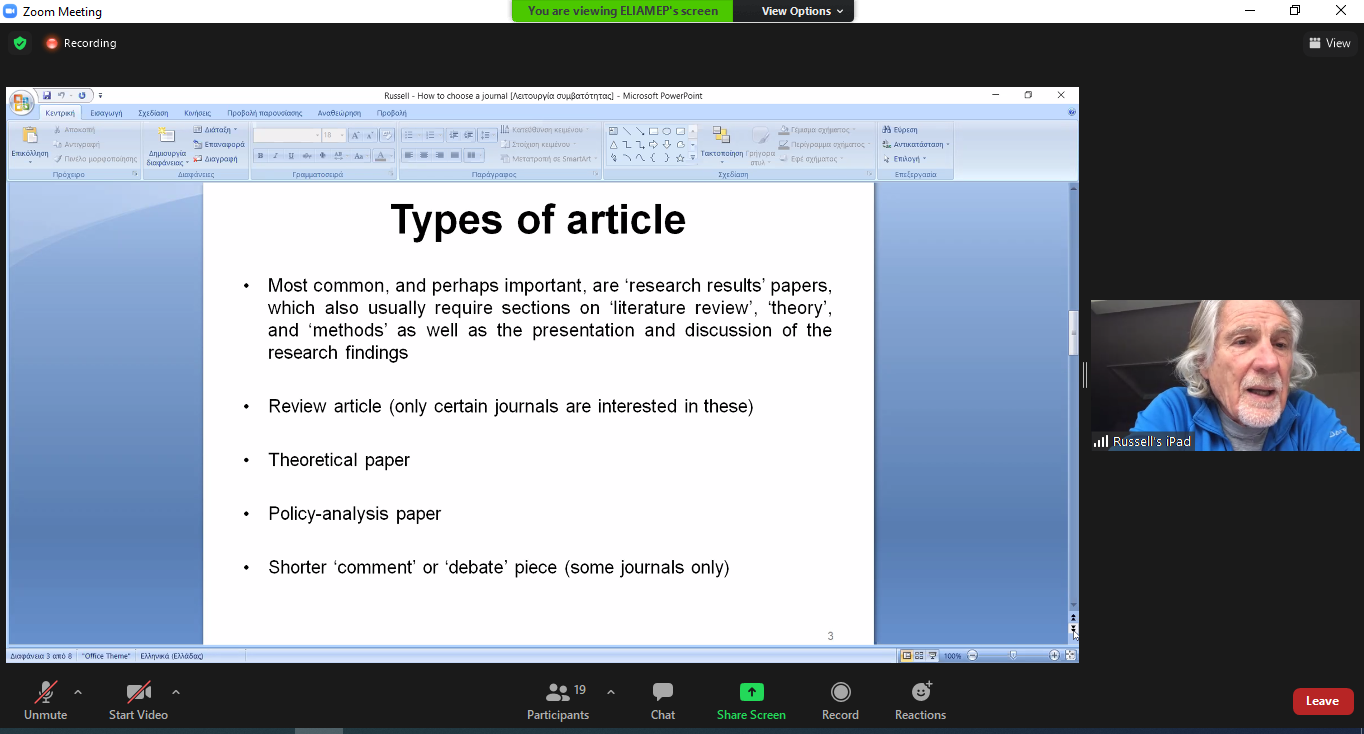
The first and second sessions, on 3 and 5 March, focused on identifying the academic journal that best fits one research article. The first session featured a guest lecturer, Anthropology professor Russell King of the University of Sussex who shared his experience as the editor of the well-known migration journal JEMS. The second session expanded on this excellent foundation to discuss the topic from an area studies perspective, as provided by the Armakolas and Funk, editors of SEEBSS. Topics covered in these sessions included: choosing one’s audience, journal aims and scope that match one’s research, the importance of journal metrics and types of publishing options.

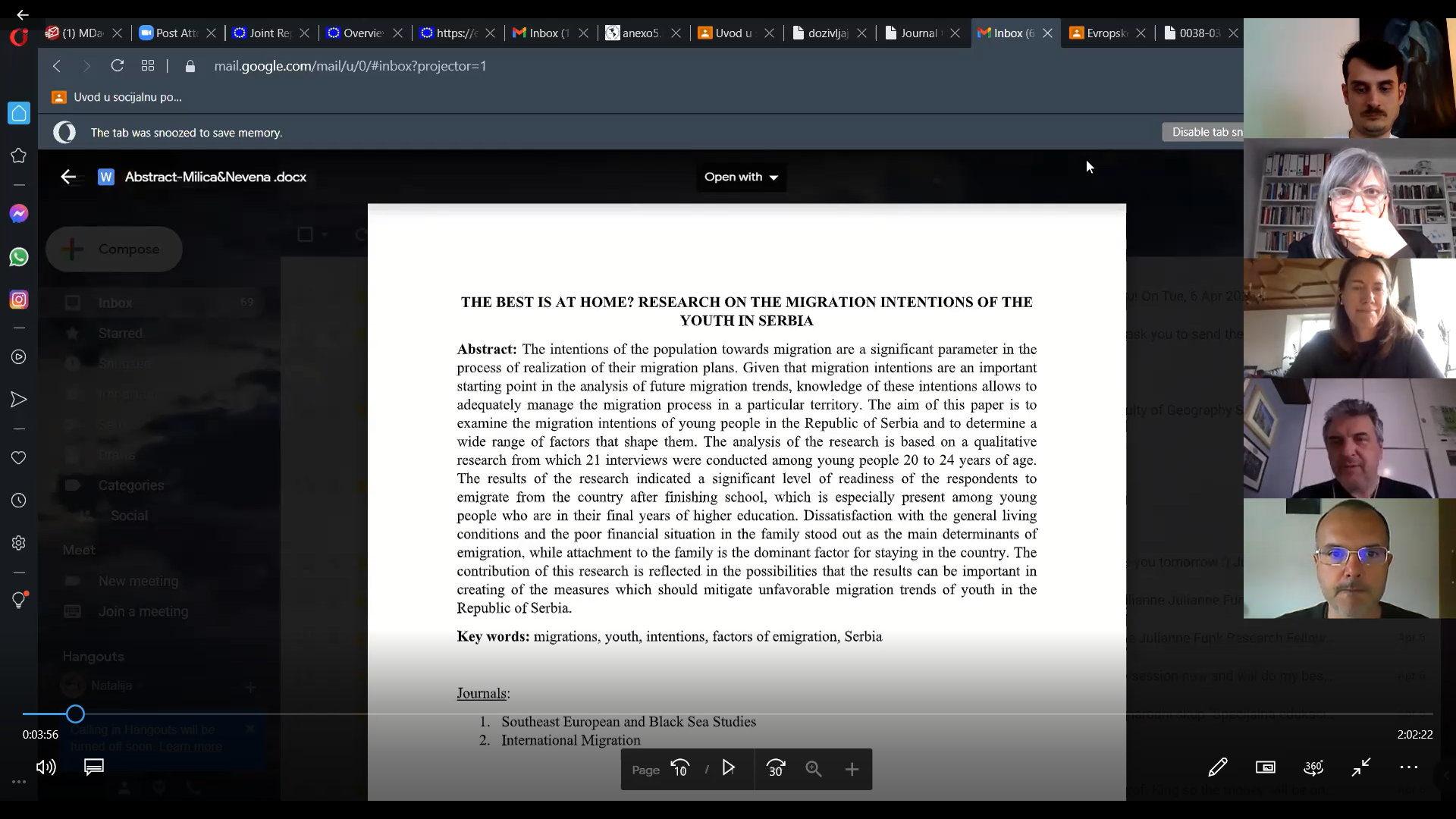
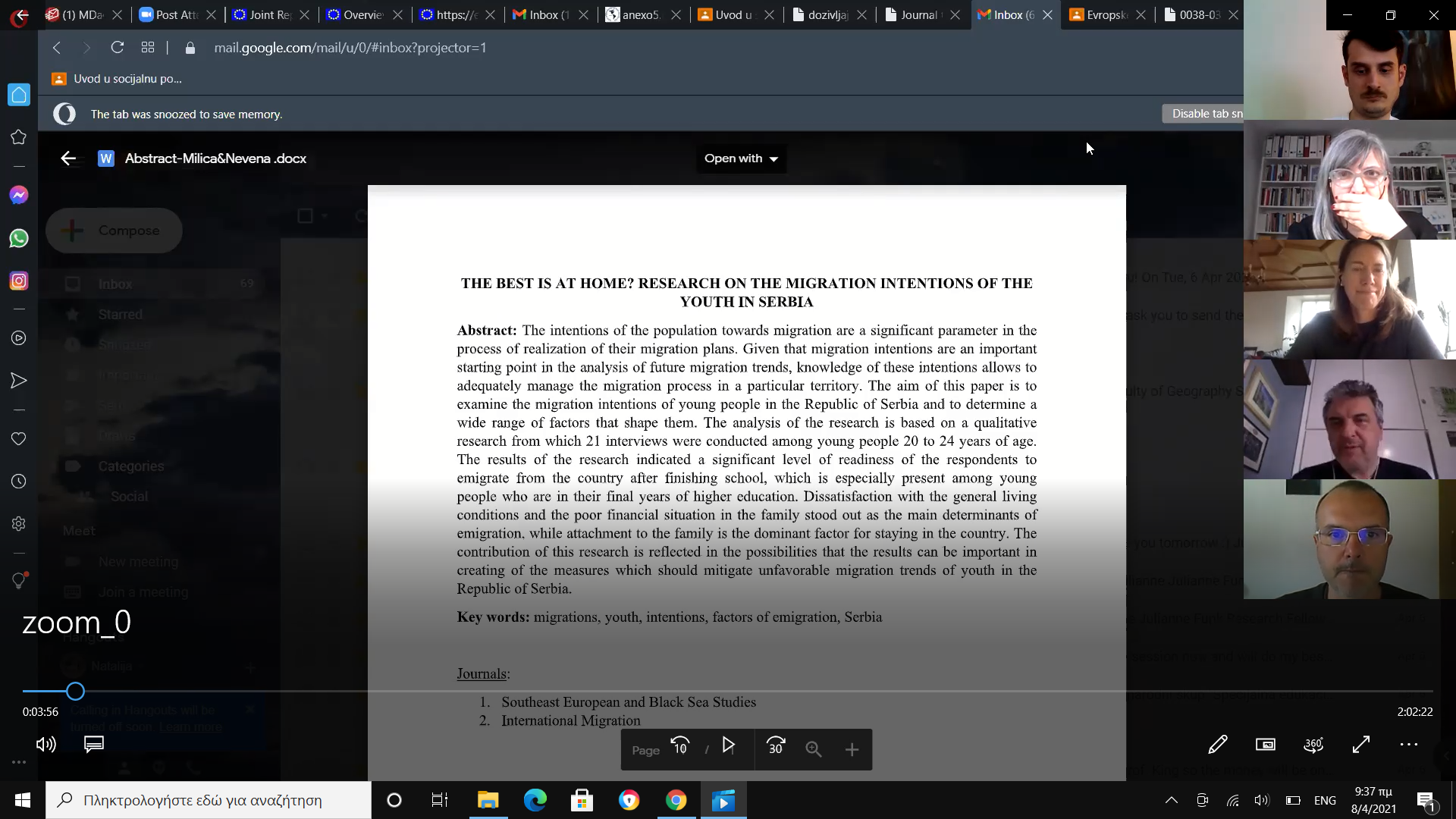
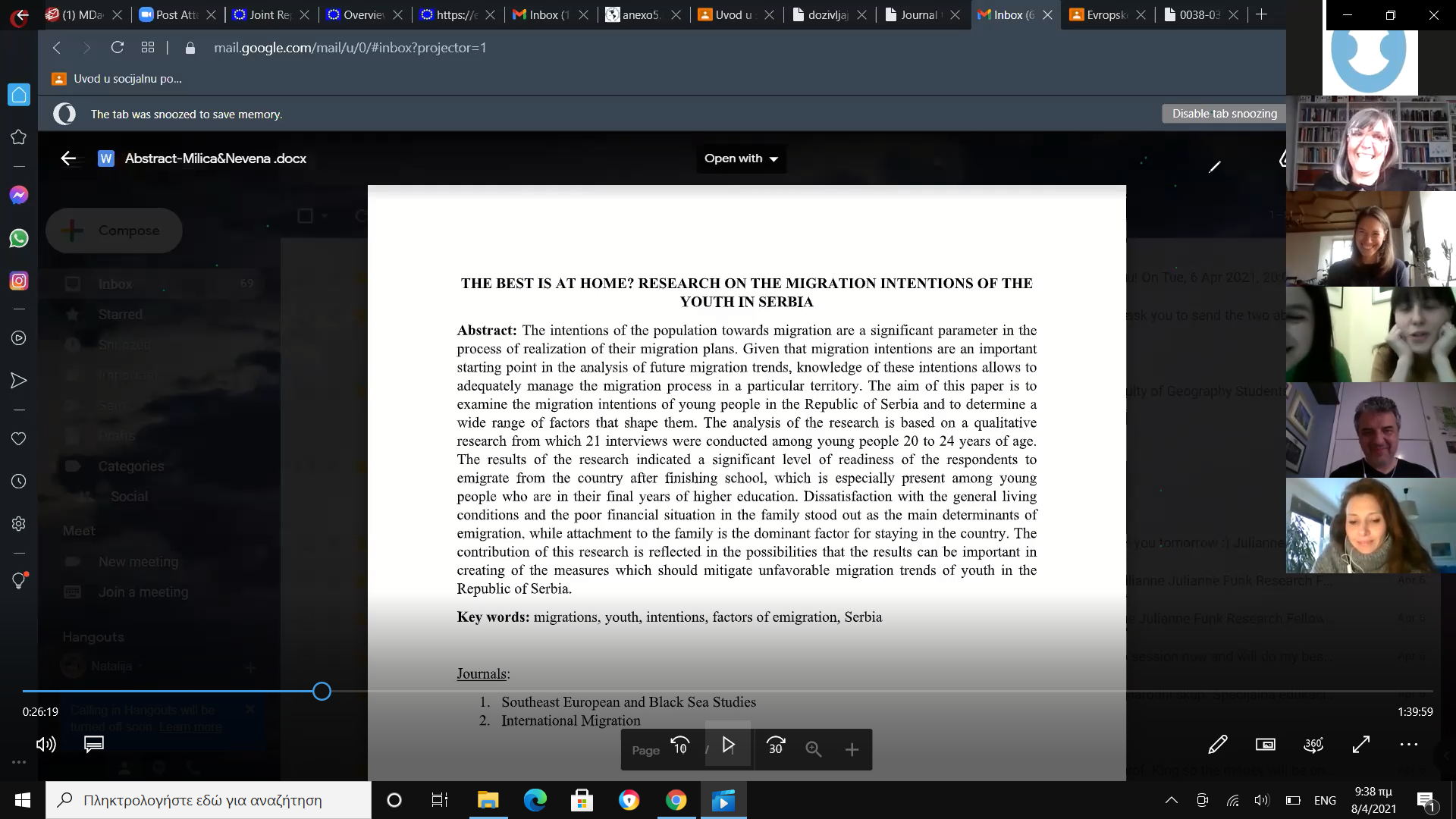
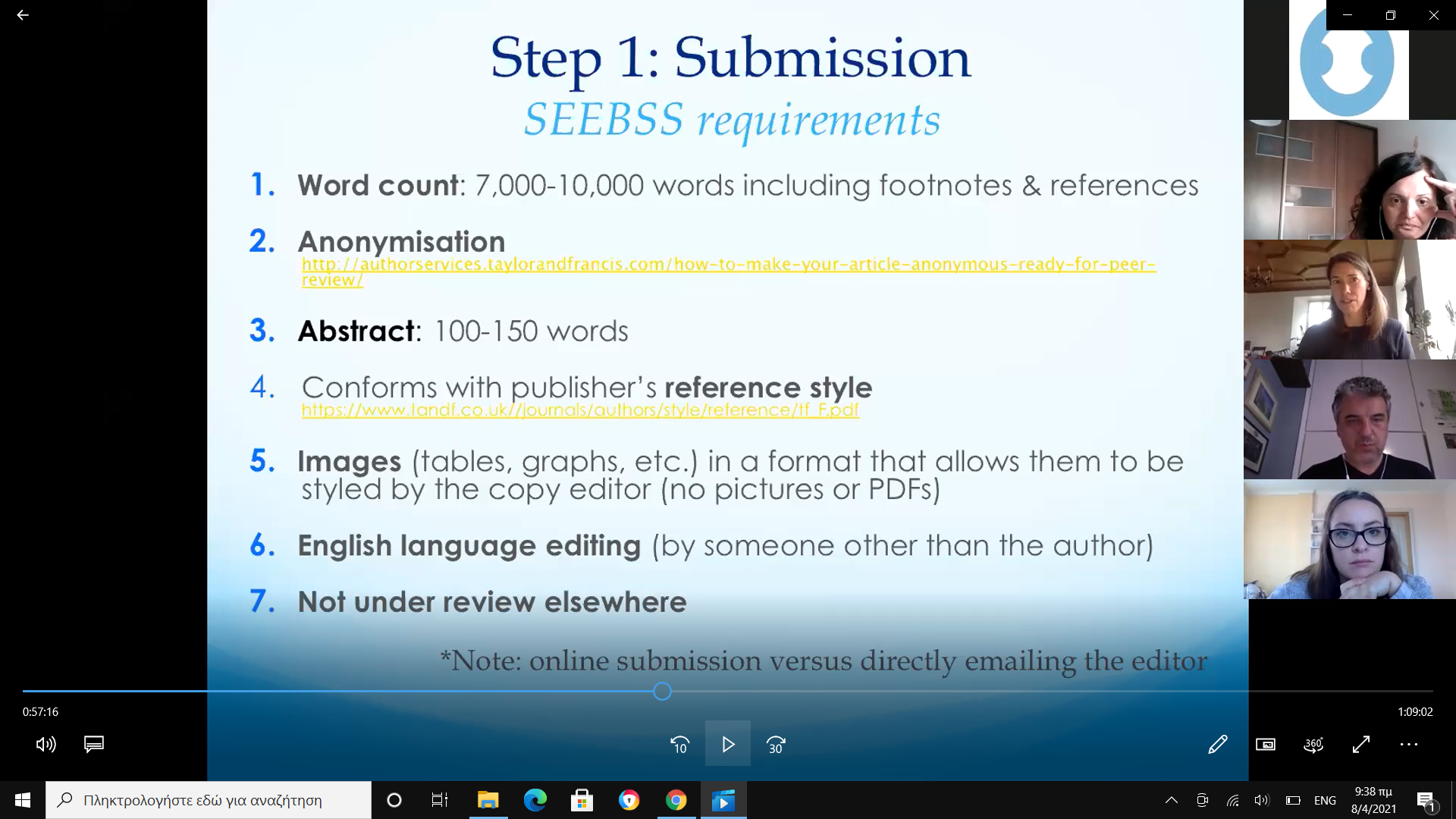
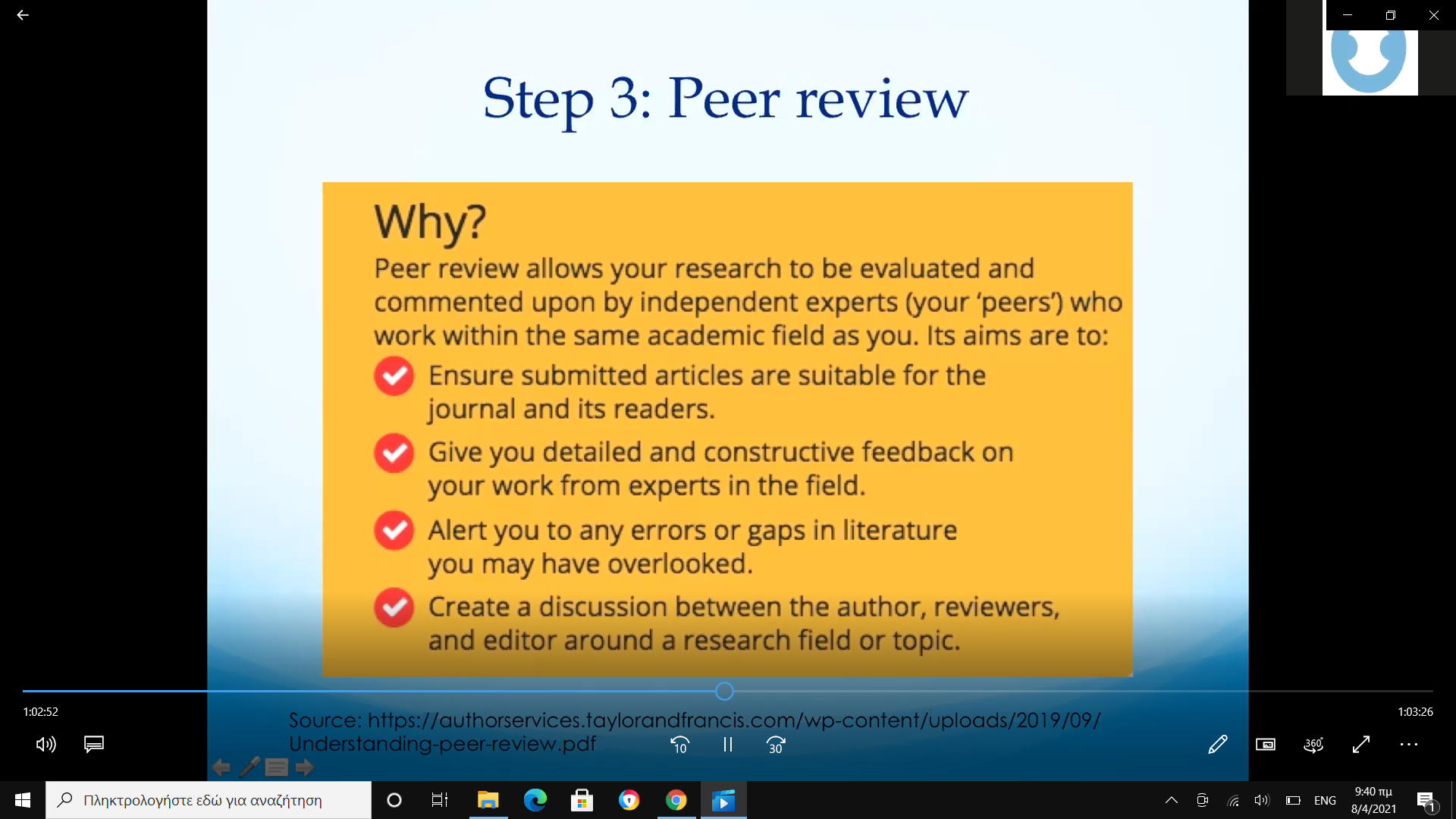
The third and fourth sessions of the seminar, on 31 March and 7 April, provided detailed information about preparing a manuscript to submit to an international journal and what happens to that manuscript while you are waiting, from the perspective of the editors of SEEBSS and other examples provided by participants. The goal of the third session was to give inside tips to students and scholars about crucial elements editors look for in a newly submitted manuscript and how to avoid desk rejection. The fourth session covered how to engage with international journals, including specific submission requirements and instructions for authors, online submission systems, English language copy-editing, and what to expect during the process of peer review towards publication. In both sessions we worked with the titles, abstracts and keywords of students participating, suggesting improvements.

The MIGREC team looks forward to the next Publishing Seminar, to be held hopefully in May / June 2021, ‘Publish or Perish. Marketing your research to reach an international audience’, which aims to grow participants’ capacities to produce more appealing research outputs for prominent international scientific journals.


MIGREC’s first Publishing Seminar a success Read More »