MIGREC at the Conference of Global Campus South East Europe
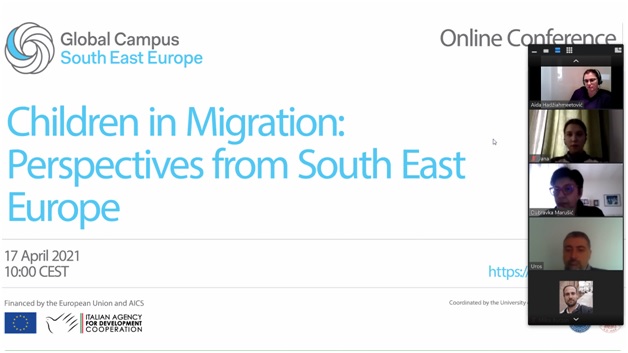
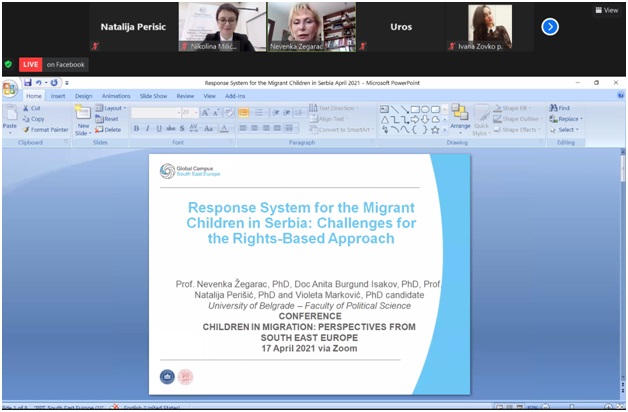
Members of the MIGREC team – Nevenka Žegarac, Anita Burgund, Natalija Perišić and Violeta Marković – participated at the conference “Children in Migration: Perspectives from South East Europe” organised by the Global Campus South East Europe / European Regional Master Programme in Democracy and Human Rights in South East Europe, the University of Sarajevo and the University of Bologna with presentation “Response System for the Migrant Children in Serbia: Challenges for the Rights-Based Approach”, on April 17, 2021.
The conference was a part of the two-year-long project ‘Children in migration in South East Europe’ which aims to strengthen education, research, training, network-building, and advocacy for the rights of migrant and refugee children in South East Europe by producing high-quality research on the topic and disseminating knowledge among students, academia, relevant stakeholders, and the wider public.
The conference focused on presenting and discussing the preliminary findings of research done by 16 researchers from five countries of South East Europe. Research encompasses different issues around children in migration through the region, from identification and arbitrariness of age assessment to guardianship and access to education and integration. The objectives of the conference were to contribute to a mutual understanding of the highest child rights standards enshrined in international and regional mechanisms, as well as to create a space for knowledge exchange between relevant stakeholders, experts and practitioners working directly with children in migration in different countries of South East Europe.
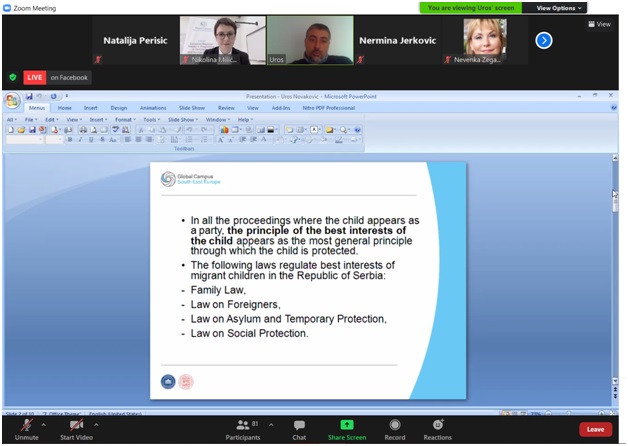
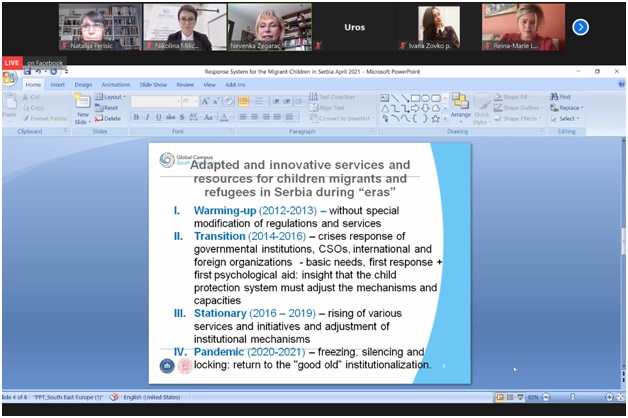
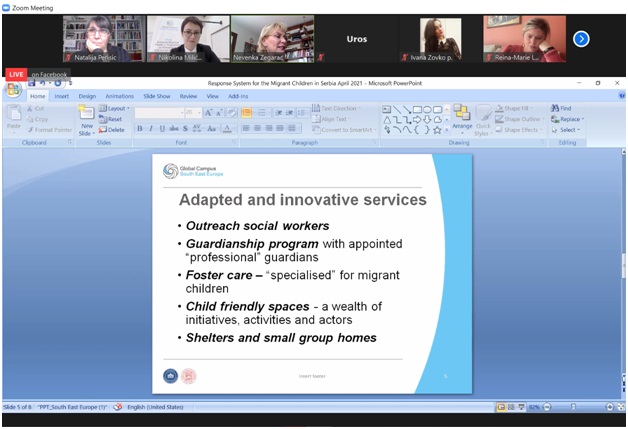
Prof. Žegarac presented her contribution on the challenges for the rights-based approach to migrant children in Serbia. She argued in favour of shifting national responses from migration perspective to child rights-based perspective and the importance of child participation and agency, gender sensitivity and diversity. The development of child centered services in the national context passed different stages to result in some adapted and some innovative services for migrant children. Prof. Žegarac presented in more detail outreach social workers, guardianship programme, foster care, child friendly spaces, as well as shelters and small group homes for migrant children. Finally, she reflected on the availability, accessibility, acceptability and quality of child-rights response. The main conclusions are an unprecedented dose of adaptability and resilience, openness to innovation and the need to respect the rights-based approach, flexible usage of resources, and quick shifts to changing situations, but also the lack of institutional memory of the response system, as well as the absence of an authentic approach based on the rights of children.

MIGREC at the Conference of Global Campus South East Europe Read More »