June 2021

Conference “Strengthening of Cooperation with Business Diaspora”

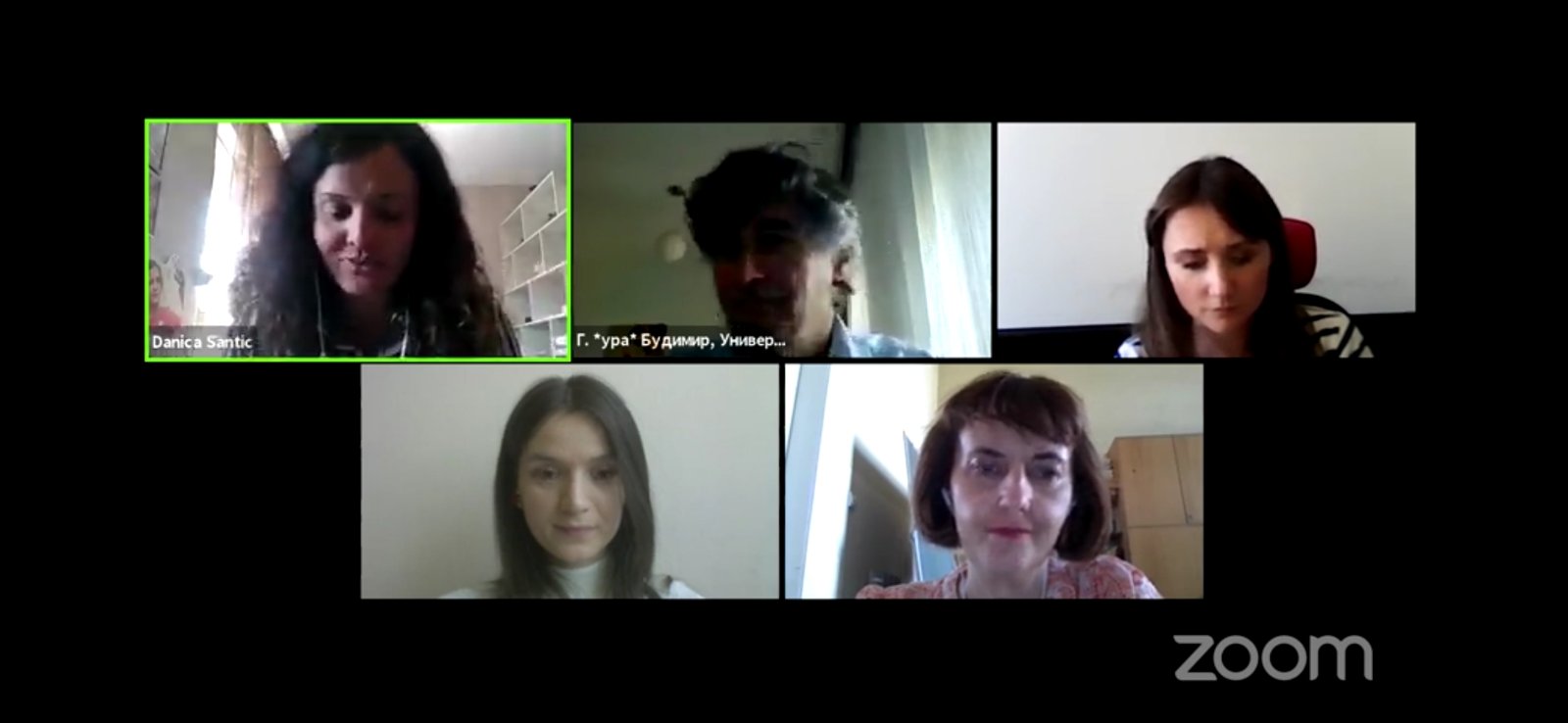
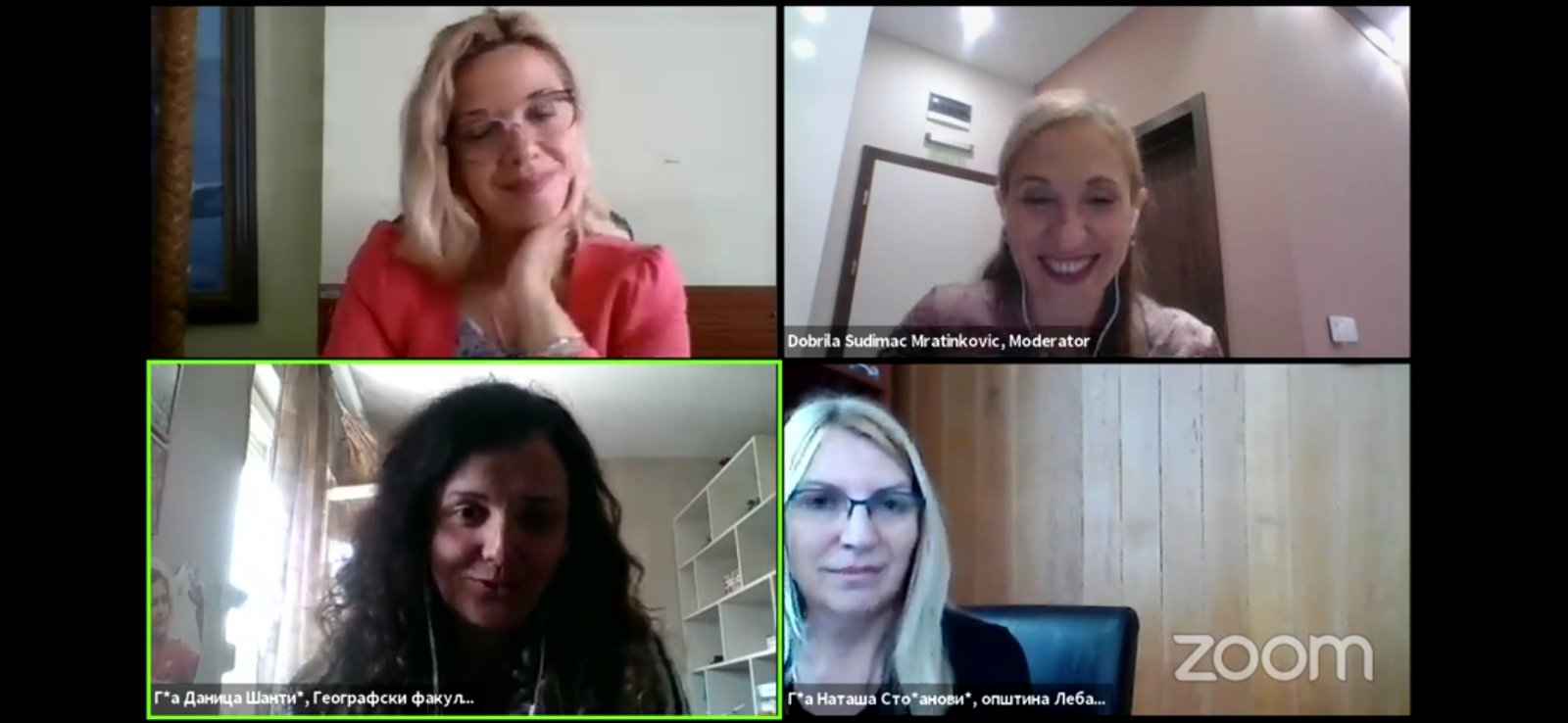
Members of the MIGREC team Danica Šantić and Milica Todorović participated at the conference “Strengthening of Cooperation with Business Diaspora in Austria, Switzerland and Germany” organized by the Link Up! Serbia II Project, financed by the Austrian Development Agency (ADA), through funds of the Austrian Development Cooperation (ADC), and implemented by the International Centre for Migration Policy Development (ICMPD). The conference was held from June 16 to 18, 2021.

The conference was aimed at presenting results of the first year of the Link Up! Serbia II Project implementation, discussion of new modes of cooperation being developed between business diaspora and local self-governments and MFA in Serbia and the new Diaspora Business Hub, online platform – Business Atlas for Diaspora and Serbia. The discussion also included other topics related to enhancing cooperation with diaspora in the German-speaking countries. The list of participants included representatives of the Government of the Republic of Serbia, several embassies in Belgrade, higher educational institutions, media, local self-governments and business diaspora.

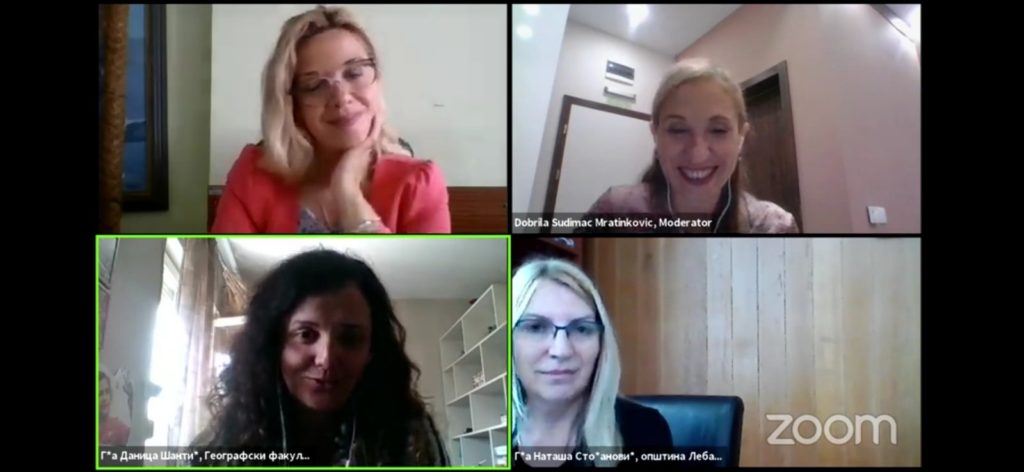
Prof. Danica Šantić participated as a moderator, whereas Milica Todorović, MA, was one of the panellist at the session devoted to steps for improving grants for successful realization of diaspora potentials. Participants at the session discussed projects and grant support schemes in the context of successful realization of diaspora potential, limits or challenges to its achievement and possibilities to overcome them. One of the session’s topic was how to lay the foundation or, if such foundation already exists, how to “scale up” the cooperation for yielding significant changes in broader eco-system in Serbia.

Prof. Danica Šantić also participated in the session dealing with business and research as developmental format of Diaspora Days. Within this session, the participants discussed important topics of cooperation with diaspora and challenges and obstacles at local and regional levels. The significance of the Diaspora Days was stressed as an opportunity and occasion for professional and academic communities from Serbia and diaspora to gather at an academic conference in order to offer ideas and solutions for all challenges accompanying local development.

Conference “Strengthening of Cooperation with Business Diaspora” Read More »

MIGREC at the conference „Innovation and Resilience“

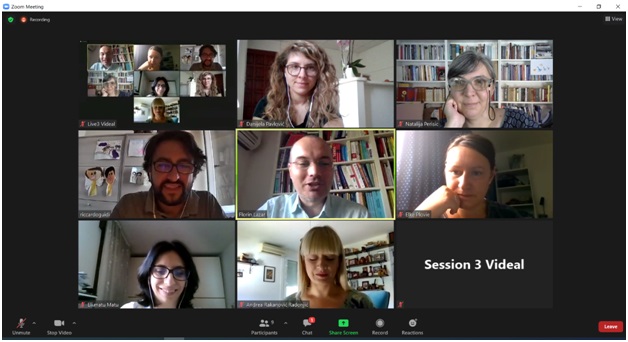
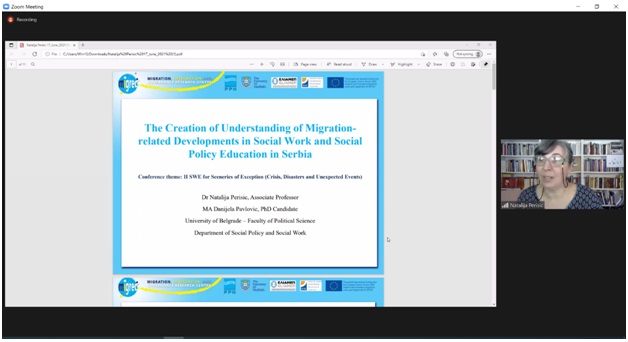
Members of the MIGREC team, Natalija Perišić and Danijela Pavlović, participated on June 17, 2021 at the conference „Innovation and Resilience: Preparedness of Social Work Education in Uncertain Times“ organized by the European Association of Schools of Social Work and the University of Tallinn with presentation „The Creation of Understanding of Migration-related Developments in Social Work and Social Policy Education in Serbia“.

The conference was structures around six topics:

  1. Lifespan and Social Work in an Era of Innovation
  2. Social Work Education for Sceneries of Exception (Crises, Disasters and Unexpected Events)
  3. Post-Traumatic Approaches in Social Work
  4. Innovative Social Work Teaching Practices Involving Service Users
  5. Innovative Skills for Social Work Practice with Distressed Groups: Migrants, Refugees, War and Conflict Victims and Health Crises Victims
  6. Social Work Ethics in Times of Uncertainty: Balancing Innovation and Tradition

Professor Perišić showed that the influence of various kinds of migration on Serbian society was deep. She pointed out that the migration trends were diverse: forced and voluntary, regular and irregular, internal and external. It is reasonable to expect that all this will be enhanced in near future. As the result, she mentioned the necessity for stronger support to vulnerable population and the need for reshaping the developmental concept of the society. Her presentation focused on the impact of the MIGREC project on emerging understanding of migration-related developments in education for social work and social policy in Serbia.

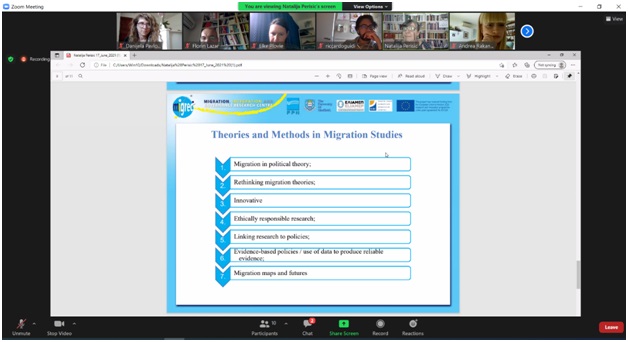
In addition, the presentation contained the thematic fields of the project: integration of migrants, migration governance, development and migration nexus, theories and methods in migration studies and knowledge, discourses and representation of migrants. Prof. Perišić pointed out that researching each of the thematic fields and putting them within the research centre to be developed within the project would lead to development of theoretical, practical and political knowledge and understanding of importance for education in social work and social policy at the doctoral studies level.


MIGREC at the conference „Innovation and Resilience“ Read More »

IMISCOE PhD Network Presentation Series

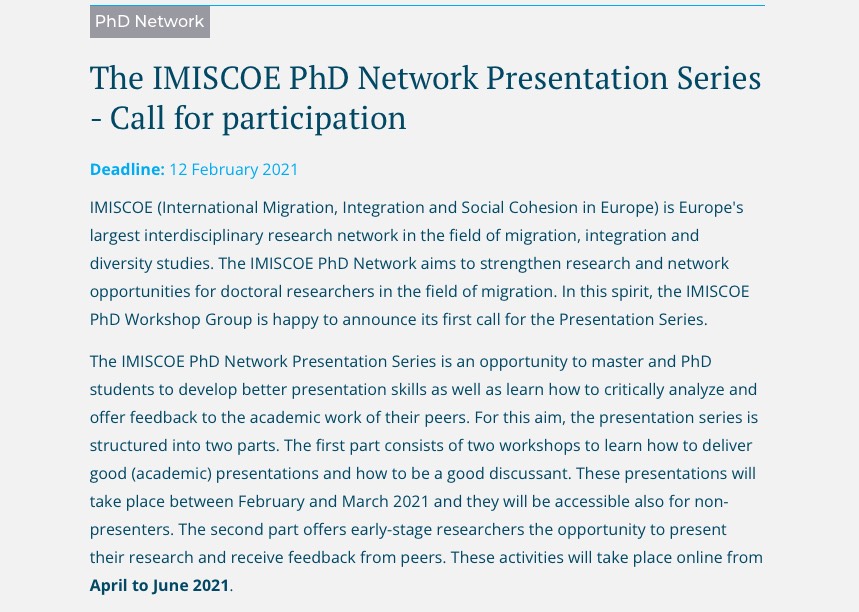
A member of the MIGREC team participated in the IMISCOE PhD Presentation Series which was held during April, May and June 2021. This Presentation series was focused on PhD students and young researchers, with the aim to develop better presentation skills as well as learn how to critically analyze and offer feedback to the academic work of their peers. The presentation series was structured in two parts: it started with lectures for PhD candidates and young researchers on how to deliver good presentations and how to participate in the discussion; the second part consisted of young researchers and PhD students presenting their work and getting feedback from their peers and professors.

Violeta Marković, PhD candidate at the Faculty of Political Science of the University of Belgrade participated in both parts of this Presentation series. In the second part she presented her PhD proposal on June 15, 2021 as part of the Children and Migration series. Her presentation was on Child labor among unaccompanied and separated children refugees and migrants on their journey from countries of origin to the Republic of Serbia. She pointed out that the risk of children being exposed to child labour abuse is high, given that migration itself contains all those elements that are otherwise defined as risks of children being exposed to this type of abuse: poverty, irregular school attendance, parental unemployment, etc. Based on three theoretical approaches: child protection, advocacy and resilience, the objective of this research was to determine and systematize the characteristics of child labour and the experiences of unaccompanied and separated children with protection systems mandated to protect children from child labour on their journey from the country of origin to the Republic of Serbia and in Serbia. She pointed out that in order to do this, she will be using a mixed research design, combining qualitative and quantitative research methods. The data in the research will be collected in two ways – through a questionnaire with social protection professionals and focus groups and interviews with stakeholders and unaccompanied and separated children and youth. She is hoping for the research to have a wider impact on society, practice of protection of children and that new scientific knowledge will provide basis to improve the protection of children affected by child labour abuse, especially in transit countries.

IMISCOE PhD Network Presentation Series Read More »

MIGREC at the IMISCOE PhD Network Presentation Series

Member of the MIGREC team, Danijela Pavlović, participated at the IMISCOE PhD Network Presentation Series aimed at enhancing research capacities for PhD candidates in the field of migration. IMISCOE offers to PhD candidates an opportunity to develop better presentation skills and learn how to critically analyze academic work of their colleagues and give appropriate feedback. To that end, the presentation series was structured in two parts. The first part consisted of two workshops with lectures for PhD candidates – how to deliver good (academic) presentations and how to be successful in discussion. The second part encompassed researchers’ presentations in early phase, giving them an opportunity to present their work and get feedback from their colleagues.

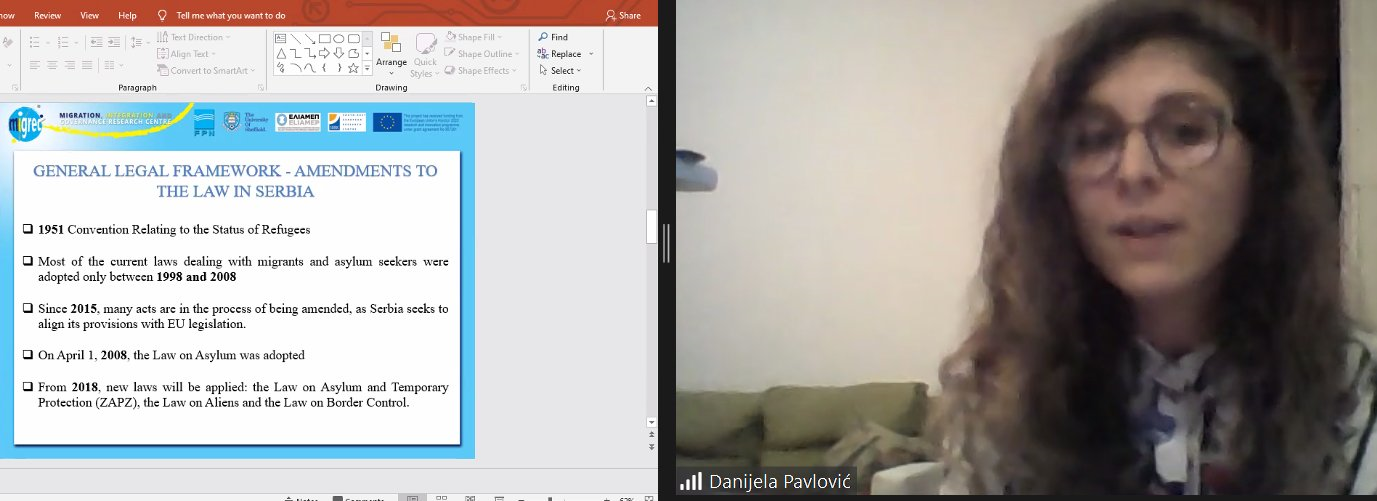
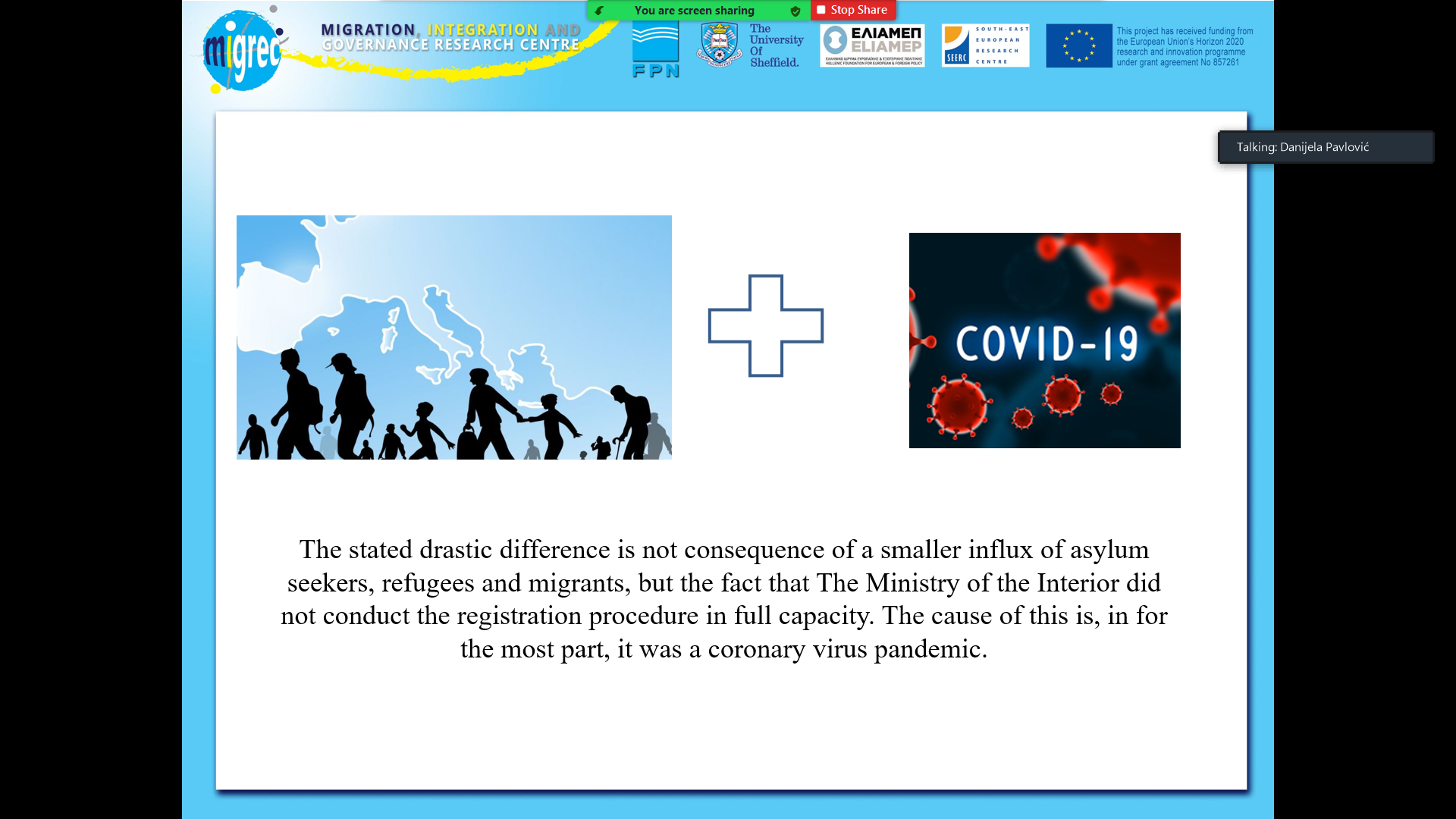
Danijela Pavlović spoke on May 20, 2021 about the asylum policy and challenges to and responses of the system in the Republic of Serbia, with a reference to the challenges brought by the Covid-19 pandemic. She pointed out that on their routes migrates were meeting national systems which did not recognize their requests and rights, thus making them an invisible and extremely vulnerable category of population. She stressed that the asylum system in Serbia started to be implemented on April 1, 2008, with the adoption of the Law on Asylum, but that prior to the this moment Serbia neither had a functional system of asylum protection nor the state authorities had experience in this field. Danijela Pavlović spoke about the most important novelties in 2018 and the adoption and implementation of new laws: Law on Asylum and Temporary Protection, Law on Foreigners and Law on Border. She pointed out that persons with approved right to asylum enjoy legal guarantees for rights to accommodation, stay, health care, freedom of movement, education, legal and social aid, access to labour market and assistance in integration. The adoption of new law indeed created prerequisites for improvement of asylum system in Serbia; however, on the other hand there are problems which professionals keep facing with in working with migrants. The author said that registration of asylum seeker and acceptance of new asylum requests had been stopped during the pandemic. In this period, migrant policies were carried out in accordance with conditions of global health and economic crises, which the Republic of Serbia was no exception whatsoever.


MIGREC at the IMISCOE PhD Network Presentation Series Read More »