

MIGREC Seminar Series – Migration Governance
The second set of workshops in the MIGREC series focused on migration governance and spanned from April to May 2021 to include eight speakers. It sought to engage an exciting interdisciplinary group of external scholars whose work speaks directly to the themes of MIGREC. The speakers covered the global context of migration governance, crises and migrant solidarities and also touch upon the geographical focus. Most important however, was the opportunity for Belgrade team members to present their work, obtain feedback and continue the dialogue from the last workshop series.
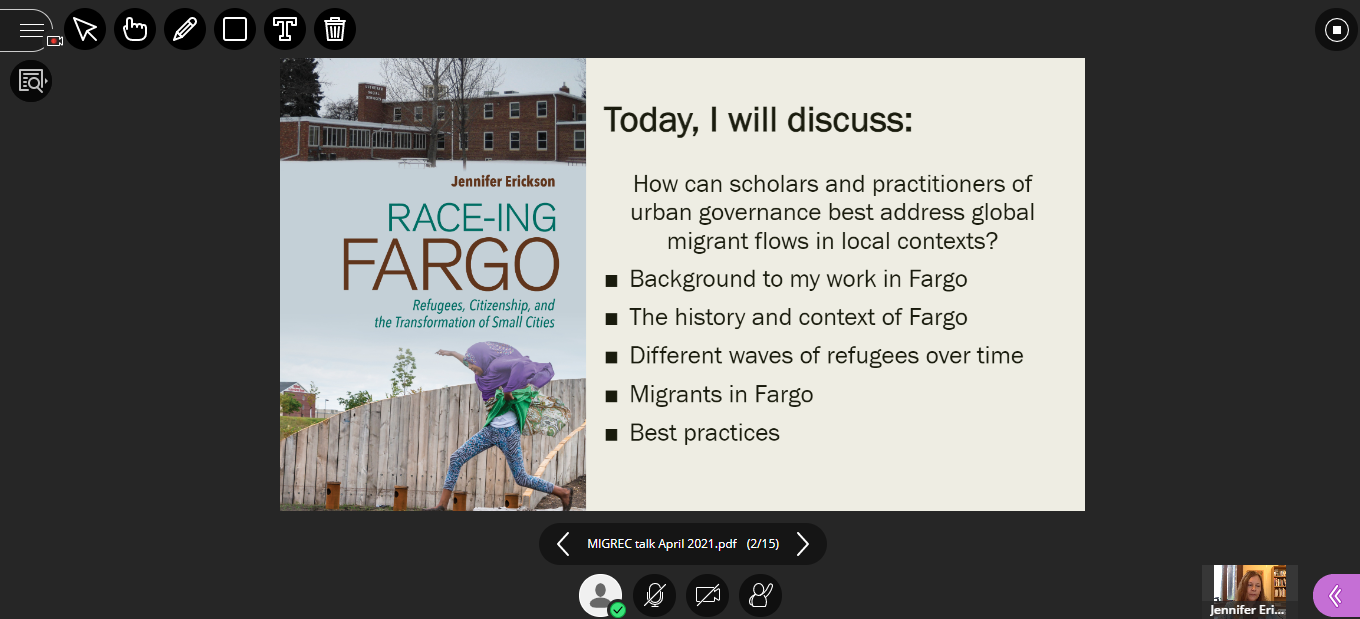
Jennifer Erickson, an Associate Professor and Assistant Department Chair of Anthropology, affiliated faculty member in Women’s and Gender Studies and African American Studies, and a member of the steering committee for the Association of American University Professors at Ball State University in Muncie, Indiana, presented her chapter ‘Race-ing Fargo: Mobility, Context, and Global Refugee Flows’. In her talk, prof. Erickson examined refugee resettlement to Fargo, North Dakota, a small city in the United States. She highlighted the ways in which global political, economic and cultural structures, such as (post)colonialism and (post)socialism, flow through and intersect with local histories, norms, and practices.
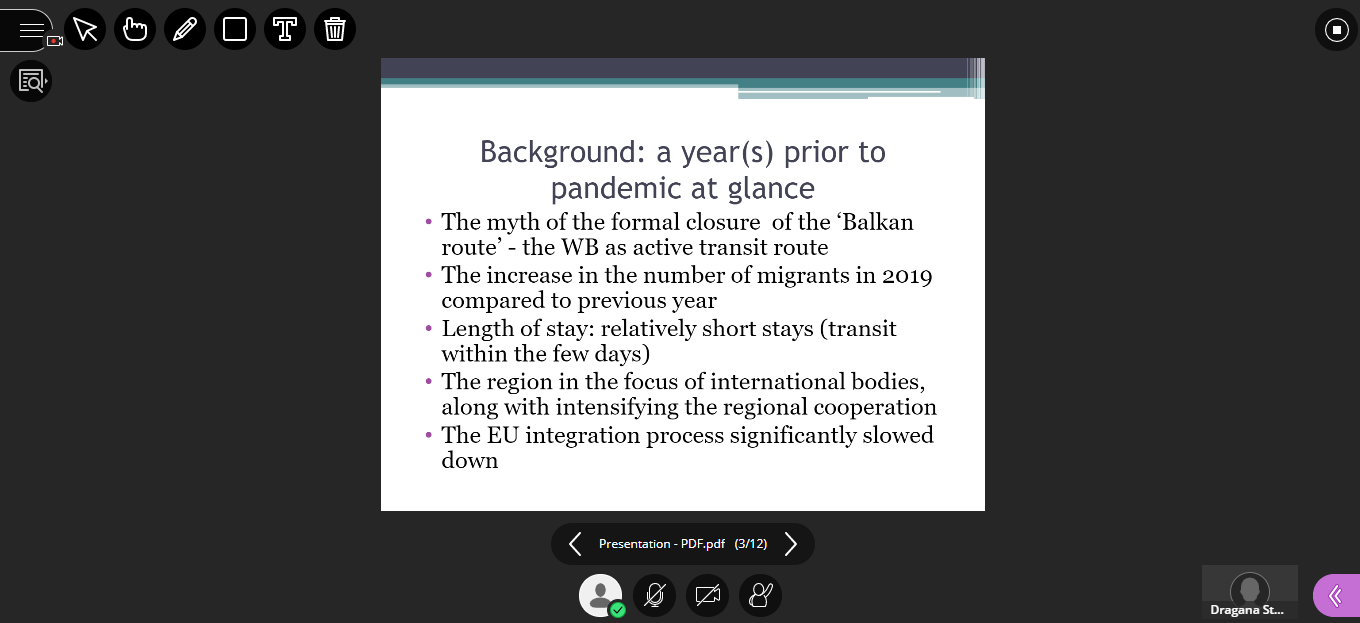
Dragana Stoeckel, an Assistant Professor at the University of Belgrade – Faculty of Political Science presented ‘Stranded migrants on the Balkan route in the Covid-19 era: selectivity in border management on the way to European Union’. She pointed that the coronavirus pandemic had caused a global health crisis with large-scale and far-reaching consequences which are deteriorating an already existing migrant crisis. The Covid-19 prevention measures, aimed at restricting the movement, increased health risk for migrants, led to many incidents in/around the camps, but also to mistreatment of the migrants by border officers, police and military staff and “pushbacks”.
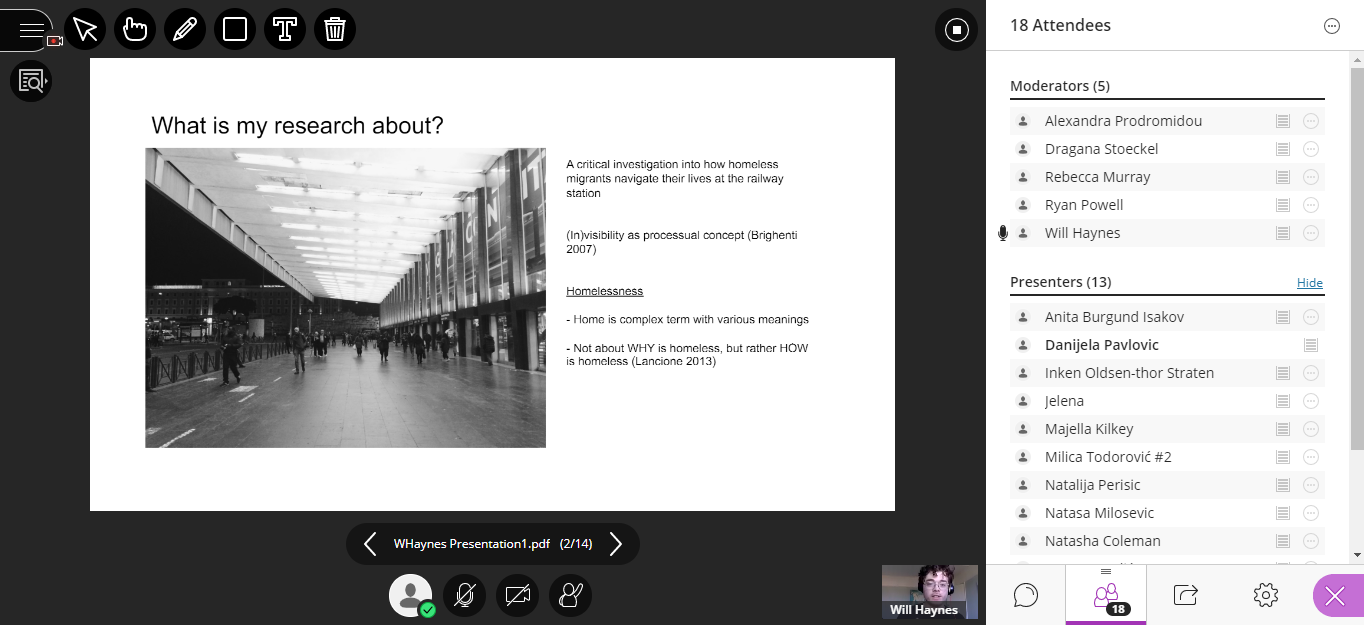
Will Haynes, a PhD Candidate from the University of Sheffield presented his work ‘The railway station as a key site of mobility for homeless migrants in Rome’. Building on debates around Europe’s spaces of exclusion and urban marginality, he investigated into how homeless migrants navigate their lives within an essential and multi-faceted urban transit space: the train station in Rome.
Suzanne Hall, an interdisciplinary urban scholar from the London School of Economics presented ‘The Migrant’s Paradox: edging against the state of contradiction’. She showed that a migrant is a person required and refuted by Western sovereignty. To inhabit this impossible dualism requires living with a steadfastly unstable status, readily questioned at the onset of national elections or economic crises, while tenuously embraced under the banners of celebratory multiculturalism.
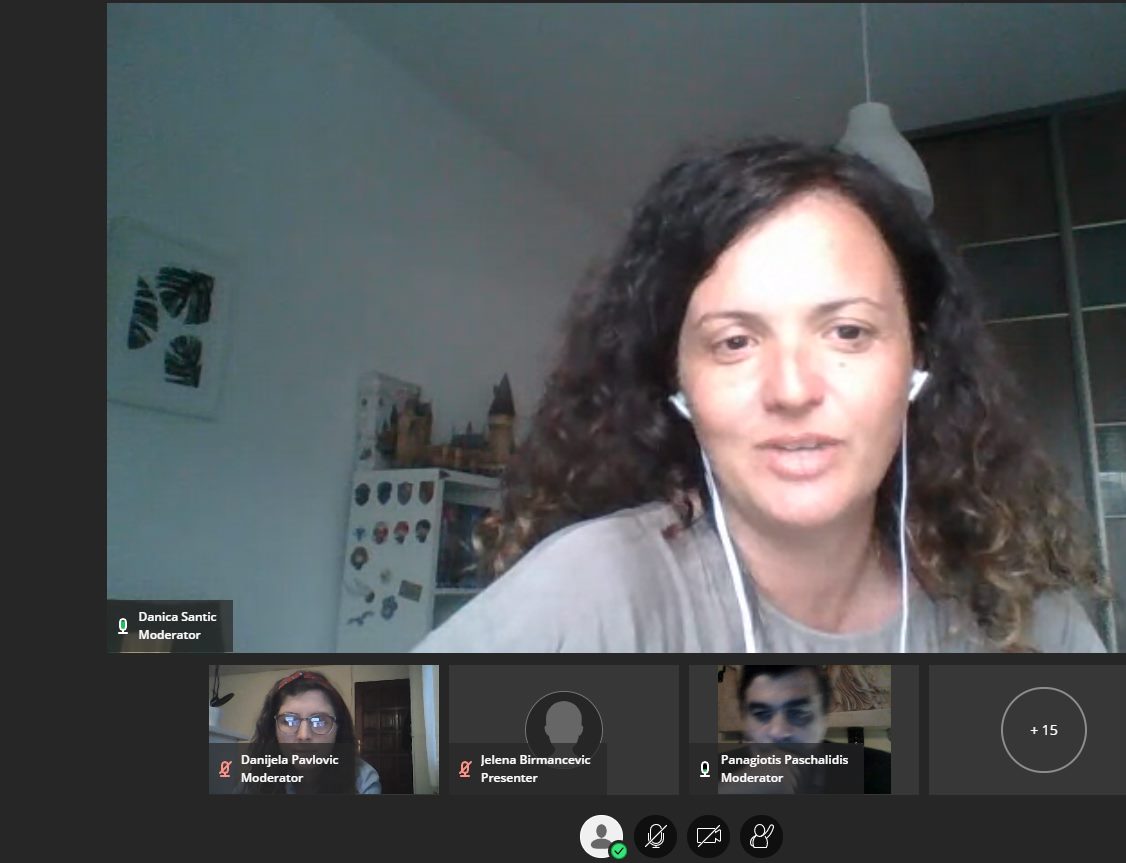
Danica Šantić, an Associate Professor at the University of Belgrade – Faculty of Geography, presented ‘Policy coherence on Migration Governance in Serbia’. Her overview provided an analysis of existing policies, strategies and practices in the field of migration governance at the national level, and identifying national priorities with references of the legal and policy frameworks for migration regulation and governance.
Danijela Pavlovic, a PhD from the University of Belgrade – Faculty of Political Science, presented ‘Asylum Policy Governance in the Republic of Serbia’. She pointed out that the government and civil society organizations have developed various services to ensure the effectuation of the rights of asylum seekers and analysed the asylum policy with a focus on the existing normative and institutional framework in this area.
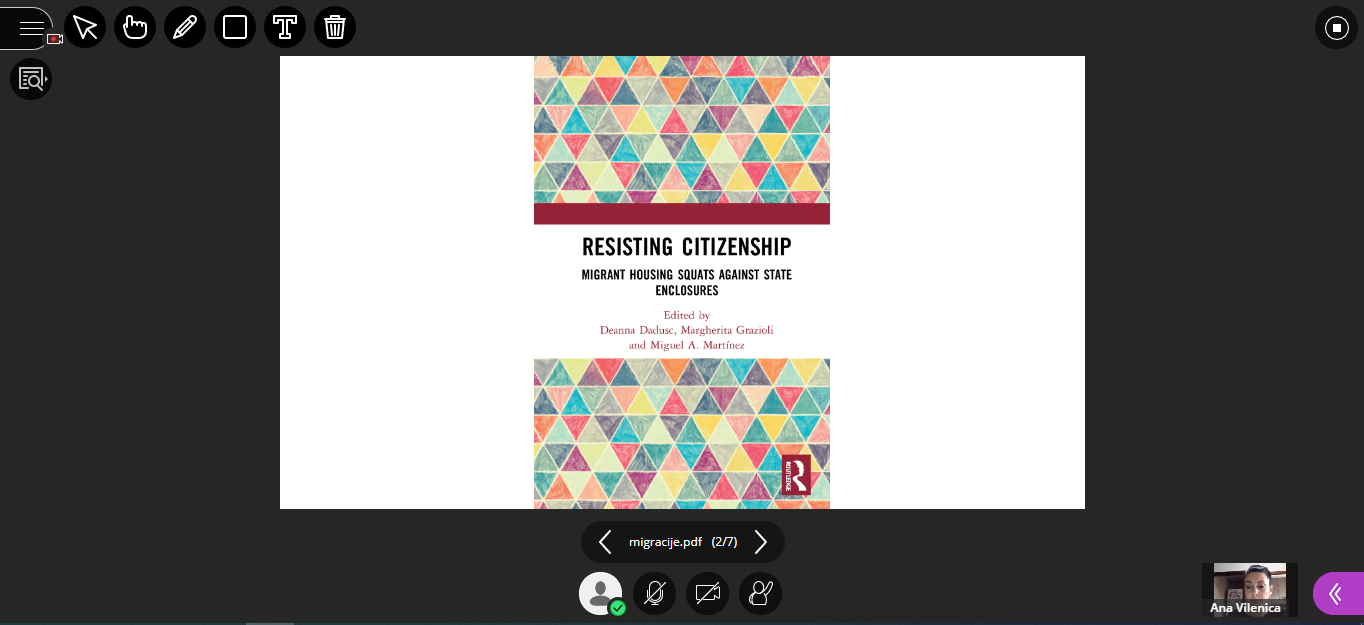
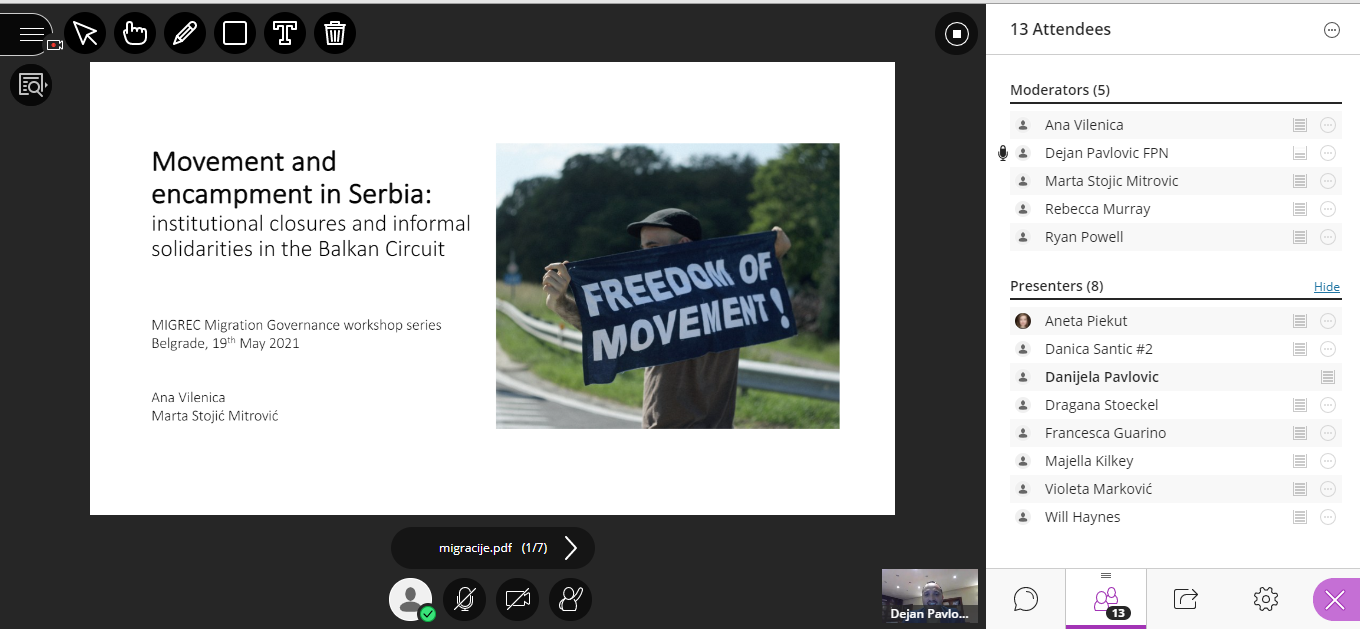
Marta Stojić Mitrović from the SASA Institute of Ethnography and Ana Vilenica from the London South Bank University presented ‘Movement and encampment in Serbia: institutional closures and informal solidarities in the Balkan Circuit’. They discussed bordering enacted by the state actors and informal migrant support in Serbia, a state lying on the land migration route from Turkey to central Europe, in the Western Balkans, a EUropean “periphery within”. They described versatile dynamics in a diachronic perspective, with special emphasis on 2020-2021, when the pandemic crisis rhetoric energized securitarian practices and anti-migrant discourse.
Migration governance workshops is to be followed by Migration development nexus workshop in October to December 2021.






MIGREC Seminar Series – Migration Governance Read More »