Member of the MIGREC team, Danijela Pavlović, participated at the IMISCOE PhD Network Presentation Series aimed at enhancing research capacities for PhD candidates in the field of migration. IMISCOE offers to PhD candidates an opportunity to develop better presentation skills and learn how to critically analyze academic work of their colleagues and give appropriate feedback. To that end, the presentation series was structured in two parts. The first part consisted of two workshops with lectures for PhD candidates – how to deliver good (academic) presentations and how to be successful in discussion. The second part encompassed researchers’ presentations in early phase, giving them an opportunity to present their work and get feedback from their colleagues.
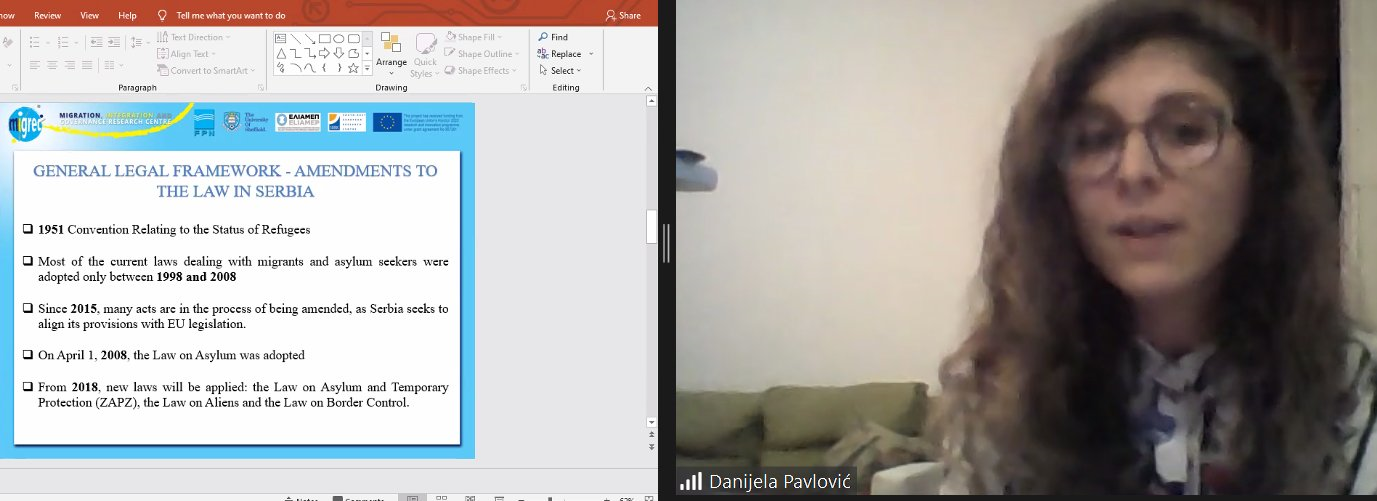
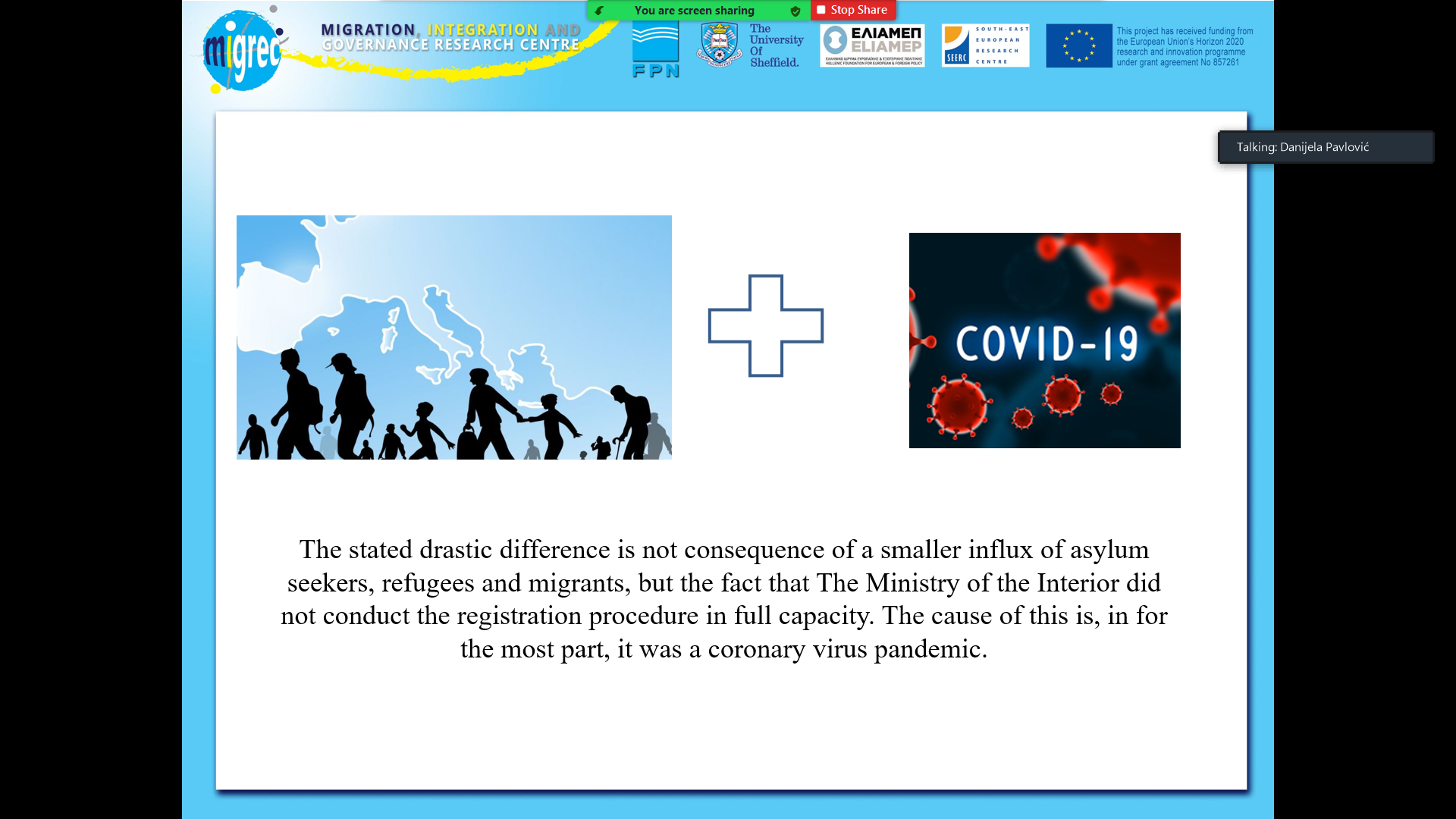
Danijela Pavlović spoke on May 20, 2021 about the asylum policy and challenges to and responses of the system in the Republic of Serbia, with a reference to the challenges brought by the Covid-19 pandemic. She pointed out that on their routes migrates were meeting national systems which did not recognize their requests and rights, thus making them an invisible and extremely vulnerable category of population. She stressed that the asylum system in Serbia started to be implemented on April 1, 2008, with the adoption of the Law on Asylum, but that prior to the this moment Serbia neither had a functional system of asylum protection nor the state authorities had experience in this field. Danijela Pavlović spoke about the most important novelties in 2018 and the adoption and implementation of new laws: Law on Asylum and Temporary Protection, Law on Foreigners and Law on Border. She pointed out that persons with approved right to asylum enjoy legal guarantees for rights to accommodation, stay, health care, freedom of movement, education, legal and social aid, access to labour market and assistance in integration. The adoption of new law indeed created prerequisites for improvement of asylum system in Serbia; however, on the other hand there are problems which professionals keep facing with in working with migrants. The author said that registration of asylum seeker and acceptance of new asylum requests had been stopped during the pandemic. In this period, migrant policies were carried out in accordance with conditions of global health and economic crises, which the Republic of Serbia was no exception whatsoever.