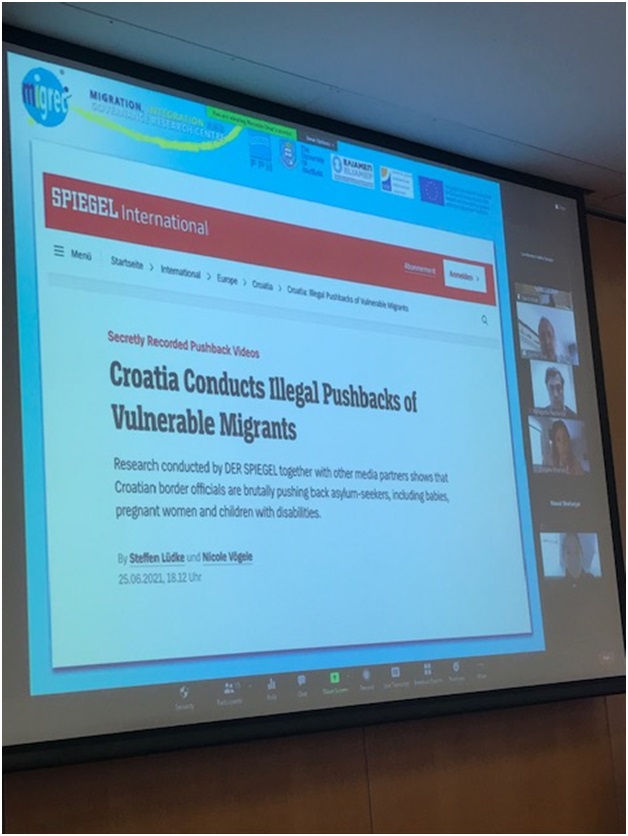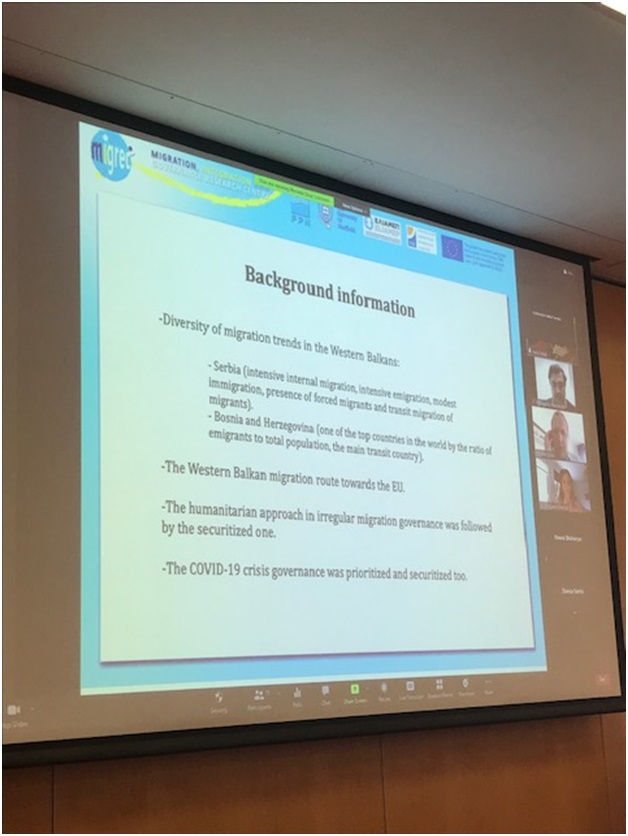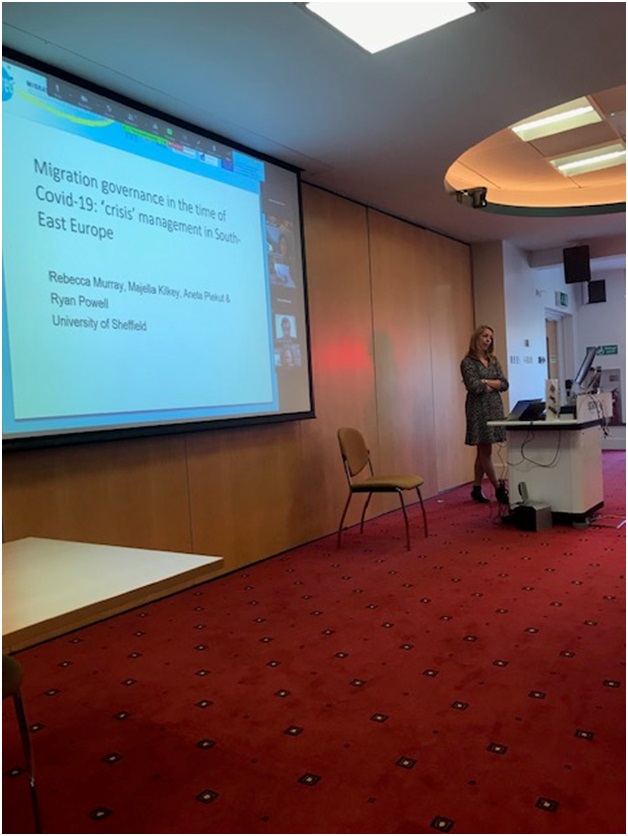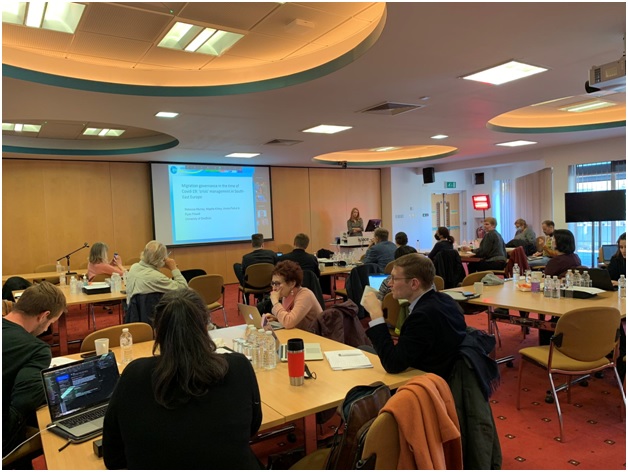
MIGREC team members contributed with a panel aimed at understanding of how migration governance is being shaped by a ‘crisis’ discourse. The presentations responded to a deficit in scholarship that focuses on how multiple crises have shaped migration governance within South-East Europe (SEE). This region is an important point of focus due to its geopolitical significance, especially since the ‘migrant crisis’ of 2015-16, which transformed its positioning in relation to European migration governance. Dynamic migration patterns have made SEE countries, to a varying extent, countries of origin, transit and destination. The Western Balkan countries experienced significant change, becoming one of the most populated migration routes into the EU. They constitute simultaneously the border along the EU, and the buffer zone between Greece and Western Europe. Greece, meanwhile, has experienced its own transformation, from a transit to a (temporary) destination front-line state. Significant numbers of migrants, therefore, are currently stranded in the Western Balkans and Greece, and in the time of Covid-19 they have become further subject to logic of ‘crisis’ management. The panel comprehensively examined the “crisis” management through policy, media and behavioural lenses, and as related to different groups of migrants (irregular, regular and returnees).
Access the conference programme here: