Annual International Conference of the Royal Geographical Society was held from August 31 to September 3, 2021 under the title “Borders, Borderland and Bordering” (https://www.rgs.org/research/annual-international-conference/attending-the-virtual-conference/). The main topics of the Conference were: What is the role of geography and geographers in producing knowledge and understanding about the multiple, multi-scalar and ceaselessly changing forms of environmental, physical, symbolic, smart/digital and invisible borders? How can geographers illuminate and creatively engage with borderlands? How can we interrogate the multiplicity of bordering technologies and practices? How are the disciplinary borders of geography itself being reified, challenged and reshaped in an academic environment that increasingly promotes trans-disciplinary research? What truly progressive ideas and research can geographers develop, what actions can we take and what alternatives can we propose that challenge those borders and bordering practices that control and confine?
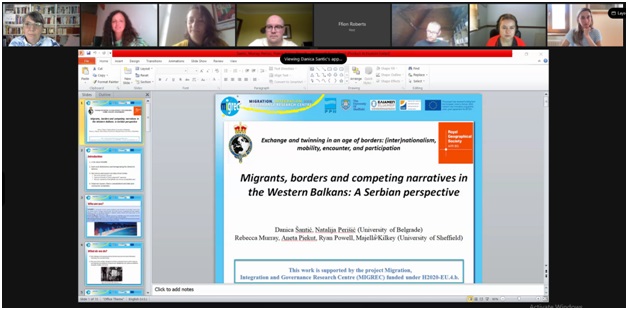
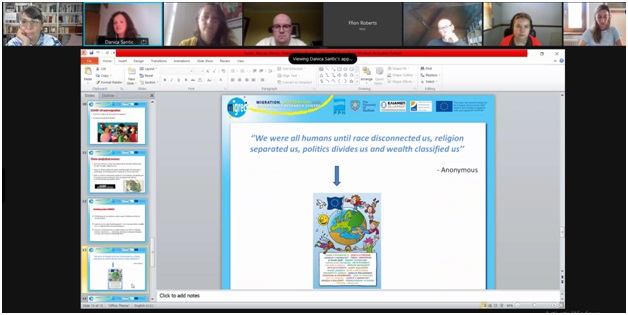
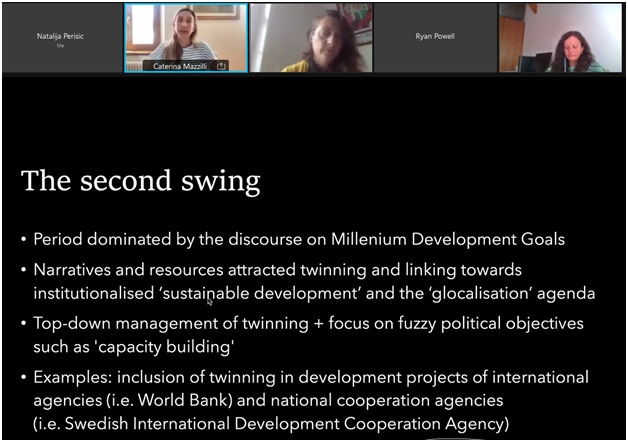
Prof. Dr. Danica Šantić from the University of Belgrade – Faculty of Geography presented on “Migrants, borders and competing narratives in the Western Balkans: A Serbian Perspective” in front of the MIGREC team which included also Natalija Perišić, Rebecca Murray, Ryan Powell and Majella Kilkey. MIGREC’s presentation was a part of the panel “Exchange and twinning in an age of borders: (inter)nationalism, mobility, encounter, and participation”.
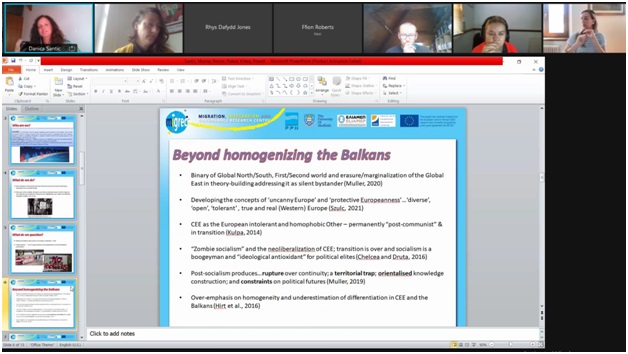
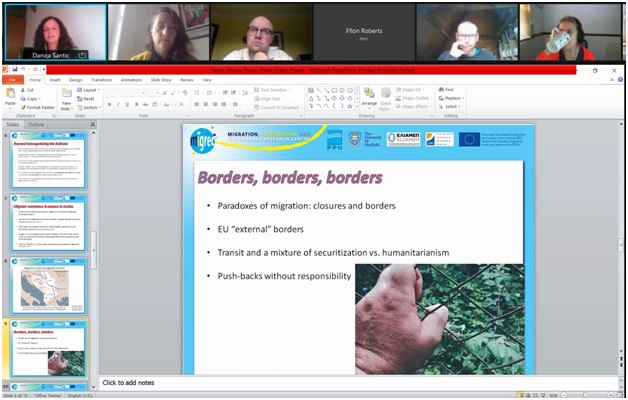
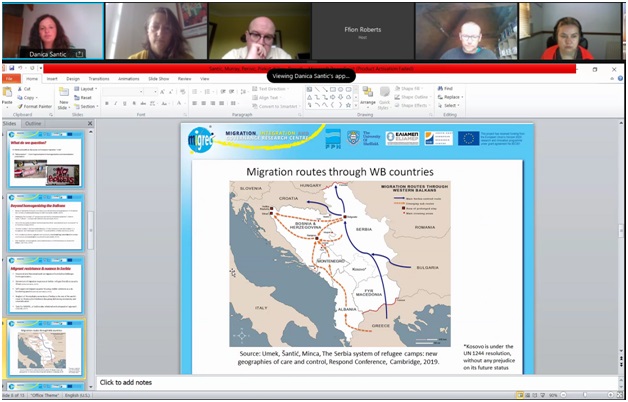
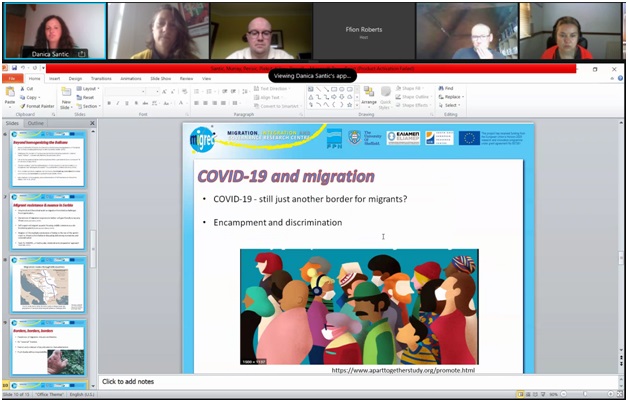
Prof. Šantić presented the main twinning ideas behind the MIGREC project, its aims, goals and activities as an overall framework. Drawing on insights from the project, she sought to place the western Balkans at the centre of debates which contribute to the disruption of east-west dichotomous thought through a migration lens. Through a critical engagement with migration narratives in Serbia before and during COVID-19, Prof. Šantić presented three analytical moves: decentering Western Europe from these debates; capturing diversity within the region underlying logics and rationales in challenging the homogenisation of responses as “post-communist”; disrupting contemporary narratives of an intolerant, xenophobic and homogeneous post-communist “east” juxtaposed with a liberal, multicultural and cosmopolitan “west”. Through international collaborative practice within the MIGREC, myths perpetuated by dichotomous and normative thinking by theorizing from and with Serbia were challenged. The variable, divergent and often ambivalent ways in which migrants are positioned and governed, highlighting care and solidarity alongside hostility and racism (just as in “western Europe”) were nuanced. This revealed a far more dynamic, complex and variegated context in refuting a standardized and static post-communist xenophobia – one that is shown to be produced relationally and in opposition to an imagined, tolerant European civility as the self-image of the west.