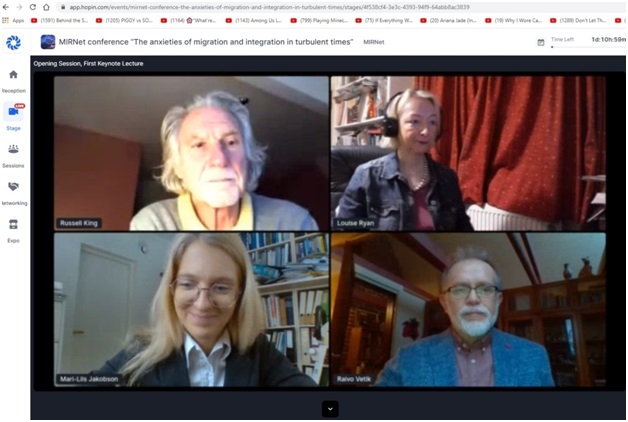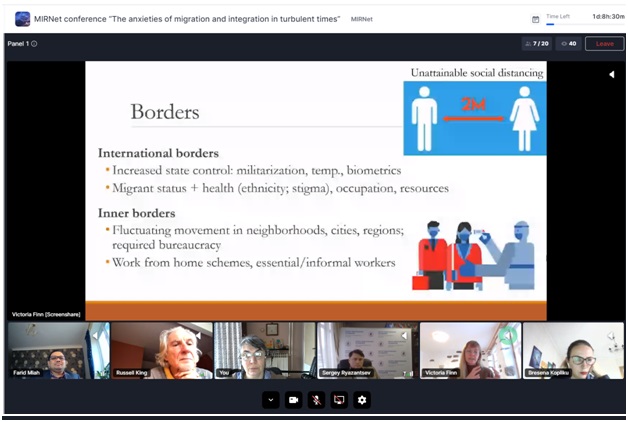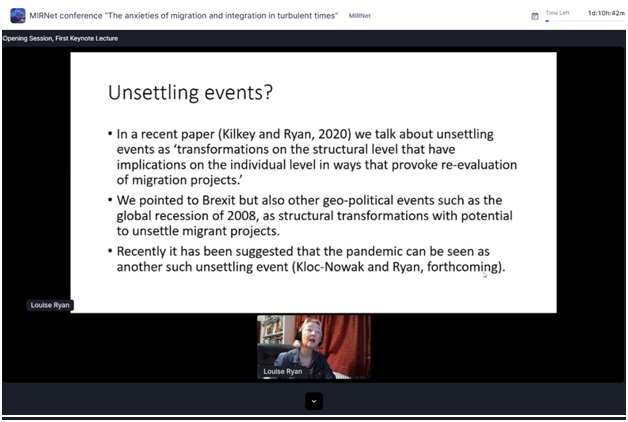
Member of the MIGREC team Natalija Perišić had on January 14th, 2021 a successful online presentation “Encampment and Marginalization of Irregular Migrants as a Policy Response to COVID-19 in Serbia” at the international academic conference “The anxieties of migration and integration in turbulent times“, organized by the School of Governance, Law and Society (Tallinn University, Estonia), Sussex Centre for Migration Research, Roskilde University and University of Tampere, within the EU-WIDENING MIRNet project.
The framework of the conference encompassed analyses of impact of various developments – European migrant crisis, political destabilization in a number of states, demographic tensions, environmental problems and finally the COVID-19 pandemic, on emergence of new and escalation of the existing migration-related anxieties. These tensions, both as causes and consequences of migration, are witnessed in migrants’ sending, transit and receiving countries alike.
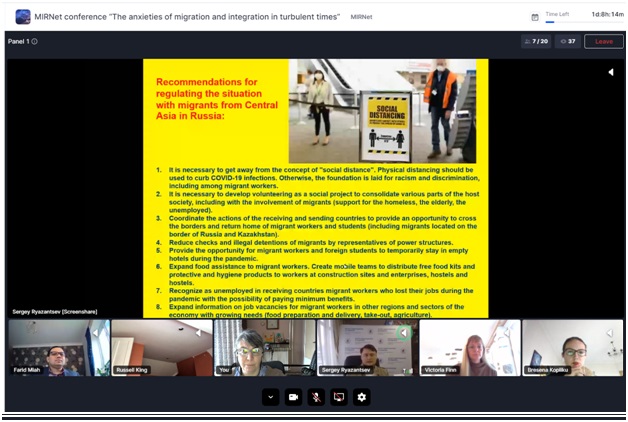
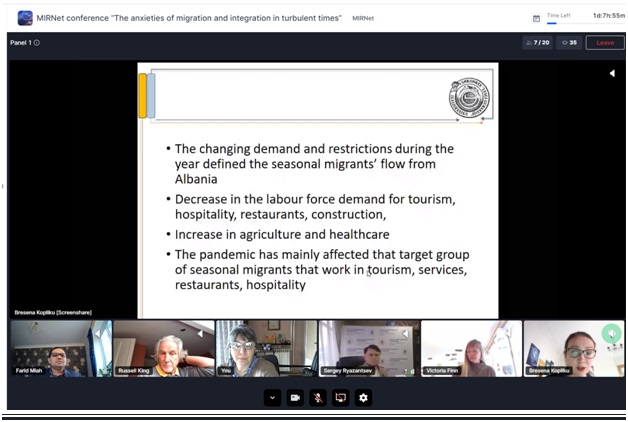
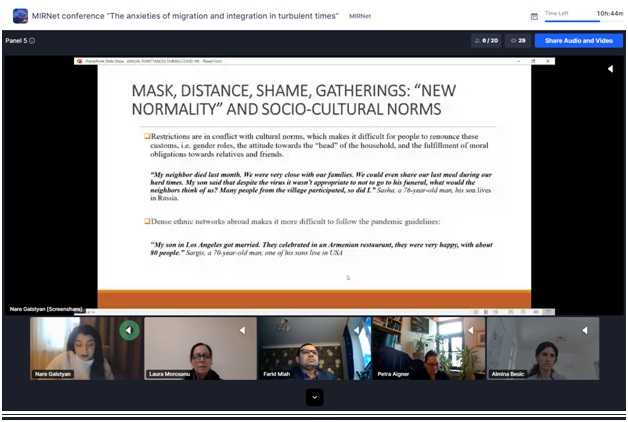
The conference consisted of two introductory presentations and ten sessions with 43 participants organized around the following topics: The impact of COVID-19 on migration processes; Prejudice and migration; Migration as lived experience in uncertain times; Anxiety and migration policy-making; Coping with COVID-19; Integration, integrities and belonging; The populist appeal of immigration; Migration strategies in turbulent times; Relational perspectives on migration and integration; Migration and policy performance: comparative perspectives.
Prof. Natalija Perišić participated in the panel on the impact of COVID-19 on migration processes. Her presentation briefly referred to the migration situation in Serbia, irregular migration management and management of the COVID-19 pandemic during the state of emergency. In this context she raised her main research questions – how the pandemic influenced life experiences of irregular migrants in Serbia. She pointed to overpopulated asylum and reception centers for irregular immigrants, prohibition of leaving the centres, armed forces stationed around the centres during the pandemic etc. Starting from the theoretical framework of lacking universalism in national laws and policies regulating the intersections between dangers for public health, security and migration, she concluded that irregular migrants were exposed to oppressive and discriminative practices during the proclaimed state of emergency in Serbia.