The third set of workshops in the MIGREC series focused on the relationship between migration and development. Spanning from October to December 2021, the event featured seven speakers, from internationally acclaimed scholars to early career researchers and PhD students. The main attendees included scholars from a variety of institutions, including the University of Belgrade, ELIAMEP and SEERC, as well as scholars from other partner institutions who have a particular interest or expertise in this area. The Migration Development workshop was a valuable opportunity for researchers and academics to come together and share their insights and ideas on this important topic.
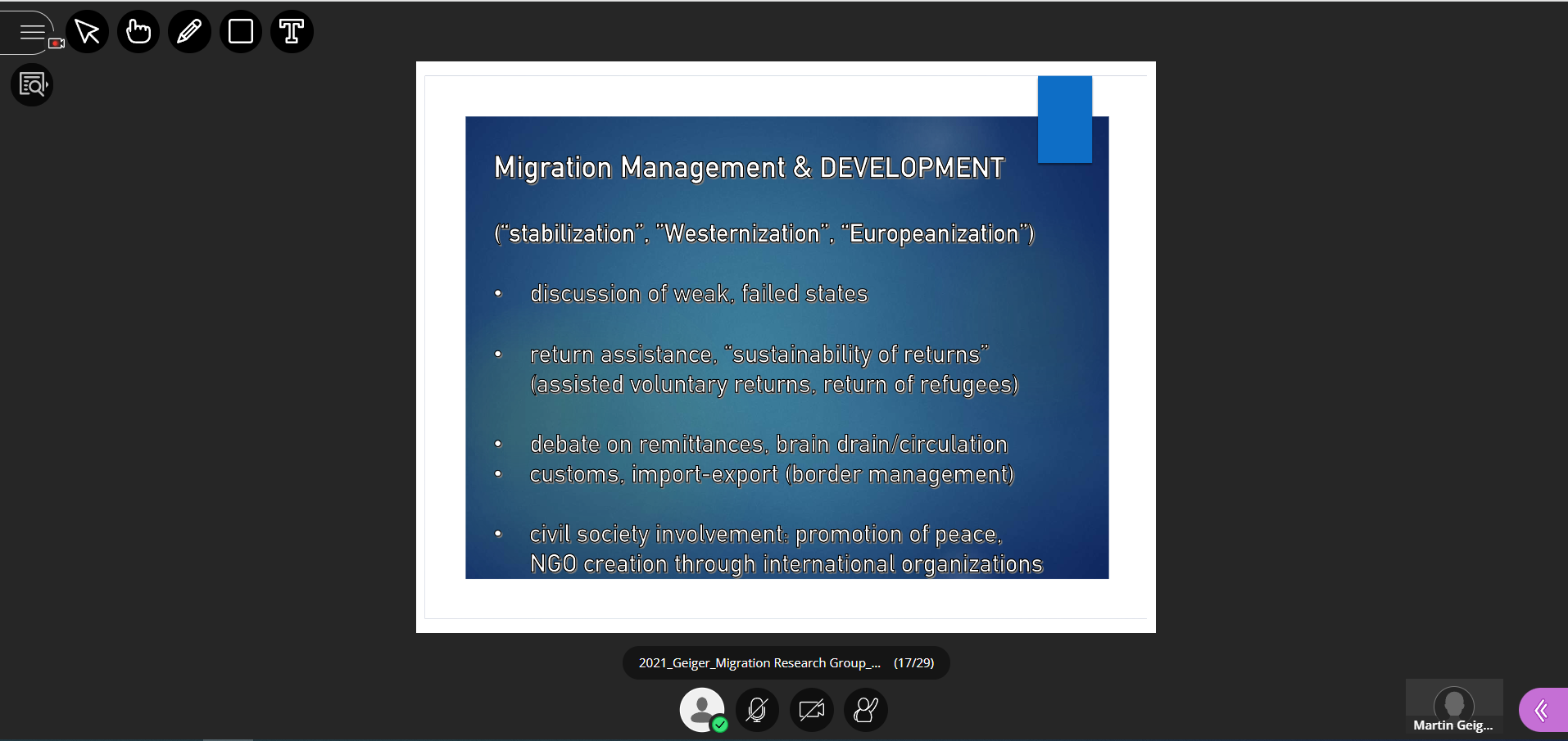
Martin Geiger, an Associate Professor of Politics of Human Migration and Mobility at Carleton University presented ‘The European Union, Russia, and International Organizations in Regional and Global Migration Management’. He spoke about the impact of the concept of migration management on the development of international politics, with a focus on Eastern and Southeastern Europe, the Western Balkans and the role of the EU, Russia and international organizations in these developments. He critically evaluated the outcomes of migration management activities in terms of development and integration.
Roda Madziva an Assistant Professor in the School of Sociology and Social Policy at the University of Nottingham presented ‘Diaspora investment and complex transnational care arrangements among diaspora women: A case study of Zimbabwean women living in the UK’. Her presentation focused on the engagement/involvement in transnational business creation and the dynamics of sustaining care arrangements in transnational spaces of Zimbabwean migrant women residing in the UK. In her presentation, she highlighted the influence of cultural and social factors on women’s participation in transnational activities and questioned traditional understandings of brain drain and care.
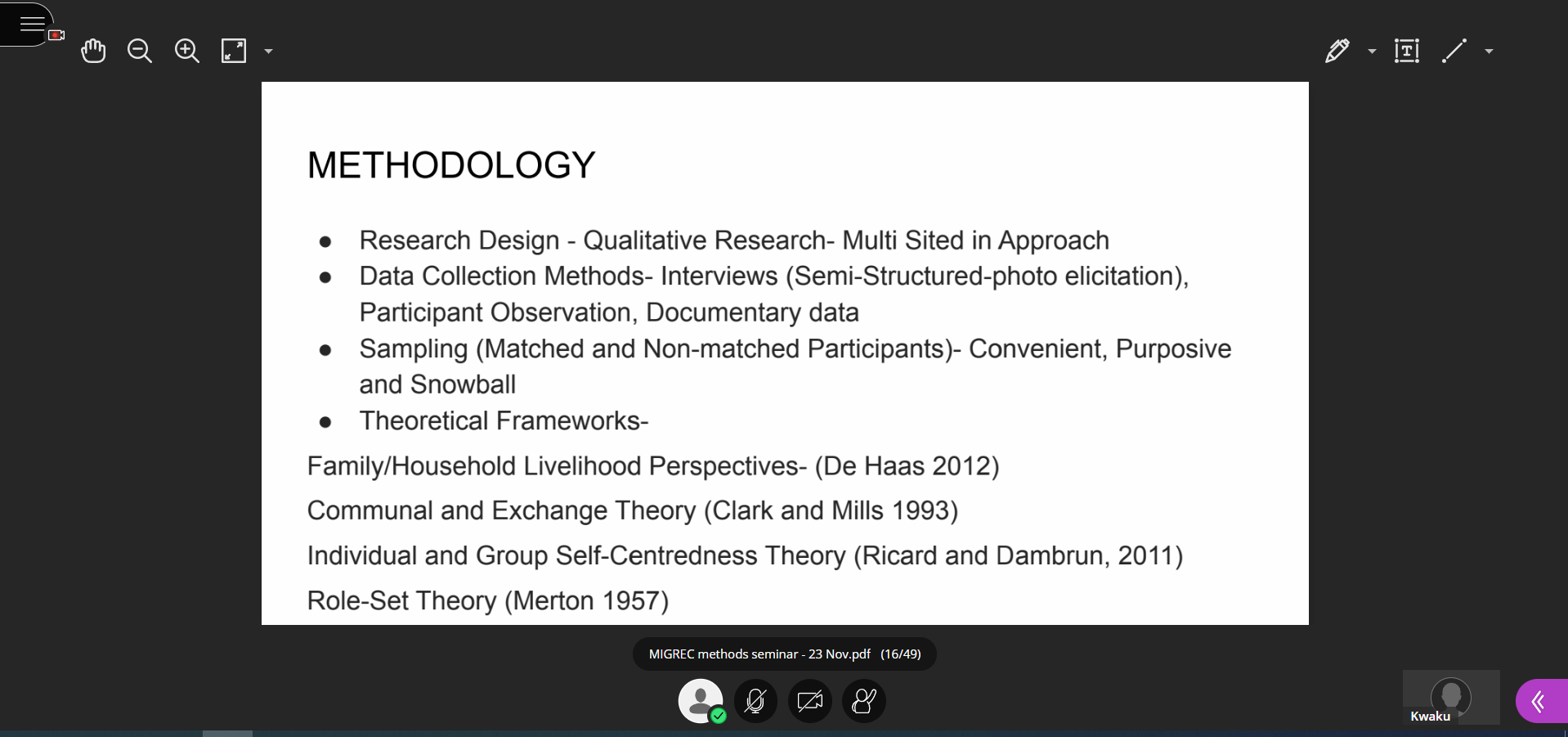
Kwaku Gyening Owusu a tutor in health and social care at the School of Applied Social Science, University of Bedfordshire, UK presented his study ’Migration and Development: Ghanaian Hometown Associations (HTAs) as Drivers of Welfare Development Back Home’. This study examined the impact of Ghanaian Hometown Associations (HTAs) on welfare development in their communities and other parts of Ghana. The findings suggest that HTAs have a positive impact on meso-level development in Ghana, with motivations including the well-being of left-behind families and community members.
Milica Todorović a PhD candidate and teaching assistant at the University of Belgrade, Faculty of Geography, Department of Human Geography presented ‘Return migration and reintegration in the context of the migration cycle in the Republic of Serbia’. She pointed out the need for more research on this topic in Serbia and discussed her doctoral dissertation, which aims to comprehensively investigate the process of voluntary return migration in the Republic of Serbia by examining all stages of the migration cycle of returnees and their reintegration process.
Dominika Pszczółkowska a political scientist and migration researcher at the Centre of Migration Research, University of Warsaw gave a lecture entitled ‘Researching the diaspora online and offline’. The presentation discussed the challenges and considerations of conducting qualitative research with diaspora members, both in person and online. Pszczółkowska drew on her experiences from two research projects, one focused on destination choice among Polish post-EU-accession migrants and the other on political and public participation of Poles in the Polish-Irish transnational space.
Obert Tawodzera a research fellow at the University of Birmingham presented ‘Shifting positionalities and power relations: theethical and emotional challenges of doing multi-sited research as a doctoral student’. Based on his own experiences of conducting multi-sited research with Zimbabwean migrants in the UK and their overseas family members, Obert discussed the ethical and emotional challenges faced by doctoral researchers when conducting qualitative multi-sited research, specifically in regards to negotiating continuous access to participants living in different parts of the world.
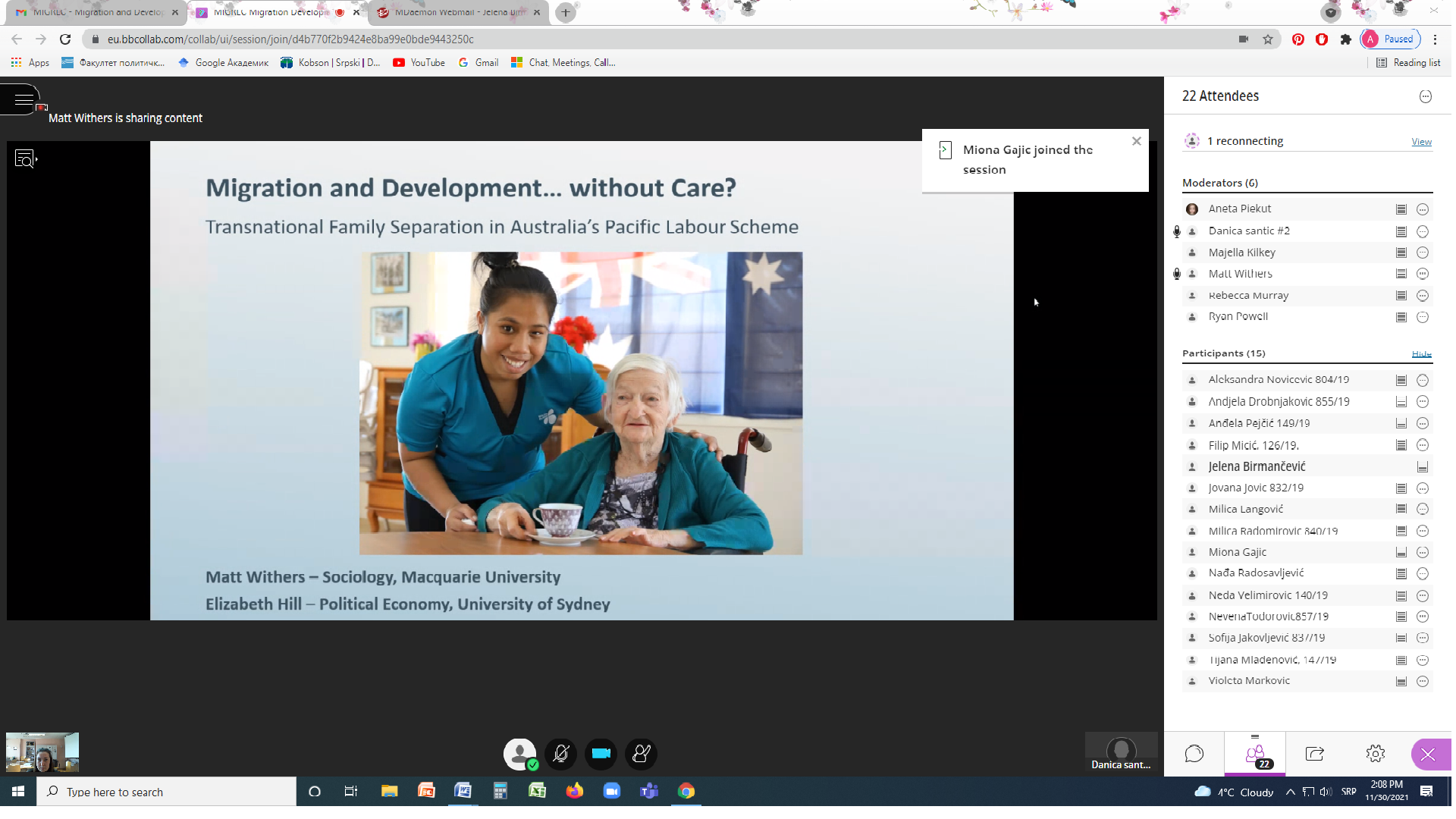
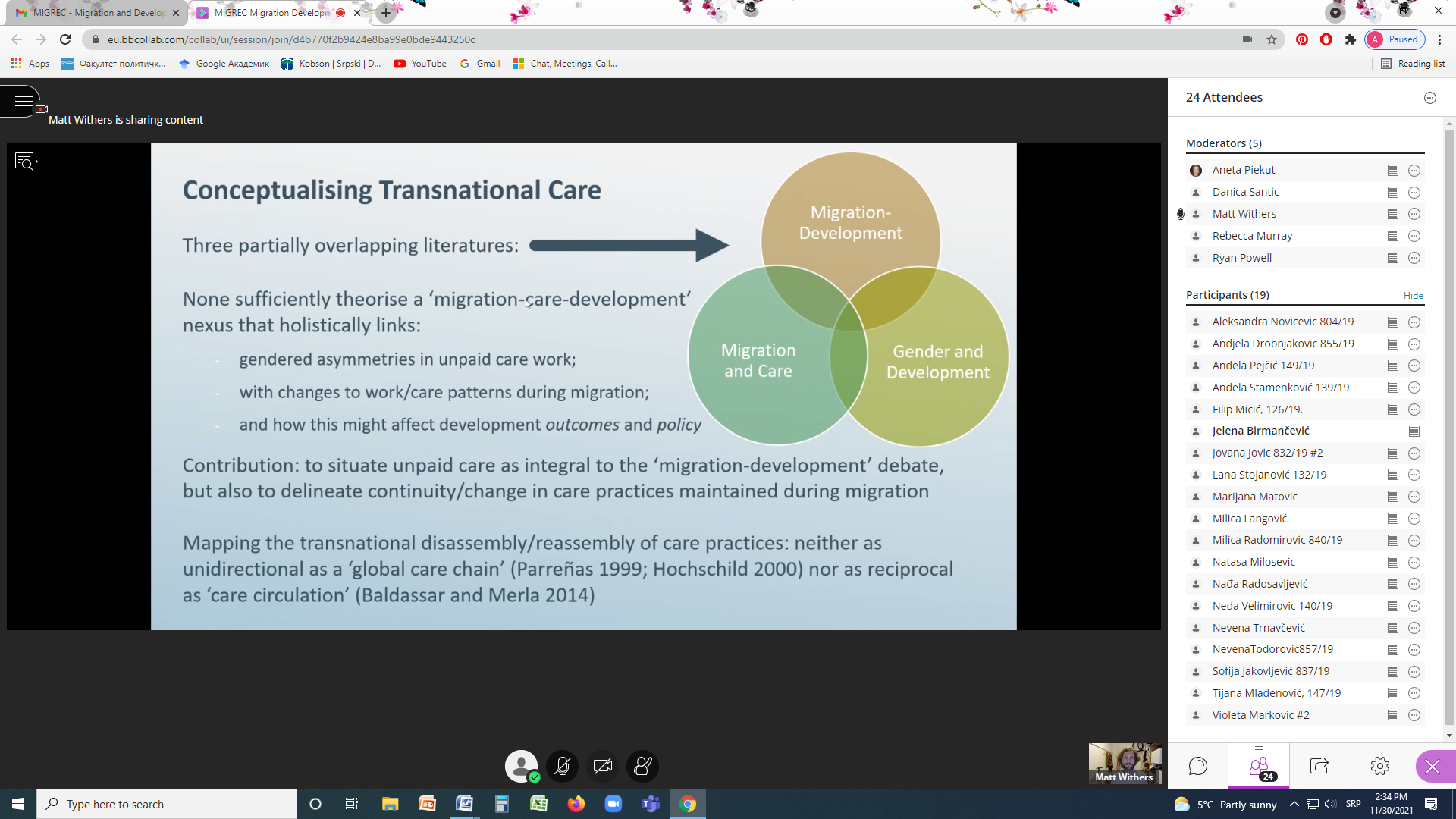
Matt Withers a research fellow within the Department of Sociology at Macquarie University presented ‘Migration and Development, without Care?’. His research paper highlighted the negative impacts of restrictive temporary labor migration schemes on families and communities in the Indo-Pacific region. The paper proposed a holistic migration-care-development nexus that prioritizes the identification, evaluation, and policy redress of unsustainable disruptions to care practices.