Events

MIGREC at the conference of the Demographic Association of Serbia

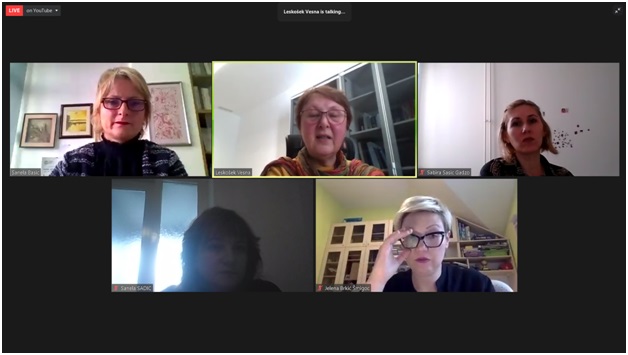
Members of the MIGREC team – Danica Šantić, Marija Antić and Milica Todorović – participated at the conference “COVID-19: socio-demographic processes, challenges and consequences of the pandemic” organized by the Demographic Association of Serbia and the Center for Demographic Research of the Institute of Social Sciences with presentation “Challenges in Migration Management in the Republic of Serbia during the COVID-19 pandemic”, on March 25, 2021.

The academic conference was devoted to analyses of effects and consequences of the COVID-19 pandemic on demographic, social and migration processes. More than 50 prominent researchers from the Republic of Serbia and other countries of the region who treat population topics from various aspects took part in the conference. Although long-term consequences of the pandemic for population, society and migration are still uncertain, the participants on this occasion exchanged the so-far obtained research results, opinions and attitudes in the actual pandemic context. The papers were organized in three sessions: mortality due to the corona virus pandemic, COVID-19 and population and social groups and COVID-19 – migration and labour market.

Prof. Danica Šantić, Prof. Marija Antić and Milica Todorović, MSc, presented their research results within the third session: COVID-19 – migration and labour market. Their research put accent on the challenges the Republic of Serbia faced with in management of return migration flows and irregular migration in the aftermath of introduced state of emergency. The authors pointed out that mass return migration flows in the Republic of Serbia in that period made a huge challenge for the state which policy moved between “don’t stay/don’t leave” discourses. On the other hand, it was stressed that irregular migrants during the state of emergency faced with particularly unfavorable circumstances having in mind the limitation of movement from the admission centres and high level of their stigmatization. The conclusion is that in this period the migration-related policies were carried out in accordance with the conditions of global health and economic crises, which the Republic of Serbia was not exempted from.
MIGREC at the conference of the Demographic Association of Serbia Read More »
MIGREC Project presented at the Twinning Project Days

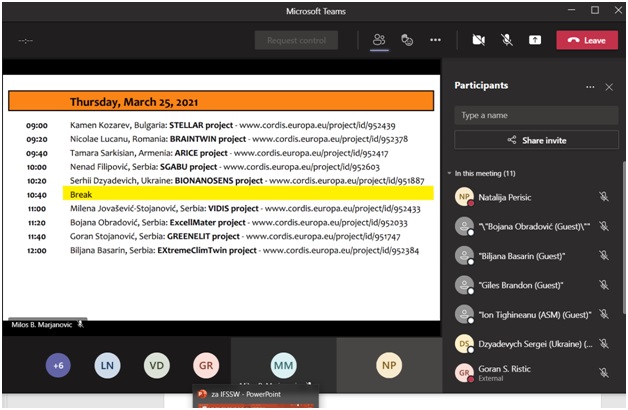
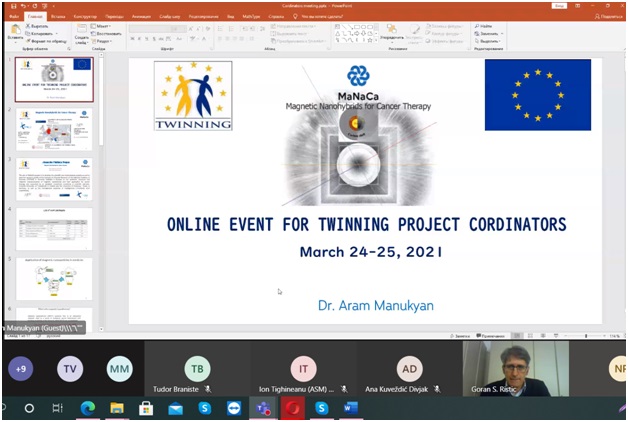
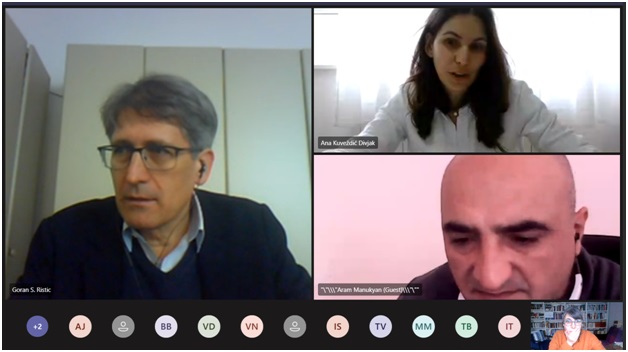
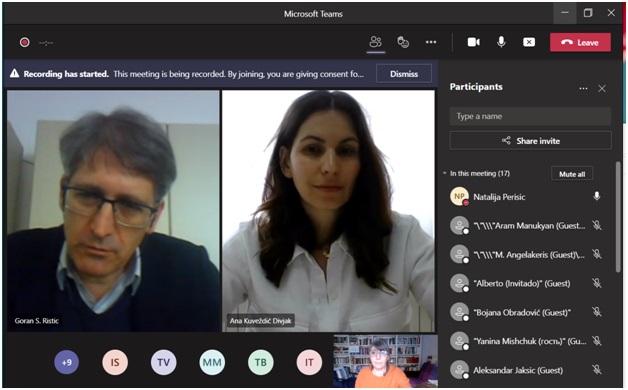
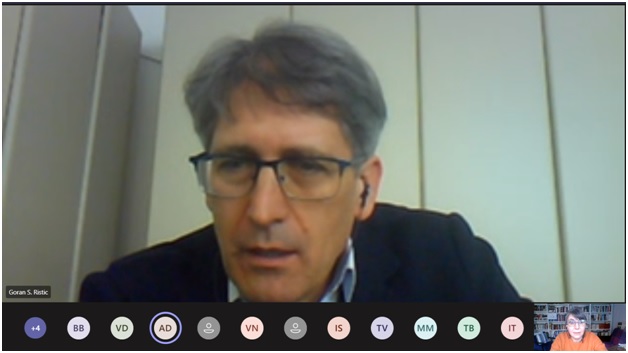
The Twinning Project Days were held at the MS Teams online platform on March 24 and 25, 2021. The Faculty of Electronic Engineering of the University of Niš – coordinator of the ELISCIR project – was the organizer.

Out of the need for connecting and networking and exchange of experiences in implementation of the Twinning projects, the coordinator of the ELICSIR project, Prof. Goran Ristić, organized presentations of nineteen ongoing Twinning projects funded within the EU Horizon2020 programme. Coordinators from seven European countries presented goals, work packages and impact of their respective projects. A particular segment of presentations was devoted to the adjustment of project activities to new circumstances due to the COVID-19 pandemic. Project coordinators exchanged extremely useful experiences on transfer of activities to online forms, redistribution of cost, introduction of new activities etc.

Prof. Natalija Perišić presented general and particular goals of the MIGREC project, the activities realized so far within the work packages and influence of COVID-19 on current and further activities. The record of presentation of the MIGREC project is available at the link https://youtu.be/Pf9nxtKfyN0.


MIGREC Project presented at the Twinning Project Days Read More »

MIGREC online presentation at an academic conference in Sarajevo

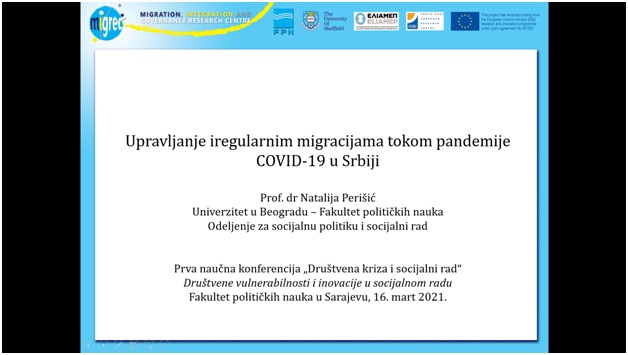
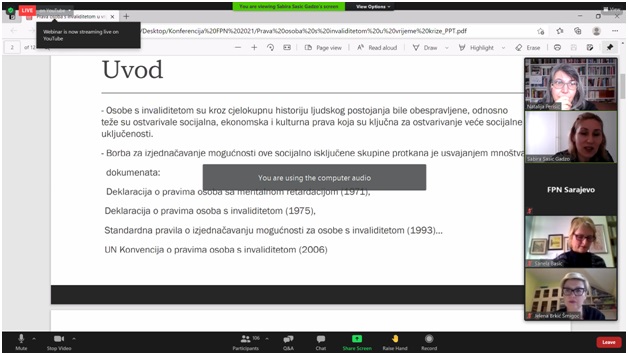
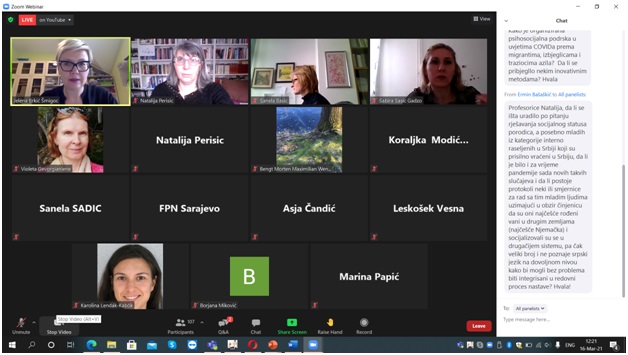
Member of the MIGREC team Natalija Perišić participated at the academic conference “Social Vulnerabilities and Innovation in Social Work” organized by the Faculty of Political Science of the University of Sarajevo, with online presentation “Irregular Migration Governance during the COVID-19 Pandemic in Serbia” on March 16, 2021.

The conference was aimed at contributing the re-creation of inclusive sociality for the post-crisis period, by launching a dialogue between academic and professional communities on possibilities for (self)critical re-description of professional paradigm on the platform advocated by the Global Agenda for Social Work and Social Development 2020-2030, with focus on welfare and wellbeing of all on the principles of social citizenship, human rights and social justice. The conference was envisaged as a place for presentations, discussion and critical reflection of innovative policies, programmes and approaches of professional social work in promoting, advocating and realization of inclusive, democratic, just and solidary society. The plenary session has been accompanied with four thematic panels.

Prof. Natalija Perišić’s presentation focused on the actions of the Government of the Republic of Serbia during the state of emergency proclaimed in March 2020, in the field of irregular migration. The adoption of the decision on limitation of movement of irregular migrants and asylum seekers as a consequence of the COVID-19 pandemic resulted in overcrowded capacities in the asylum and reception centres. In order to facilitate the situation, the Commissariat for Refugees and Migration of the Republic of Serbia increased accommodation capacities and took numerous urgent measures. However, the adjustment of other state institutions to new circumstances was extremely slow. This influenced aggravation of living conditions of irregular migrants and asylum seekers, particularly combined with limiting non-governmental sector to involve in provision of support and assistance. The presentation delivered by Prof. Natalija Perišić pointed to the needs for more careful planning of decisions and measures pertaining to irregular migration governance, in coordination with other policies important for irregular migrants and asylum seekers.


MIGREC online presentation at an academic conference in Sarajevo Read More »

MIGREC online presentation at the international conference in Tallinn, Estonia

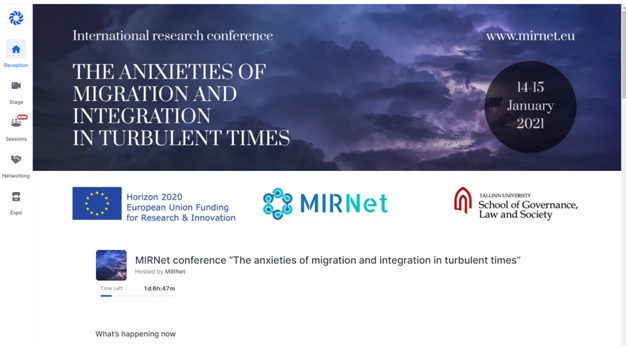
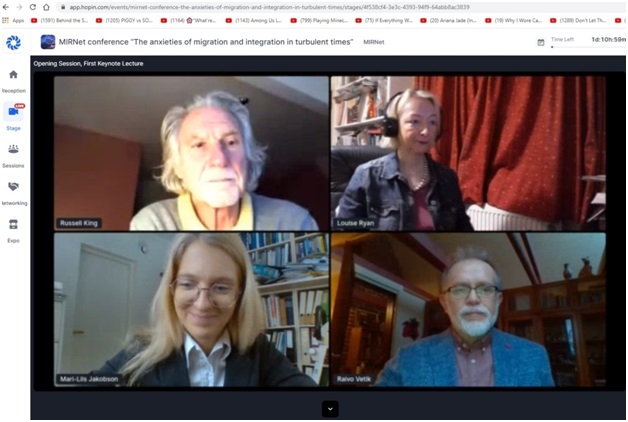
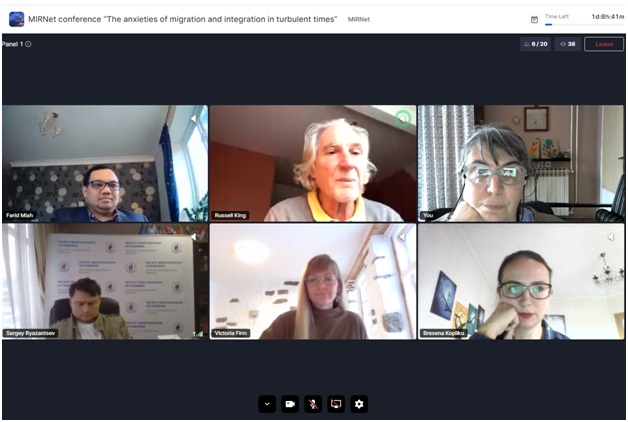
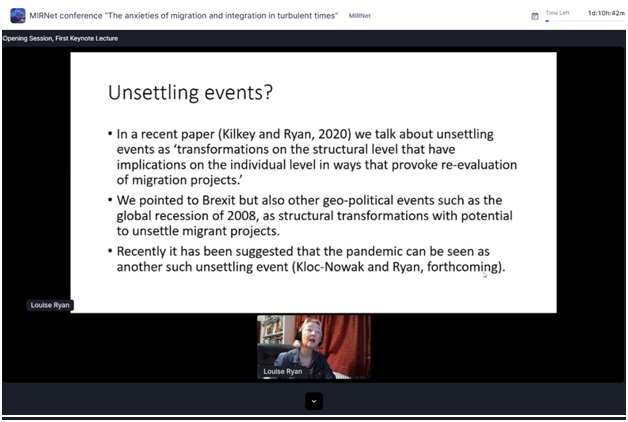
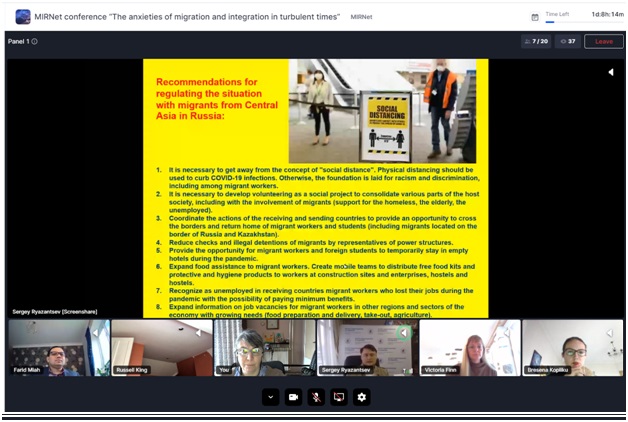
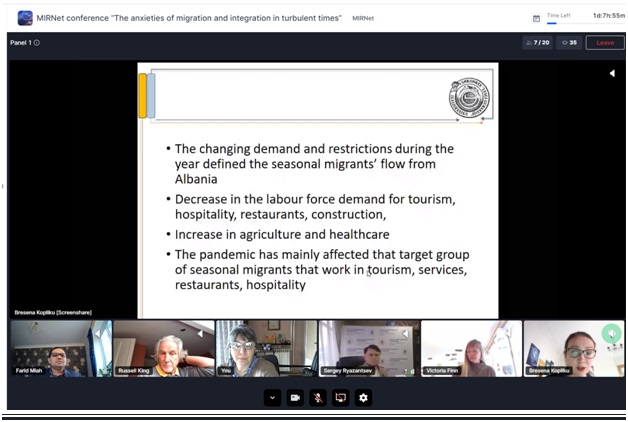
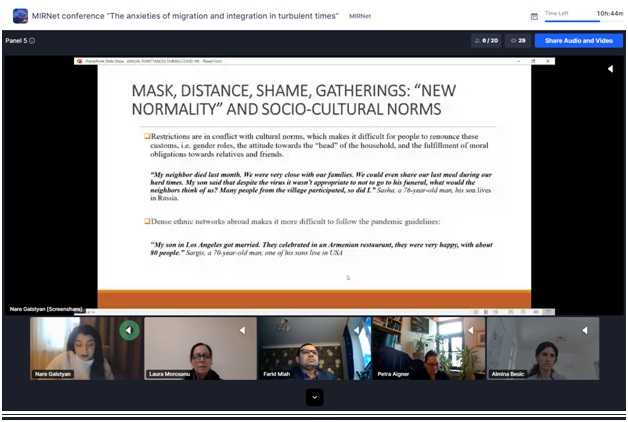
Member of the MIGREC team Natalija Perišić had on January 14th, 2021 a successful online presentation “Encampment and Marginalization of Irregular Migrants as a Policy Response to COVID-19 in Serbia” at the international academic conference “The anxieties of migration and integration in turbulent times“, organized by the School of Governance, Law and Society (Tallinn University, Estonia), Sussex Centre for Migration Research, Roskilde University and University of Tampere, within the EU-WIDENING MIRNet project.
The framework of the conference encompassed analyses of impact of various developments – European migrant crisis, political destabilization in a number of states, demographic tensions, environmental problems and finally the COVID-19 pandemic, on emergence of new and escalation of the existing migration-related anxieties. These tensions, both as causes and consequences of migration, are witnessed in migrants’ sending, transit and receiving countries alike.
The conference consisted of two introductory presentations and ten sessions with 43 participants organized around the following topics: The impact of COVID-19 on migration processes; Prejudice and migration; Migration as lived experience in uncertain times; Anxiety and migration policy-making; Coping with COVID-19; Integration, integrities and belonging; The populist appeal of immigration; Migration strategies in turbulent times; Relational perspectives on migration and integration; Migration and policy performance: comparative perspectives.
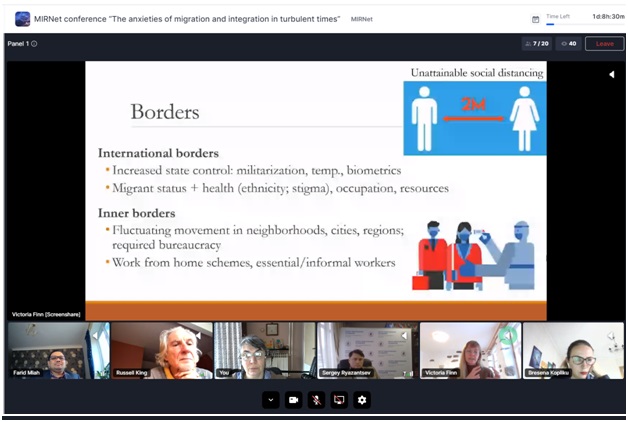
Prof. Natalija Perišić participated in the panel on the impact of COVID-19 on migration processes. Her presentation briefly referred to the migration situation in Serbia, irregular migration management and management of the COVID-19 pandemic during the state of emergency. In this context she raised her main research questions – how the pandemic influenced life experiences of irregular migrants in Serbia. She pointed to overpopulated asylum and reception centers for irregular immigrants, prohibition of leaving the centres, armed forces stationed around the centres during the pandemic etc. Starting from the theoretical framework of lacking universalism in national laws and policies regulating the intersections between dangers for public health, security and migration, she concluded that irregular migrants were exposed to oppressive and discriminative practices during the proclaimed state of emergency in Serbia.


MIGREC online presentation at the international conference in Tallinn, Estonia Read More »

Migration Governance Workshop

The MIGREC is preparing a series of exciting workshops. See what you might be interested in.

Migration Governance Workshop Read More »

International Migrants Day

On the occasion of the International Migrants Day (December 18th), the Department of Social Policy and Social Work at the Faculty of Political Science organized an online lecture for its master’s students.
During the last 10 years public discourses on migration and forced migration were being particularly shaped by armed conflict in Syria, unstable situation in Afghanistan and Iraq, civil disorders, wars and violence in Central and South America, increase of poverty and armed confrontations in several African regions and natural disasters of huge proportions all around the world. These developments yielded a sharp increase of forced migration – as many as 80 million people were in forced migration worldwide, according to the last data of the UNHCR. More than million people have passed through the Republic of Serbia since 2015, majority of them craving to reach some of the European Union member states.
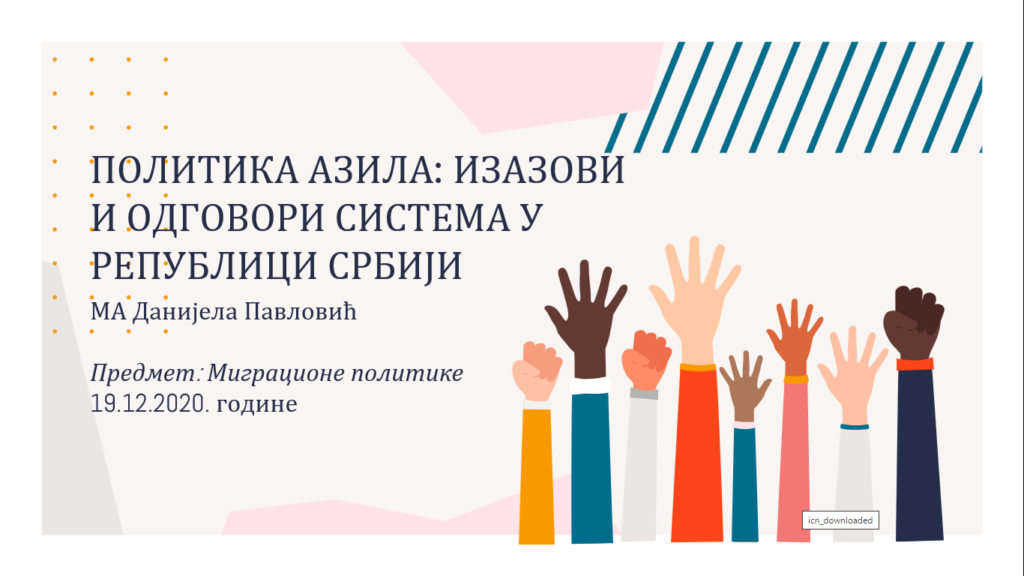
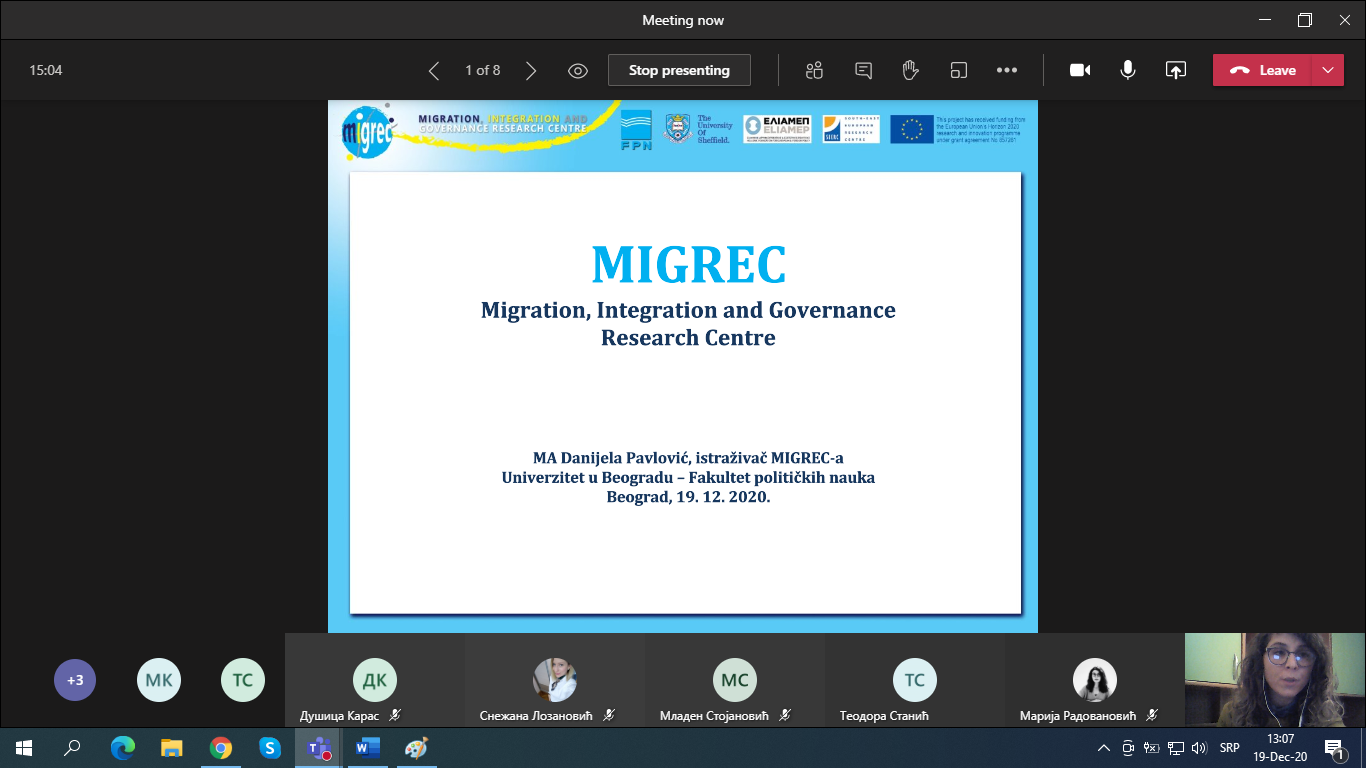
Students of master studies had an opportunity to get additional information on the ongoing project“Migration, Integration, Governance and Research Centre” (MIGREC) at the Faculty of Political Science, and Danijela Pavlović, member of the MIGREC team, presented her research paper „Asylum Policy: Challenges and Responses of the System in the Republic of Serbia“.


International Migrants Day Read More »

MIGREC’s First Summer School

The MIGREC is announcing its First Summer School to be held in June 2021 and led by the Migration Research Group from the University of Sheffield. The focus of the Summer School will be on advanced research methods. More information will follow.

MIGREC’s First Summer School Read More »

CONSULTATIONS ON MIGRATION POLICY

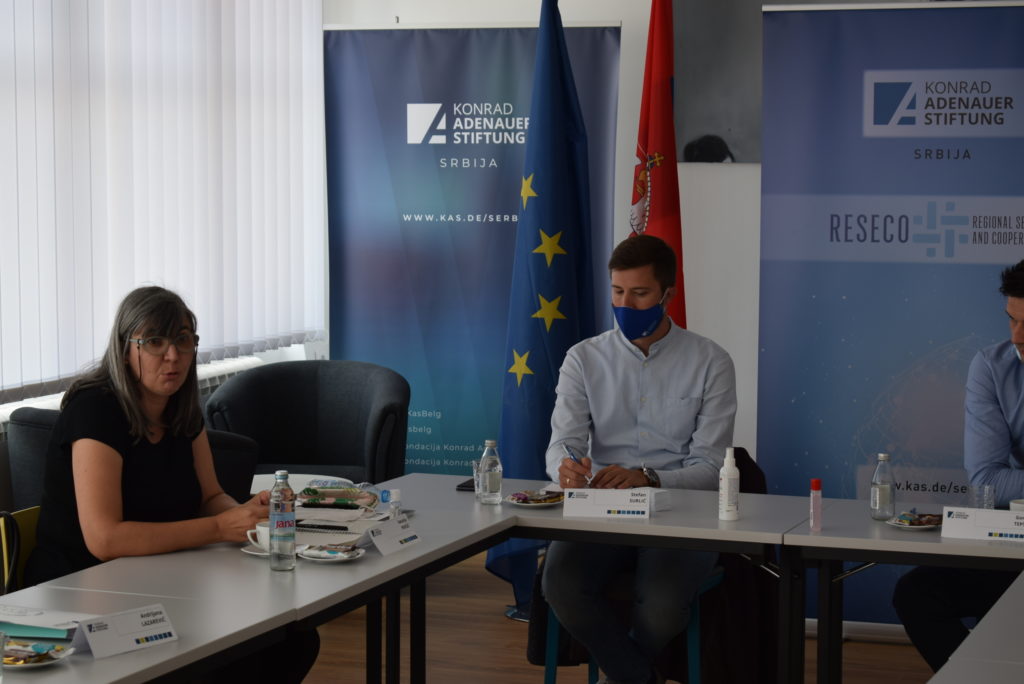
Consultations of the working group on the topic „Migrant Policy and Challenges to the Integration of Refugees on the Western Balkans“, organized by the RESECO Initiative and supported by the Konrad Adenauer Foundation, were held on September 23, 2020.

Representatives of the RESECO Initiative – Stefan Surlić and Goran Tepšić from the University of Belgrade – Faculty of Political Science, together with Aleksandra Popović and Andrijana Lazarević from the Konrad Adenauer Foundation, pointed to the need for drafting more precise proposals and recommendations for improvement of the migration policy in Serbia and in the region. Sonja Tošković (Belgrade Centre for Human Rights), Radoš Đurić (Centre for Protection and Assistance to Asylum Seekers), Uroš Živković (Ministry of Labour, Employment, Veteran and Social Issues), Marjan Đurovski (University St. Kliment Ohridski, Skopje) and Natalija Perišić, coordinator of the MIGREC project (University of Belgrade – Faculty of Political Science) all participated the meeting.


CONSULTATIONS ON MIGRATION POLICY Read More »

Methodological Workshop – CONTINUED

Observational studies, Case studies

Speaker: Assistant Professor Kostas Gemenis, Senior researcher at the Max Planck Institute for the Study of Societies in Cologne, Germany

Monday 5th October from 14:00-17:00 Serbian time


Integration Workshop – CONTINUED

Confronting the progressive dilemma, rethinking inclusive solidarity

Speaker: Dr Biljana Đorđević, University of Belgrade – Faculty of Political Science, Department of Political Science

Discussants: Dr Marta Stojić Mitrović, Institute of Ethnography, SASA & Ryan Powell, Department of Urban Studies, University of Sheffield

Friday 9th October at 2 pm UK time / 3 pm Serbian time / 4 pm Greek time

https://eu.bbcollab.com/guest/011e24fd48704ea0b33605096623c451

Methodological Workshop – CONTINUED Read More »