MIGREC online presentation at the international conference in Tallinn, Estonia

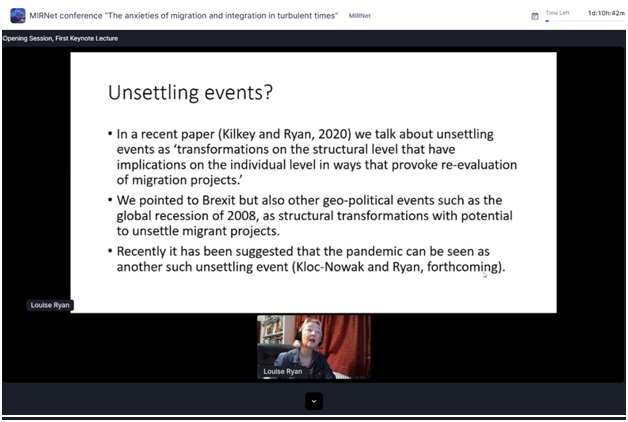
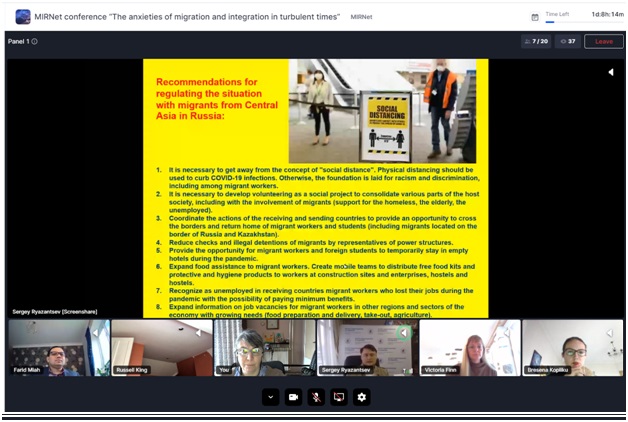
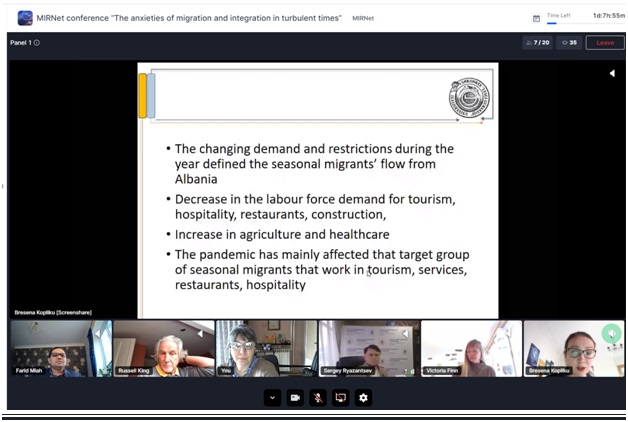
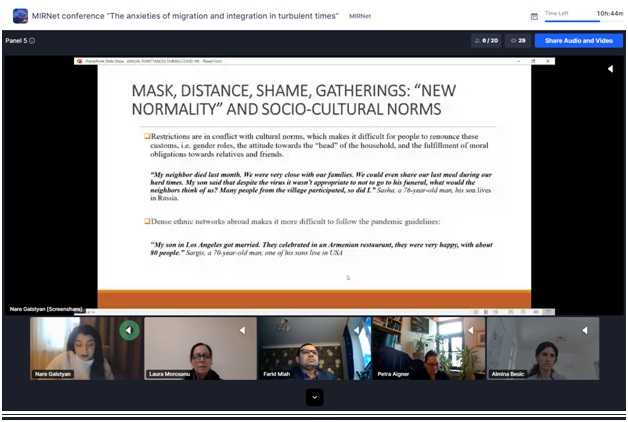
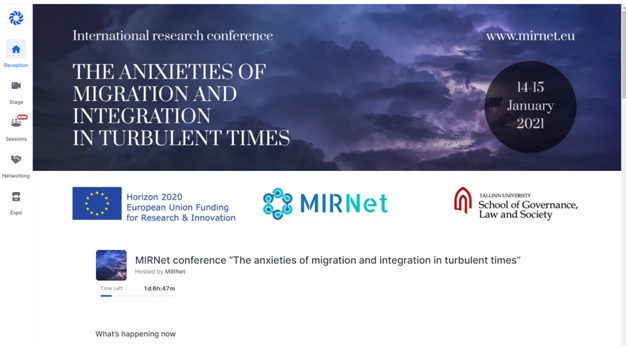
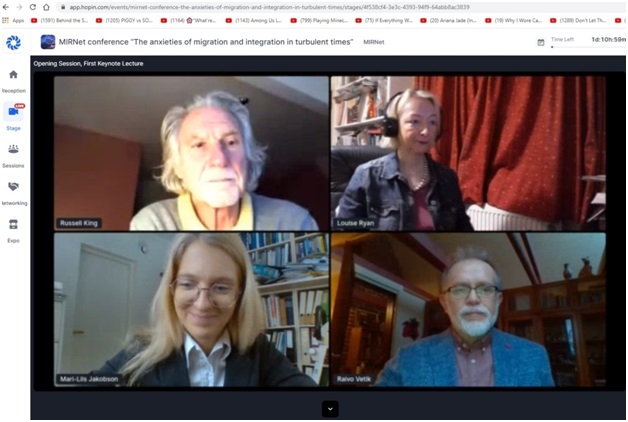
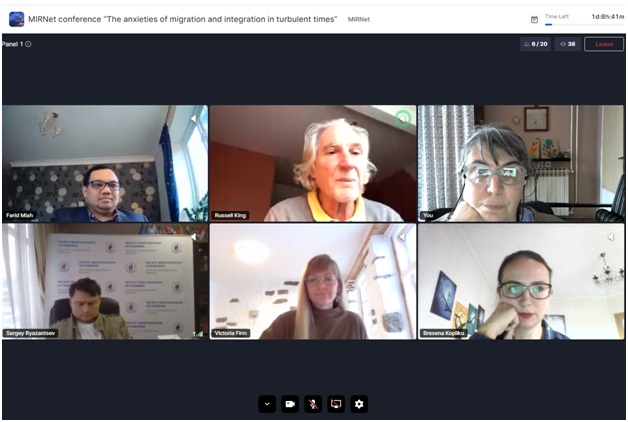
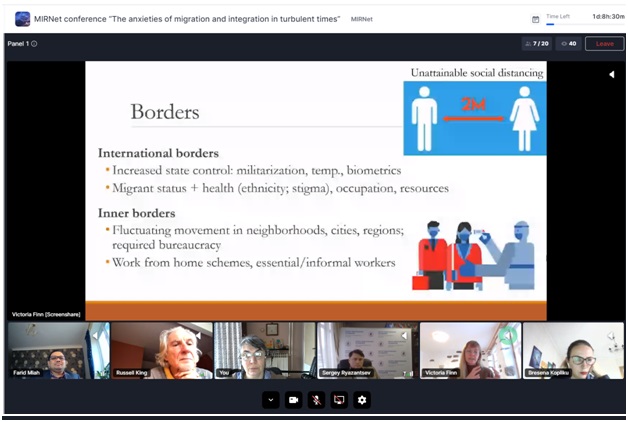
Member of the MIGREC team Natalija Perišić had on January 14th, 2021 a successful online presentation “Encampment and Marginalization of Irregular Migrants as a Policy Response to COVID-19 in Serbia” at the international academic conference “The anxieties of migration and integration in turbulent times“, organized by the School of Governance, Law and Society (Tallinn University, Estonia), Sussex Centre for Migration Research, Roskilde University and University of Tampere, within the EU-WIDENING MIRNet project.
The framework of the conference encompassed analyses of impact of various developments – European migrant crisis, political destabilization in a number of states, demographic tensions, environmental problems and finally the COVID-19 pandemic, on emergence of new and escalation of the existing migration-related anxieties. These tensions, both as causes and consequences of migration, are witnessed in migrants’ sending, transit and receiving countries alike.
The conference consisted of two introductory presentations and ten sessions with 43 participants organized around the following topics: The impact of COVID-19 on migration processes; Prejudice and migration; Migration as lived experience in uncertain times; Anxiety and migration policy-making; Coping with COVID-19; Integration, integrities and belonging; The populist appeal of immigration; Migration strategies in turbulent times; Relational perspectives on migration and integration; Migration and policy performance: comparative perspectives.
Prof. Natalija Perišić participated in the panel on the impact of COVID-19 on migration processes. Her presentation briefly referred to the migration situation in Serbia, irregular migration management and management of the COVID-19 pandemic during the state of emergency. In this context she raised her main research questions – how the pandemic influenced life experiences of irregular migrants in Serbia. She pointed to overpopulated asylum and reception centers for irregular immigrants, prohibition of leaving the centres, armed forces stationed around the centres during the pandemic etc. Starting from the theoretical framework of lacking universalism in national laws and policies regulating the intersections between dangers for public health, security and migration, she concluded that irregular migrants were exposed to oppressive and discriminative practices during the proclaimed state of emergency in Serbia.
MIGREC online presentation at the international conference in Tallinn, Estonia Read More »
Migration Governance Workshop

The MIGREC is preparing a series of exciting workshops. See what you might be interested in.

Migration Governance Workshop Read More »
International Migrants Day

On the occasion of the International Migrants Day (December 18th), the Department of Social Policy and Social Work at the Faculty of Political Science organized an online lecture for its master’s students.
During the last 10 years public discourses on migration and forced migration were being particularly shaped by armed conflict in Syria, unstable situation in Afghanistan and Iraq, civil disorders, wars and violence in Central and South America, increase of poverty and armed confrontations in several African regions and natural disasters of huge proportions all around the world. These developments yielded a sharp increase of forced migration – as many as 80 million people were in forced migration worldwide, according to the last data of the UNHCR. More than million people have passed through the Republic of Serbia since 2015, majority of them craving to reach some of the European Union member states.
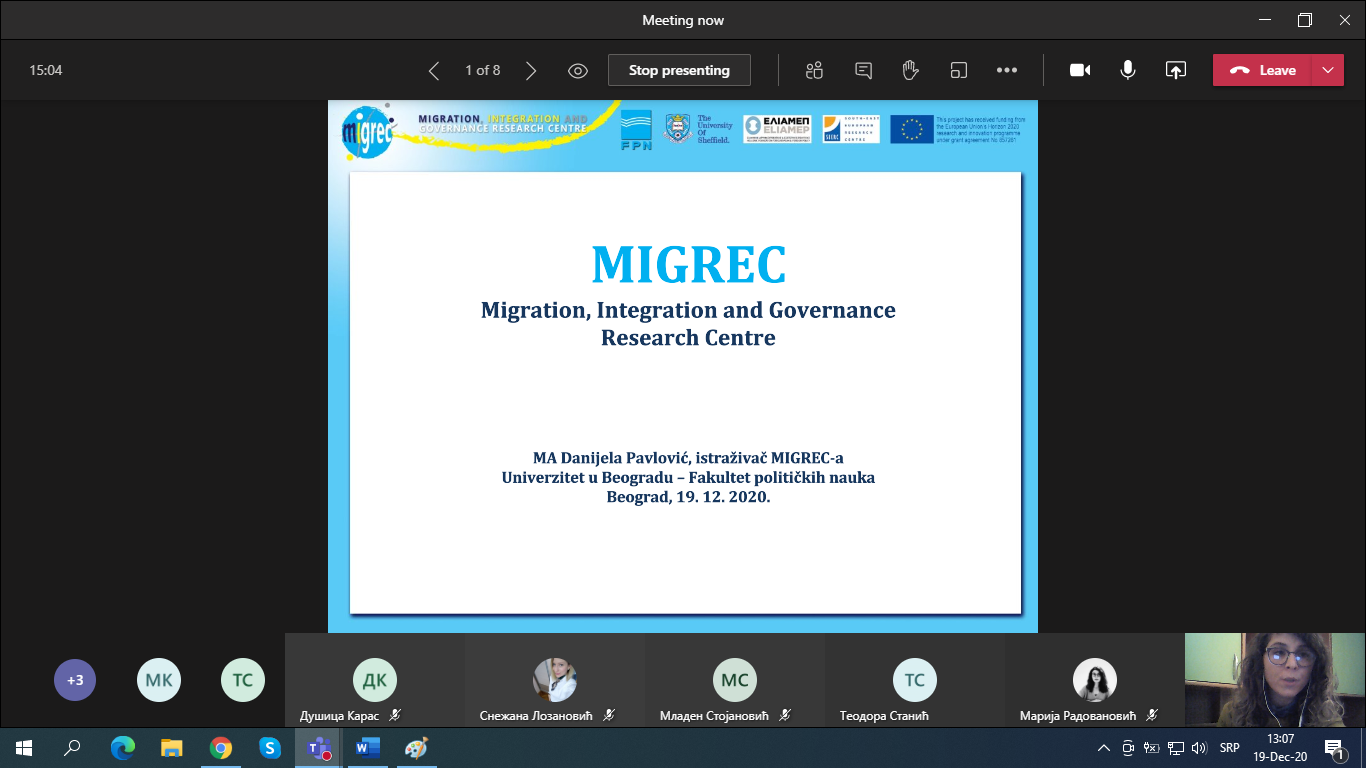
Students of master studies had an opportunity to get additional information on the ongoing project“Migration, Integration, Governance and Research Centre” (MIGREC) at the Faculty of Political Science, and Danijela Pavlović, member of the MIGREC team, presented her research paper „Asylum Policy: Challenges and Responses of the System in the Republic of Serbia“.


International Migrants Day Read More »

Course on Protection of Children Affected by Mixed Migration launched at the FPN

The Faculty of Political Science, University of Belgrade, in cooperation with the UNICEF Serbia and with financial support of the U.S. government, presented a new course – Protection of Children Affected by Mixed Migration.

The course was developed in accordance with global standards and knowledge developed in response to refugee and migrant crisis and is based on experiences of national stakeholders. It is aimed at further enhancement of child protection system in Serbia in order to address vulnerabilities emerging in the context of migration.

Professors Nevenka Žegarac and Natalija Perišić, Assistant Professors Anita Burgund Isakov and Katarina Lončarević and Associate Violeta Marković all participate in drafting and carrying out of the course.

On 3/11/2020, the course was launched at the webinar with following speakers: Prof. Dragan R. Simić, Dean of the Faculty of Political Science, Deyana Kostadinova, UNICEF Representative in Serbia, Ivan Gerginov, Assistant Commissioner in the Commissariat for Refugees and Migration of the Republic of Serbia, Slađana Čabrić, Assistant Minister for labor, employment, veteran and social issues and Prof. Nevenka Žegarac.

Protection of Children Affected by Mixed Migration is a multidisciplinary course aimed at enhancing capacities of students and professionals working with children affected by migration. It will be piloted during the winter semester of the academic year 2020/ 2021, with the vision to become accredited and remain a permanent course in the academic offer of the Faculty of Political Science, for students of social work, political science, communication studies, gender and cultural studies in the coming years.

The contents of the course encompasses eight topics: rights-based approach in work with migrant children and child protection framework; main principles in protection of children affected by mixed migration; identification of children affected by mixed migration and organization of initial response; gender and vulnerability; gender-based violence and migration; guidelines for case management in protection of migrant children; unaccompanied children and separated children; alternative care and sustainable solutions.

The announcement of the course at the TV RTS 1 morning programme can be seen here:

http://streaming.ninamedia.rs/uploads/dtmp4.php?src=/2020/11/05/6E3CCD9C-915C-4644-A41A-B5D895FCEF5C


Course on Protection of Children Affected by Mixed Migration launched at the FPN Read More »

MIGREC’s First Summer School

The MIGREC is announcing its First Summer School to be held in June 2021 and led by the Migration Research Group from the University of Sheffield. The focus of the Summer School will be on advanced research methods. More information will follow.

MIGREC’s First Summer School Read More »

CONSULTATIONS ON MIGRATION POLICY

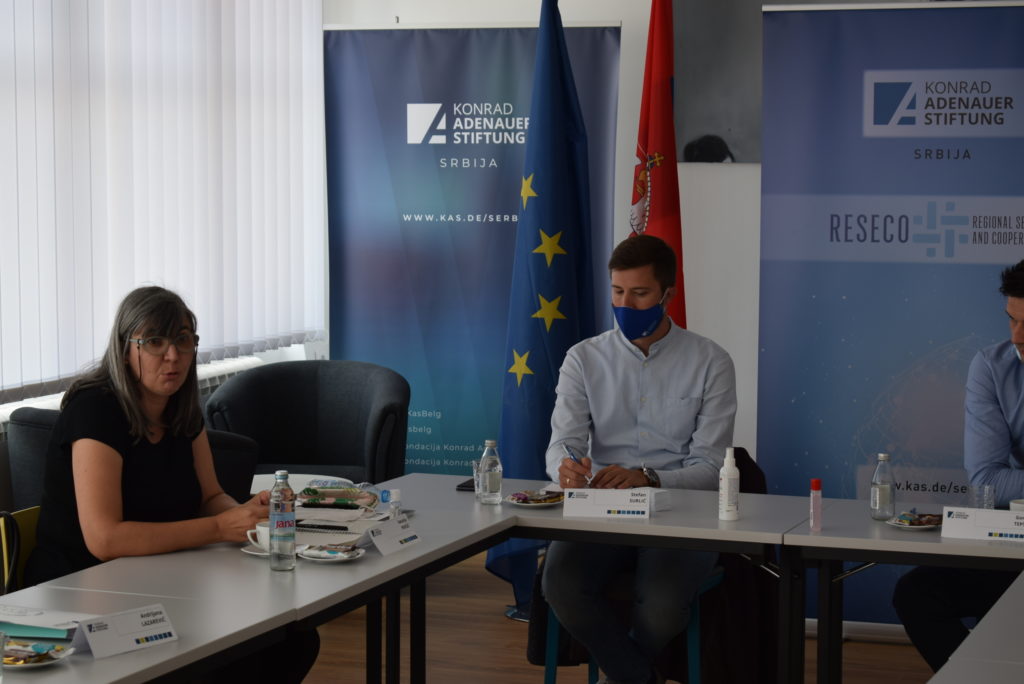
Consultations of the working group on the topic „Migrant Policy and Challenges to the Integration of Refugees on the Western Balkans“, organized by the RESECO Initiative and supported by the Konrad Adenauer Foundation, were held on September 23, 2020.

Representatives of the RESECO Initiative – Stefan Surlić and Goran Tepšić from the University of Belgrade – Faculty of Political Science, together with Aleksandra Popović and Andrijana Lazarević from the Konrad Adenauer Foundation, pointed to the need for drafting more precise proposals and recommendations for improvement of the migration policy in Serbia and in the region. Sonja Tošković (Belgrade Centre for Human Rights), Radoš Đurić (Centre for Protection and Assistance to Asylum Seekers), Uroš Živković (Ministry of Labour, Employment, Veteran and Social Issues), Marjan Đurovski (University St. Kliment Ohridski, Skopje) and Natalija Perišić, coordinator of the MIGREC project (University of Belgrade – Faculty of Political Science) all participated the meeting.


CONSULTATIONS ON MIGRATION POLICY Read More »

Methodological Workshop – CONTINUED

Observational studies, Case studies

Speaker: Assistant Professor Kostas Gemenis, Senior researcher at the Max Planck Institute for the Study of Societies in Cologne, Germany

Monday 5th October from 14:00-17:00 Serbian time


Integration Workshop – CONTINUED

Confronting the progressive dilemma, rethinking inclusive solidarity

Speaker: Dr Biljana Đorđević, University of Belgrade – Faculty of Political Science, Department of Political Science

Discussants: Dr Marta Stojić Mitrović, Institute of Ethnography, SASA & Ryan Powell, Department of Urban Studies, University of Sheffield

Friday 9th October at 2 pm UK time / 3 pm Serbian time / 4 pm Greek time

https://eu.bbcollab.com/guest/011e24fd48704ea0b33605096623c451

Methodological Workshop – CONTINUED Read More »

MIGRANT INTEGRATION WORKSHOP

In the period from September 10 to 16, 2020 under the auspices of the MIGREC project, four online workshops focused on current challenges around migration and integration, were organized by MIGREC partner – the University of Sheffield’s Migration Research Group. Workshop participants extended beyond members of the MIGREC consortium, to include among others, senior researchers, PhD students and Master students from the University of Belgrade, as well as a number of practitioners and stakeholders working in the field of integration in Serbia.

The first workshop “Life at the Frontier: Social mobility, segregation and integration“ was chaired by Helen Grady, Senior Broadcast Journalist for BBC Radio 4 . It included presentations from Professor Gwilym Pryce (Sheffield Methods Institute and Department of Urban Studies, University of Sheffield), Professor Liv Osland (Western Norway University of Applied Sciences) and Professor Urban Lindgren (Umea University, Sweden). There were further contributions from Lord David Blunkett, and a range of stakeholders from the UK, Norway and Sweden.The workshop marked the launch of a significant new project funded by Nordforsk and the ESRC, involving as Co-Investigator MIGREC’s team member Dr Aneta Piekut. The Project will compare and contrast the social integration of migrants between neoliberal societies (the four nations of the UK) and socio-liberal ones (Norway and Sweden).

In the second workshop, the speaker was Professor Raivo Vetik, from School of Governance, Law and Society, Tallinn University, Estonia, Coordinator of the MirNet project, with a presentation “Beyond state-of-the-art in studying migrant integration: a relational approach“. This presentation captured an innovative way to conceptualize identificational integration of migrants and discussed policy implications deriving from the study based on such a conceptualization. Professor Raivo Vetik proposed a new, relational approach to conceptualize identificational integration of migrants by defining national identity in terms of social positioning.

Kostas Vlachopoulos, a PhD Researcher in Politics at the University of Glasgow and Junior Research Fellow at the Migration Programme of  ELIAMEP, presented “Migration in Greece: It’s time to talk about integration” during the third workshop. While Greece is currently hosting approximately 96,500 refugees and asylum-seekers (30,700 of them residing in the islands and 65,800 in the mainland), official discourse and policy around their integration remains weak. Kostas Vlachopoulos made three arguments as to why integration is necessary and beneficial in the Greek context: 1. by forwarding integration processes, there is a chance to combat a conservative set of policies and securitized discourse toward migrants; 2. the utilitarian argument; 3. the moral/humanitarian argument.

The last workshop provided an opportunity for University of Belgrade MIGREC researchers to present on current writing and research projects. The presentations revealed a rich body of work from a range of disciplines ongoing at the University of Belgrade including relating to: Access to justice for asylum seekers in the Republic of Serbia (Dr Dejan Pavlović), and Migration and youth in Serbia: attitudes, intentions and motives (Vanja Javor, Milica Todorović and Nevena Radić).

Majella Kilkey, Professor of Social Policy and Co-Director of the Migration Research Group at the University of Sheffield, UK, closed the workshop series and invited colleagues to join the next series of workshops to be organized as part of the MIGREC project.


MIGRANT INTEGRATION WORKSHOP Read More »

Online Debate at the Summer School in Skopje

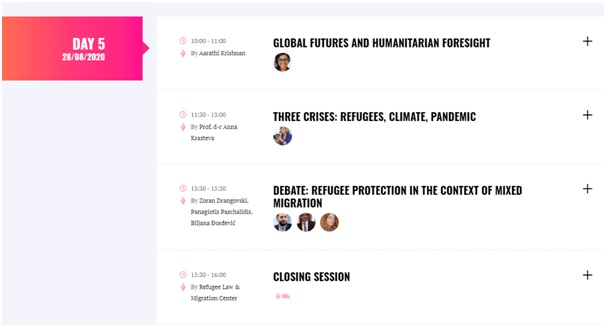
On 28/8/2020 MIGREC team members Biljana Đorđević and Panagiotis Paschalidis, altogether with Zoran Drangovski from the Macedonian Young Lawyers Association, took part in an online debate on “Refugee protection in the context of mixed migration – Movements in the Western Balkans” which was a closing event of the Summer School on Refugee Rights and Migration with a special focus on the Challenges in times of COVID-19 Pandemic. The debate was organized by Center for refugee law and migration at the Iustinianus Primus Law Faculty, University Ss. Cyril and Methodius – Skopje, North Macedonia in collaboration with the UNHCR Mission in Skopje, and in partnership with the International Institute of Humanitarian Law – Sanremo, Italy. The debate took place from 13:30 to 15:30 (CET), using the Zoom meeting platform. Panagiotis Paschalidis presented the situation in Greece, Zoran Drangovski in North Macedonia and Biljana Đorđević presented the situation in Serbia, thus covering significant part of the Balkan migration route. The debate has been followed by a Q & A session from the summer school participants and lecturers. It was a great opportunity to promote MIGREC project and team members’ cooperation.

Online Debate at the Summer School in Skopje Read More »